Audio
Listen to the article
Warrington
Andy Burnham sailed into Westminster largely on his performance as mayor of Greater Manchester. As his accent suggests, though, Mr Burnham is not from Manchester. He grew up a few miles to the west, on the edge of Warrington, a very different northern English town which deserves to be better known.
- Warrington, with about 215,000 people, has GDP per person one-third higher than the British average, and faster growth since 2010.
- The new town prospered by working with market forces and private homebuilders, distinct from Mr Burnham’s “Manchesterism”.
- A 2010s investment spree left £1.8bn in debts, a 7.5% council-tax rise and planned asset sales — a warning for the next prime minister.
Warrington is less glamorous than Manchester, but stranger
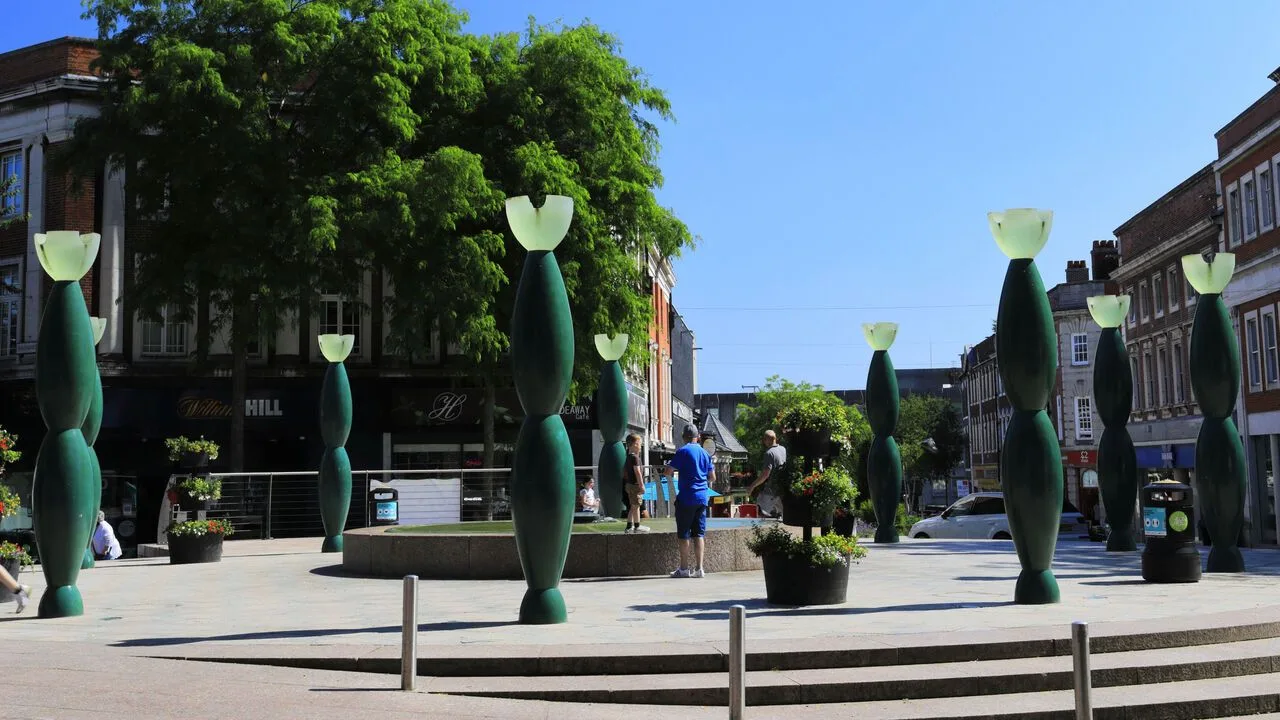
Warrington is not a glamorous place. It has no skyscrapers and is small, with about 215,000 inhabitants. Its people like it that way.
“They don’t want us to be too big, and be a city,” says Hans Mundry, leader of the Labour-run borough council.
Warrington Town Football Club plays in the seventh division of English football; its rugby-league team is far better. In 2015 the Royal Society of Arts ranked the town last out of 325 places for cultural amenities. Angry Warringtonians pointed out, not altogether convincingly, that Britain’s first IKEA furniture store had opened there.
GDP per person vs British average
Council debts by 2023
Council-tax rise on households
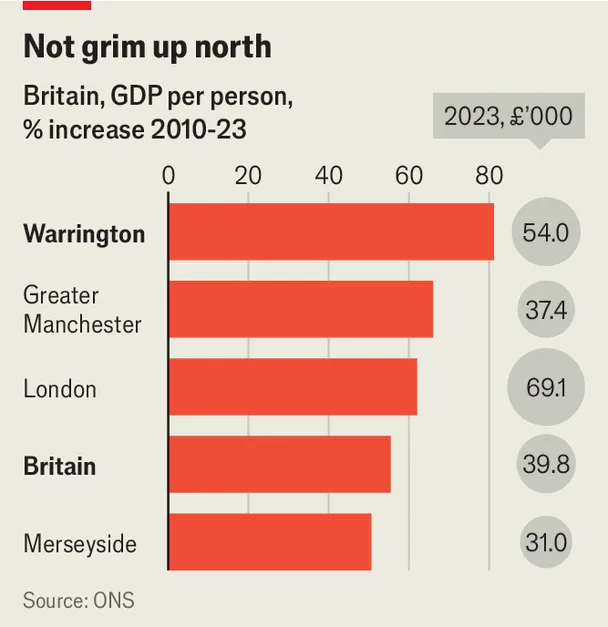
For all that, it is successful. GDP per person is one-third higher than the British average, and has grown faster since 2010 (see chart).
The place has prospered by pursuing policies distinct from what Mr Burnham calls “Manchesterism”, a vaguely articulated, leftist approach to economic development which gives the state a big role. Warrington is an alternative model for the next prime minister, and a warning.
A new town that chose private building and market forces
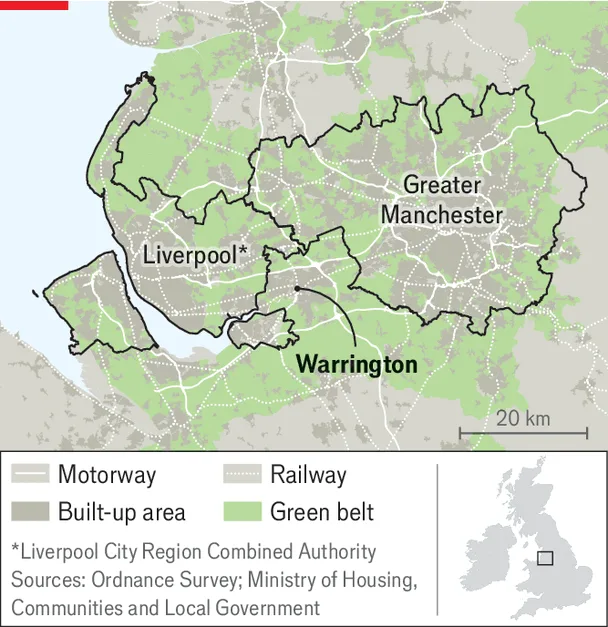
Along with more than a dozen other urban areas in England, it is a post-war “new town”. The government in Westminster gave it special planning powers in 1968, assuming that it would build homes to mop up working-class people pushed out of Manchester by slum-clearance projects — much as the new towns around London did. But within a few years Warrington was defiantly going its own way.
Middle-class people converged on it, attracted by its location near three motorways: the M6, M56 and M62. Warrington’s planners pivoted in response. Rather than erecting large social-housing estates, as originally envisaged, they accepted that private homebuilders would supply most homes.
They frowned on underpasses and overpasses, symbols of modernity adored by the architects of other new towns like Milton Keynes and Stevenage.
Engineering, transport links and a business-friendly council
The instinct to work with market forces is still detectable among Warrington’s leaders. Mr Mundry argues that the town is quick to move on when old industries decline; it was once a wire-making powerhouse. A few years ago it used money from the developer of a warehouse park not to create prettier public spaces — a common use of such funds — but to set up a bus route to take workers to the warehouses.
Ian Cox, who runs the Golden Square shopping centre, says that the town is “ridiculously easy to escape from” because of its transport links to Liverpool and Manchester. Competition from those cities, plus online shopping, mean that people need a reason to visit the town centre. His solution has been to put on gigs and events. Local councils can stymie such initiatives, but Mr Cox says that Warrington has been simple to deal with — more like a company than a public body.
Today engineering drives the economy. Birchwood Park, on the north-east edge of Warrington, churned out bombs during the second world war. It now crawls with PhDs, many working on nuclear energy.
At Amentum, an American firm, engineers show off a device that can trundle through sewers, looking for flaws. Other robots are intended for more dangerous environments such as nuclear-storage tanks. “We have 270 vacancies,” says Loren Jones, the head of Amentum’s energy and decommissioning business outside North America.
Debt, green belt and sprawl: when pro-business goes too far
Unfortunately, in the past few years Warrington has been rather too keen on business for its own good. In the 2010s it went on an investment spree, buying Birchwood Park, investing in a challenger bank and pouring money into solar farms.
By 2023 Warrington’s debts amounted to £1.8bn (then $2.2bn), a colossal sum for a town of its size. It looked like a fine strategy when borrowing was cheap. But that is no longer the case. And last year one of the solar parks, near Cirencester in the Cotswolds, caught fire.
When outside experts scrutinised the council’s investments, they found that most had performed poorly. Earlier this year Warrington asked the central government for emergency help to stave off bankruptcy. It has raised council tax, levied on households, by 7.5%, more than local governments are usually permitted to without calling a referendum. Birchwood Park and other assets will be sold.
Other hazards loom. Warrington is surrounded by green-belt land, on which building is difficult. It has been able to take large bites out of the belt. But local tolerance for sprawl may be eroding. Stuart Mann, an independent councillor and self-described “pain in the arse”, argues that too little infrastructure is being built for the new residents and businesses, and that Warrington feels ever less distinct from Greater Manchester and Merseyside.
Lessons for Burnham
Over the next few years politics could spoil Warrington’s run. The first hurdle is the race to succeed Mr Burnham as mayor of Greater Manchester. If Reform UK, a right-wing populist party, wins, it could harm the town. Reform’s national leadership firmly opposes a scheme known as Northern Powerhouse Rail, which would improve Warrington’s railway links.
Next year the town will join a combined authority with largely rural Cheshire, which may or may not work well. In 2028 local voters will get a chance to punish the council for raising their taxes.
Warrington’s most famous son can learn from the town’s successes and its troubles. Creating an environment in which business can thrive is wise. Mr Burnham should know this anyway: despite talk of statist “Manchesterism”, Manchester has succeeded partly because since the 1990s it has allowed property developers to build residential towers. But he needs to keep an eye on the debt.■
For more expert analysis of the biggest stories in Britain, sign up to Blighty, our weekly subscriber-only newsletter.
KEEP THE CONVERSATION GOING
A good story is worth sharing.
Send this story to someone who values the bigger picture.
See more from GlobeBriefly on Google
Choose us as a preferred source in your Google preferences.