Audio
Listen to the article
- Readers responding to “Bipartisan and wrong” (August 8th) say opposition to animal testing has long been cross-party and that scientific evidence now undermines the practice.
- Critics cite 95% failure in clinical trials, 43% rodent and 71% combined prediction of human toxicities, and near-total failure in sepsis, stroke and Alzheimer’s models.
- Letters split between calls to replace animals with organoids, organ-on-chip and computational models now, and a view that such methods should be partners until full replacement is possible — alongside ethical objections to outsourced testing.
In response to our leader “Bipartisan and wrong” (August 8th) and related coverage, readers argue that animal testing is both ethically indefensible and scientifically obsolete — citing high failure rates, poor prediction of human toxicity and the promise of non-animal methods.

The letters below respond to our August 8th leader and to “Testing times” (August 8th) and to “The war on animal research” (The Weekend Intelligence podcast, August 1st). They have been edited for length and clarity, with facts, attributions and source links preserved.
Do animal models predict what happens in people?
1. A “colossal failure” across 15 years of data
Kathy Guillermo, senior vice-president for laboratory investigations at People for the Ethical Treatment of Animals (PETA) in Norfolk, Virginia, argues your leader misses the bipartisan history of animal protection. She notes PETA collaborated decades ago with Republican senators Bob Dole and Bob Smith, as well as Democratic senator Alan Cranston and Joe Biden during his Senate years, and says that cross-party tradition has endured.
What has changed, she writes, is the evidence. Fifteen years of data now show animal testing fails to produce treatments for humans. She cites experiments — from irradiating monkeys in HIV studies, to strangling rats to model domestic abuse, to inducing strokes in beagles — as a colossal failure: 95% of medications developed in animals fail in clinical trials.
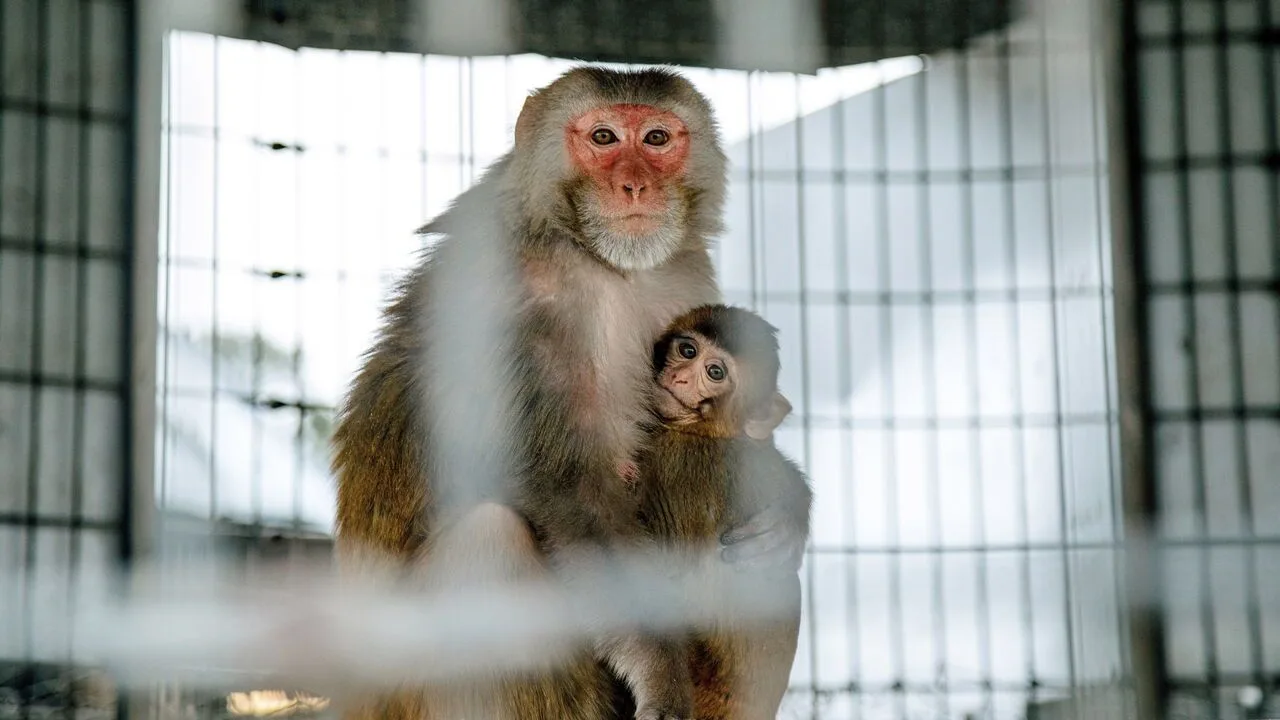
The HIV vaccine research praised at the Oregon primate centre illustrates the point, she argues: 40 years of killing monkeys, which do not even develop HIV, produced dozens of test vaccines. Only five reached clinical trials, and every one failed. Other fields mirror this, she writes: 100% failure for sepsis and stroke treatments and 99.6% failure for Alzheimer’s disease.
The growing body of published work, which PETA’s scientists outline in their strategy to phase out animal use, can no longer be ignored, she says. The new administration deserves credit for acknowledging that the data exist.
On outsourcing, lobbyists for the animal experimentation industry claim ending testing in America would move it to China, she writes. But as American agencies choose organoids, in silico computational models and other alternatives, there will be no need to outsource anything. China has invited scientists worldwide to advise on non-animal methods — and PETA’s scientists are obliging, she says.
Kathy Guillermo
Senior vice-president, laboratory investigations
People for the Ethical Treatment of Animals (PETA)
Norfolk, Virginia
2. “Close to a coin flip” — what the prediction numbers show
Dr Rebecca Weintraub, associate professor at Harvard Medical School in Boston, writes that animal models are not very good at predicting human toxicity (“Testing times”, August 8th). In one industry study of 150 drugs with known human toxicities, rodents alone caught the matching problem in just 43% of cases; adding non-rodent species brought that to 71%. In oncology, a clean animal result is close to a coin flip on whether the drug is safe in humans, she writes. More than 90% of drugs that pass animal testing still fail to win approval, often for reasons that only surface once humans are involved.
Part of the problem is what “predict” is taken to mean. Mostly it means dose scaling: animal data are used to find a safe starting dose for humans, not to determine whether a compound is toxic at all. Those claims are very different and get conflated constantly, she argues.
Negative cases are also missing — instances where an animal study calls something toxic and it turns out to be safe in humans. These are rarely tracked, but they exist, she writes. Acetaminophen (or paracetamol) is deadly to dogs and cats yet perfectly safe for people. Leave cases like that out and animal testing looks far more trustworthy than it actually is.
There is genuine debate in the field, she adds, but most scientists — and now the Food and Drug Administration — have looked at the historical contribution of animal studies and concluded they are not necessary for many kinds of testing. The fair standard for organoids, organ-on-chip systems and computational models, she argues, is not whether they reproduce what animals do, but whether they predict what happens in people — the same test animal models should have been held to all along.
Dr Rebecca Weintraub
Associate professor
Harvard Medical School
Boston
Is the ethical case being dodged?
3. The “someone else will do it” fallacy
Steven Shakespeare, professor of philosophy at Liverpool Hope University in Liverpool, says the argument that testing would move elsewhere if the West stopped is fallacious as a justification. “My unethical action does not become ethical because someone else does it or might do it if I stop,” he writes. “That would justify any number of atrocities.”
The main argument for testing is utilitarian — that animal suffering benefits humans as the “greater good”. But that begs the question of why human interests always trump animal interests, he argues.
The question is not “Can they talk?” or “Can they reason?” But “Can they suffer?”
Jeremy Bentham — cited by Steven Shakespeare, Liverpool Hope University
The substantive ethical question cannot be dodged, he writes: to what extent is it ever ethical to cause enormous suffering to other sentient beings?
Steven Shakespeare
Professor of philosophy
Liverpool Hope University
Liverpool
4. An imperfect model and a grave ethical problem
Matthew Harrison in Hong Kong writes that alternative methods cited for medical testing, such as organoids, human tissues and organ-on-chip systems, do not yet compare to the whole-of-body model provided by the animal subject. But the animal model is just that — a model, and is imperfect as a representation of the human body, he argues. Different species react to drugs in different ways, as highlighted by the Thalidomide disaster. None is a precise human analogue.
The ethical problem is grave and real, he writes. Hundreds of millions of sentient beings each year are incarcerated and subject to often-intense suffering prior to death. “This is a terrible stain on humanity, brutalising for those involved. And it is increasingly unnecessary,” he says.
Commercial rivalry with China is “perhaps your worst argument for perpetuating this atrocity,” he adds.
Matthew Harrison
Hong Kong
Who cares for the animals still in labs?
A laboratory animal behaviour technician in Oregon writes that the daily work of caring for research animals falls to behaviour technicians, veterinarians and husbandry staff. Their job is to ensure physical and psychological well-being, including managing social housing, enrichment and behavioural care that helps animals thrive.
What is less visible, the technician writes, is how often care staff advocate for animals’ retirement — in place or to sanctuaries — and support adoption when studies end. “It is strange that people who have dedicated their education and careers to animal care are cast as villains by campaigns in which resources go to advertising and lobbying rather than to the animals themselves.”
New approach methodologies (NAMs) are genuinely exciting, the technician adds, and the people who work in these facilities hope for a future where they can fully replace animal models, but the science is not there yet. NAMs and animal models should be treated as partners in advancing biomedical science, and until full replacement is possible, the animals that research still requires deserve the highest standard of care, because it is right and because better welfare yields better science. “The people inside these facilities have been working on both all along.”
A laboratory animal behaviour technician
Oregon
Can politics and technology replace testing?
5. An appeal beyond the usual allies
Jennie Jonasson in Montreal thanks The Weekend Intelligence for “The war on animal research” (August 1st). “At my age I have realised that the suffering of one is the suffering of all,” she writes. She describes the man in the podcast who is trying a non-radical approach by appealing to mainstream and right-wing politicians as “a living saint.”
While she describes herself as “to-the-left-of-Bernie liberal,” the podcast almost made her want to change party affiliation, she writes. “The ends don’t justify the means with animal testing. The other guy in the podcast from the primate-research centre thinks he is on the side of right, but this is just looking for a socially acceptable way to commit cruelty.”
“If it takes a Laura Loomer or a Pete Hegseth to get the world to stop animal testing, then so be it,” she adds.
Jennie Jonasson
Montreal
6. An anachronism in an AI era
Lauren Tartaglia in New York calls animal testing anachronistic. If society wants to prepare for the future, it should invest in technologies that are more effective and efficient, and set standards that do not include inhumane treatment of animals, she writes. AI and non-animal technologies are the future.
We can judge the heart of a man by his treatment of animals.
Immanuel Kant — cited by Lauren Tartaglia, New York
Lauren Tartaglia
New York
Letters have been edited for brevity and clarity. The views expressed are those of the correspondents and do not necessarily reflect the views of GlobeBriefly.
Responding to “Bipartisan and wrong” (August 8th), “Testing times” (August 8th) and “The war on animal research” (The Weekend Intelligence, August 1st). Figures cited — including 95% clinical failure, 43% and 71% toxicity prediction, 100% sepsis and stroke failures and 99.6% Alzheimer’s failure — are as stated by correspondents.
KEEP THE CONVERSATION GOING
A good story is worth sharing.
Send this story to someone who values the bigger picture.
See more from GlobeBriefly on Google
Choose us as a preferred source in your Google preferences.