Audio
Listen to the article
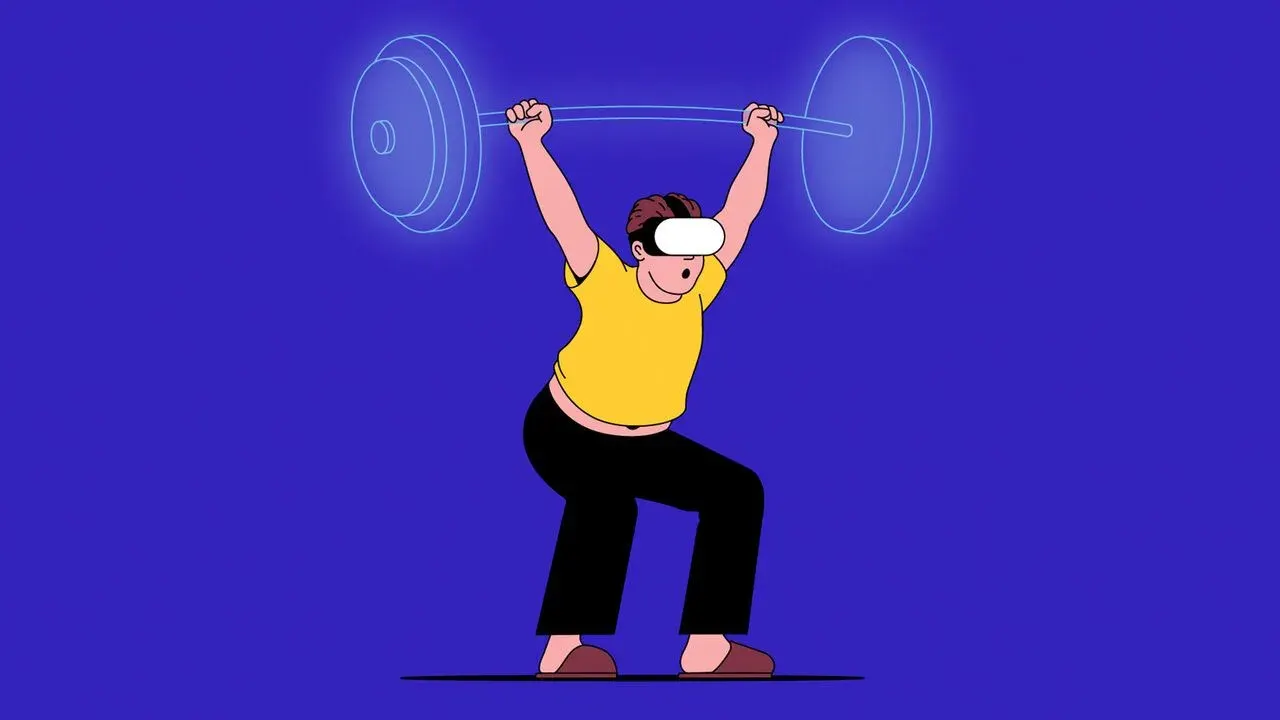
Workouts can feel monotonous. Gaming feels enjoyable. Could the two be merged? Strapping on a virtual-reality headset and gripping a motion-tracking controller in each fist can prove demanding. “Pistol Whip” forces frequent lateral steps and squats while shooting adversaries and evading incoming fire. “The Thrill of the Fight” simulates boxing and generates genuine perspiration. Both “Supernatural” and “Beat Saber” have players striking and slashing at approaching targets to driving beats. Yet do these activities qualify as legitimate physical training?
- Some VR titles reach genuinely vigorous intensity: “The Thrill of the Fight” was measured at 9.3 METs.
- Virtual and real sport produced similar weight loss in adolescents; the control group lost none.
- Headset games alone build no strength — though a VR-paired resistance machine improved strength, endurance and leg power.
How researchers measure a VR workout
Researchers say yes, albeit with qualifications. A useful yardstick for assessing virtual-reality activity is the metabolic equivalent of task, or MET.
Metabolic equivalent of task — resting consumes roughly one MET. Strolling requires three. Playing football demands ten. Anything above six METs ranks as “vigorous” exercise.
By that yardstick, several VR titles qualify as real exercise. Scientists at San Francisco State University calculated that “The Thrill of the Fight” (which is, in fact, exhausting) reached 9.3 METs. Separate research, published in JMIR Serious Games, showed the “Flow” and “Boxing” modes in “Supernatural” also qualified as vigorous exercise, at around eight METs.
METs in “The Thrill of the Fight”
METs in “Supernatural” modes
METs: the “vigorous” threshold
Cardio: a VR session can match a walk
Another experiment, published in Games for Health Journal in 2024, had volunteers try a seated video game, two VR titles and treadmill walking, ten minutes apiece, while oxygen uptake was tracked. “The Thrill of the Fight” matched treadmill walking for aerobic intensity, and elevated heart rates to a comparable degree.
Weight loss: virtual sport performed like the real thing
Cardio is one matter. Shedding pounds is another. Research published last year in Nature Medicine split 227 adolescents into five cohorts: actual table tennis, actual football, virtual table tennis, virtual football and a control group. Weight loss did not differ significantly between the real and virtual groups. Participants in both shed about 5kg after eight weeks. Those in the control group lost none.
lost over eight weeks by adolescents in both the real-sport and virtual-sport groups. The study’s control group lost nothing — which is the result that makes the comparison interesting.
The strength gap — and a workaround
However, virtual-reality titles differ widely. Intensity varies more across games than between physical and virtual workouts. The 2024 study, for example, rated “Beat Saber” as merely light exercise (2-3 METs). And even strenuous options like “The Thrill of the Fight” rely solely on arm motions and squats. Since digital items offer no physical resistance, VR games are no good for strength training.
Scientists at the University of California, Los Angeles, solved that limitation by pairing a cable-resistance training machine with a VR headset displaying a tower-defence game (in which the player must protect a stronghold from waves of virtual enemies), such that pulldowns, deadlifts and other moves triggered different attacks. Two cohorts trained across four weeks, one using the VR add-on, the other without. Those in the VR group showed greater improvement in strength, endurance and peak leg power. And they perceived their exertion level to be lower than it actually was.
What the evidence still cannot settle
Multiple other efforts have reached a similar conclusion. Exercisers using VR routinely underestimate how hard they are working. They also find it more fun than conventional exercise. Yet whether that enjoyment increases long-term adherence remains uncertain. Beyond this research, VR-exercise studies are often small and do not use comparisons or controls that allow their effects to be assessed. All that said, you don’t need a trial to show that VR exercise is better than none.
VR-exercise studies are often small and frequently lack the comparisons or controls that would let their effects be assessed, and whether the fun factor translates into long-term adherence is still unknown. Read individual headline numbers as a signal, not a settled result.
Sources
MET measurements for “The Thrill of the Fight”: San Francisco State University.
“Supernatural” Flow and Boxing modes: JMIR Serious Games.
VR versus treadmill oxygen uptake, 2024: Games for Health Journal.
Real versus virtual sport, 227 adolescents: Nature Medicine.
VR-paired resistance training: University of California, Los Angeles.
KEEP THE CONVERSATION GOING
A good story is worth sharing.
Send this story to someone who values the bigger picture.
See more from GlobeBriefly on Google
Choose us as a preferred source in your Google preferences.