Audio
Listen to the article
July 10th: Fidji Simo has stepped down from her full-time role at OpenAI for health reasons.
Microsoft’s gaming strategy has misfired badly, and new Microsoft Gaming boss Asha Sharma says the division is “not healthy”. On July 6th, less than five months after taking over, she launched what she called the biggest reset in Xbox’s 25-year history.
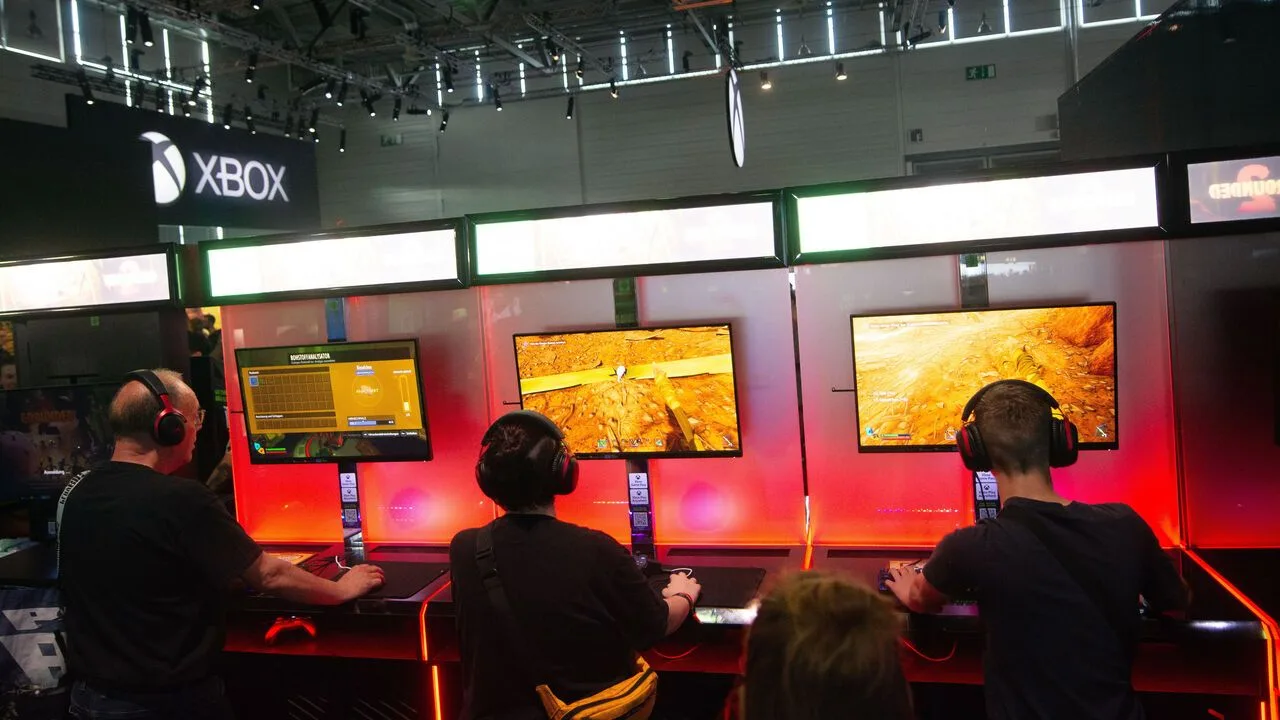
- Asha Sharma will cut 3,200 Xbox jobs over 12 months and shed up to five loss-making studios.
- Game Pass has fewer than 30m members against a 77m target, with quarterly gaming revenue falling and margins at 3%.
- AI-driven demand for memory chips lifted input costs 50% in her first 50 days, squeezing consoles before Grand Theft Auto and 2028 hardware.
It is not yet the PayPal mafia, but the Instacart matriarchy is making its mark. Not long after Fidji Simo, ex-head of the online grocery store, became Sam Altman’s product-focused sidekick at OpenAI, Asha Sharma, Instacart’s former chief operating officer, became Satya Nadella’s Ms Fix-it at Microsoft Gaming. Groceries are a tricky, low-margin business. So is Xbox — and Ms Sharma has wasted no time getting to work.
Ms Sharma has pursued the overhaul with a candour rare in big tech. No hard-core gamer herself, the battles ahead will test her mettle. Her diagnosis makes two things clear: first, Mr Nadella’s gaming strategy has misfired badly; second, the entire console industry is in a supply-chain crisis.
Why the Game Pass bet fell short
With Mr Nadella’s attention focused on the artificial-intelligence boom in recent years, Xbox suffered from neglect. Under previous management, it sought to reduce reliance on the Xbox console and focus on its multi-platform subscription service, called Game Pass, intending to become the “Netflix of gaming”.
To fuel demand, Microsoft invested what insiders say was upwards of $20bn on games and studios, in addition to the $70bn-plus it spent buying Activision Blizzard, maker of “Call of Duty”, in 2023.
Game Pass members vs 77m target
Xbox operating margins
Jobs to be cut in 12 months
Alas, Game Pass, which was meant to have 77m members this year, has fewer than 30m. Meanwhile, the multi-platform approach undermined Microsoft’s own console business by making content available on other platforms, such as Sony’s PlayStation, which kept its own games off Xbox.
Microsoft’s quarterly gaming revenue has been in decline since last autumn. Xbox’s operating margins are a meagre 3%. It has been losing market share to Nintendo, another console-maker. Bureaucracy has ballooned; in parts of the company, Ms Sharma says, work passes through 14 layers of management. Just like a real-life Pac-Woman, she intends to chomp those down to as few as three.
Sharma’s reset: cuts, Minecraft and mobile
Her strategy is bold. The year of lay-offs will be the biggest in Xbox’s history. Her disposal of studios will end Microsoft’s attempt to hoover up indie game-developers.
Yet it is not all cost-cutting. Insiders say Ms Sharma intends to invest in “Minecraft”, a hit game that was used as a cash cow rather than a growth engine and has lost significant ground to Roblox, a stable of games that competes for youngsters’ attention. She also plans to double down on mobile gaming using untapped expertise in King, creator of “Candy Crush”, which was bought with Activision.
A supply-chain crisis for Xbox at the worst time
The trickiest part will be rescuing the console. When Ms Sharma took over in February she promised “the return of Xbox”. Sales of gaming hardware have long been in decline, but insiders say Ms Sharma considers Xbox users to be her core customers, spending far more on games and services than PC players.
Yet as Ms Sharma tries to win them back, the ground is moving under her feet. When she took control, AI-related demand for memory chips and other components had already caused costs to surge across the consumer-electronics industry. Within her first 50 days, input costs rose by 50%, a source at the company says. All three console-makers have been forced to announce price increases at a time when growth in the industry, excluding China, is sluggish.
The component crunch will have long-term consequences. Microsoft had hoped to increase production of consoles to support the eagerly awaited release of the latest version of “Grand Theft Auto”, made by Take-Two, a listed studio, which is rumoured to have cost a staggering $2bn to develop. The supply constraints will make it harder to increase production to meet the expected demand.
In 2028 both Microsoft and Sony are expected to launch the next generation of devices, which could also be hampered by the supply-chain chaos. Piers Harding-Rolls of Ampere Analysis, a consultancy, says Microsoft may be hit harder, because Sony, as a consumer-electronics company, has stronger relationships with suppliers. On July 1st Sony said it would stop selling physical discs in 2028, a decision that Mr Harding-Rolls says was long in gestation but might help offset rising costs.
Spin off Xbox or fight on?
Some think Microsoft’s best response to both the strategic blunders and the hardware crisis would be to spin off the gaming business. Gil Luria of D.A. Davidson, an investment firm, reckons that the lumpiness of revenue as a result of seven-year console cycles is better suited to private-equity investors than to public ones.
There are still rich seams of potential growth within Xbox that Ms Sharma will hope to mine before a final decision about its future is made.
Sometimes it’s Game Over.
Ben Thompson · Stratechery
KEEP THE CONVERSATION GOING
A good story is worth sharing.
Send this story to someone who values the bigger picture.
See more from GlobeBriefly on Google
Choose us as a preferred source in your Google preferences.