
Audio
Listen to the article
Letters are welcome via email to letters@economist.com. Find out more about how we process your letter.
MIT institute professor Daron Acemoglu rejects The Economist’s August 17th profile that called him “oddly unconvincing,” saying it leans on unnamed sources, cherry-picked criticism and a review timed to his new book. Economist David Albouy answers that the Acemoglu critique misstates his work on settler-mortality data.
- Daron Acemoglu says The Economist’s “oddly unconvincing” verdict rests on unnamed economists and a blogger, and misrepresents his paper “Baby busts and growth booms.”
- David Albouy says Acemoglu mischaracterised his critique of settler-mortality data — 28 of 64 countries had observed rates, the rest were conjectured — leaving the property-rights link on shaky ground.
- Also in letters: Europe’s rivers as strategic water capital, peatland drainage versus slash-and-burn as the driver of Indonesia’s 2015 haze, and China’s “safety theatre.”
Daron Acemoglu responds: your critique is oddly unconvincing
Your recent article about me, “The world’s most influential economist is oddly unconvincing” (August 17th), was striking less for its hostility towards my work than for the weakness of its claims.
Critical engagement with my research and core ideas is welcome, and there is plenty in there with which one can legitimately disagree, from institutions and colonial legacies to automation and the consequences of AI. Such criticism is essential for progress in science. But this piece, instead, assembles loosely connected grievances into an insinuation of unreliable scholarship.
Let me provide three examples. First, your central verdict that I am “oddly unconvincing” rests on unnamed economists revealing their true opinion of me over a few drinks. No persons who have been offered drinks to get to this truth are named. Would you publish a letter asserting that, over a few drinks, most people tell me that your newspaper is no longer worth subscribing to? The only person quoted with such views is a blogger, Noah Smith, a thin basis for judging a lifetime of academic work.
Second, the piece constructs a critique around a social-media observation by Jesús Fernández-Villaverde regarding a recent paper, “Baby busts and growth booms,” that our estimates of the effects of lower birth rates may not extrapolate to the future. We make this exact point in the conclusion of the paper. You dismiss this, writing that such caveats “can get lost and can seem unsophisticated when set against Mr Acemoglu’s reams of maths.” You did not, I understand, interview Professor Fernández-Villaverde.
Third, the criticisms are cherry-picked in a haphazard manner. Some of them, for example from Tyler Cowen or Francis Fukuyama, could have been (and in fact, were in the past) the starting-point of fruitful discussions. I welcome such engagement, and I suspect that your writers know that these types of disagreements are part of a healthy academic debate.
The timing is also curious, coinciding with the publication of my new book, “What Happened to Liberal Democracy?” The book explores aspects of liberal philosophy, the origins of liberal democracy’s past successes, its current crisis, and what kind of new governing philosophy could re-energise liberalism. The Economist’s review of the book, published at the same time as the article, is dismissive and declares that it “grapple[s] with the question of how AI will shape the future” (“Man’s best frenemy”, August 17th). In fact, only half a chapter is about AI and democracy. It is hard not to interpret this as a strategic framing, intended to obfuscate the message of my book and bring it to The Economist’s favourite topic of defending and boosting AI.
If this is the best you can do with a body of work spanning 33 years, then it is your critique that is “oddly unconvincing.”
Daron Acemoglu
Institute professor
Department of Economics
Massachusetts Institute of Technology
Cambridge, Massachusetts
Editor’s note: We published the letter from Professor Acemoglu in an online post on August 21st.
A response to Acemoglu: the settler-mortality data debate
Your profile of Daron Acemoglu asks why such an extraordinarily prominent economist has attracted considerable scepticism. His response to my criticism of his celebrated work with Simon Johnson and James Robinson provides part of the answer.
Mr Acemoglu claims that I found their estimates unreliable by omitting half the data, including America, Canada and Australia. This is demonstrably false. I retained the United States and Canada in my sample, while pointing out that Australian data were lifted from New Zealand. Moreover, my criticism was that much of their cross-country mortality data were conjectural. Of 64 countries, only 28 were assigned mortality rates actually observed within their borders. The remaining 36 were conjectured from evidence elsewhere, using inconsistent rules and, in some cases, error-ridden readings of the historical record. Correcting for problems in these data and their statistical treatment leaves their foundational relationship between settler mortality and property rights on shaky ground.
This is part of a long-standing problem. Researchers have repeatedly raised serious questions about data underlying influential papers by Mr Acemoglu and his co-authors. Rather than confront such criticisms head-on, he has sometimes responded by shifting the argument to something his critics did not claim. His enormous stature has allowed such mischaracterisations to carry unusual weight.
There is some irony that The Economist, while scrutinising that record, simply took his assertion about my work at face value. More tellingly, although my critique was central to your article, Mr Acemoglu does not mention it at all in his lengthy letter of response. He further illustrates my point.
David Albouy
Professor of economics
University of Illinois Urbana-Champaign
Rivers run through it: Europe’s low water and strategic water management
Your article on Europe’s record-low rivers (“Mammoths and sunken warships”, August 15th) is a reminder that rivers have always been more than scenery. From the Nile to the Yangtze, they have been the arteries of societies: watering agriculture, carrying goods and connecting cities and markets. The great river-regulation projects of Central Europe in the 19th centuries were, in their time, exercises in state-building.
Modern economies have made rivers more important, not less. The Rhine and Danube now support not only farming and navigation, but chemical plants, electricity generation, cooling systems and international supply chains. This also gives water management a geopolitical dimension. In times of scarcity, decisions taken upstream can have serious consequences for countries downstream.
Europe therefore needs to think beyond adapting barges to shallower water or shifting freight onto lorries. A new generation of water infrastructure and landscape management should aim to retain more water when it is abundant in the lands and make it available when it is scarce, through reservoirs, restored wetlands and floodplains, groundwater recharge and better-connected water systems. Managed well, such storage could act rather like a battery: reducing drought damage while supporting agriculture, households, industry and the ecological health of rivers themselves. Keeping more water in the landscape can also sustain evaporation, returning moisture to the atmosphere that may later contribute to rainfall elsewhere in the region.
Just as oil-producing countries face a generational question over how to manage and invest their oil reserves, Central Europe should treat its water as strategic natural capital rather than something that simply passes through on its way to the sea.
Márton Iván
Munich
How to stop the fires: rewetting peatland, not blaming smallholders
You blamed Indonesia’s catastrophic haze in 2015 on slash-and-burn farming (“Climate change”, August 1st). This gets it exactly backwards. Intact peatland is practically fireproof, a waterlogged ecosystem that will not burn. It becomes flammable only after being drained, and draining it ranks among the most capital-intensive infrastructure feats in Indonesia’s history, canals cut by heavy machinery across millions of hectares to make way for industrial palm-oil and pulp plantations. The smallholder with a match is not the arsonist. The excavator is.
Imagine a developer puts up a shoddy tower in London and it collapses when a child cycles into it, killing thousands. You would not blame the child. Nor would you propose hiring rescue workers to loiter in the streets and buying satellites to predict which tower falls next. You would tear the thing down and rebuild it properly.
So with fire. Deliberate, capital-heavy destruction of nature made these landscapes flammable; only an equally deliberate, capital-heavy restoration—rewetting peat, replacing monocultures with functioning ecosystems—will make them fire-resistant again. That holds in Sumatra, and increasingly in Spain and France, where degraded land burns first. Firefighters and drones treat the symptom.
Restoration is the cure, and for a newspaper fond of returns on capital, averting 100,000 deaths per El Niño seems a respectable one.
Morten Rossé
Co-founder
Slow Forest
Garmisch-Partenkirchen, Germany
Watch out: China’s “safety theatre”
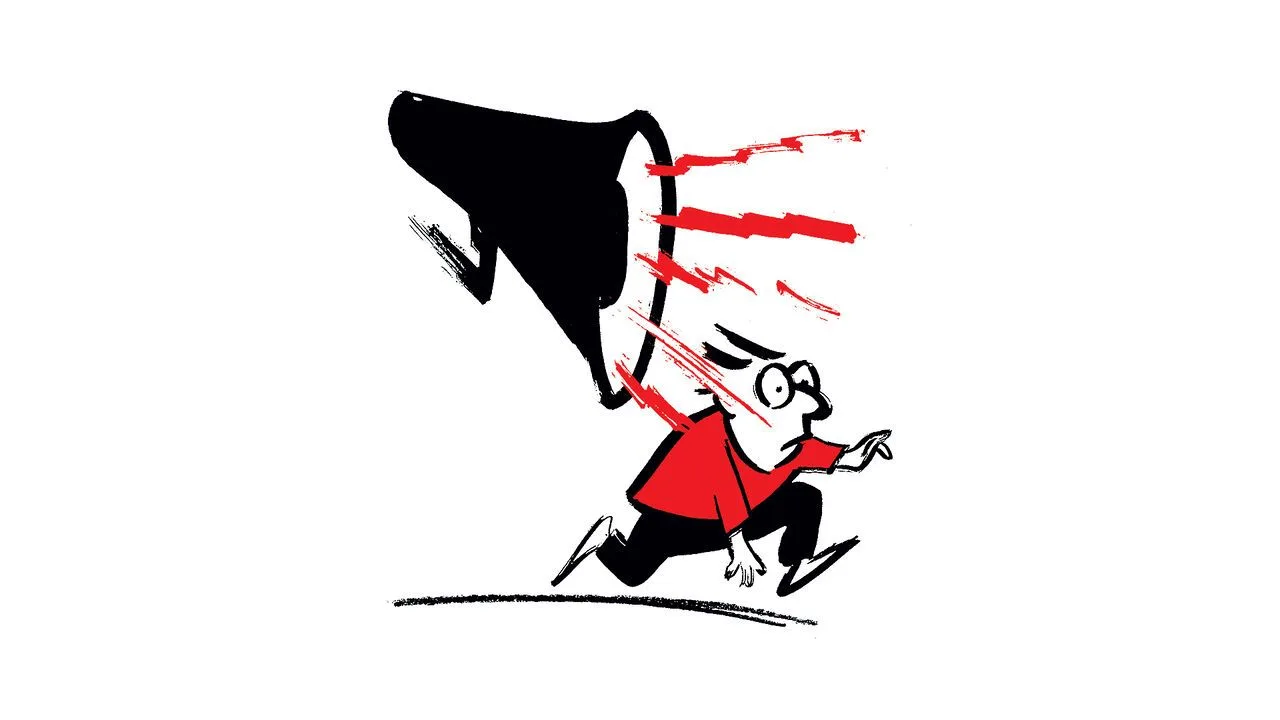
Chaguan (August 15th) accurately described China’s “safety theatre” of visual reminders to stay safe in public places. In China the accompanying soundtrack to these warnings mean that escalator rides blare out messages in Chinese and in English, spoken with a pleasant Chinese-British accent, reminding riders to “please stand firm and hold the hand rail.” At street level, safety officers broadcast pre-recorded messages to use the crosswalk, watch the curb, and be mindful of the elderly and young. Reversing lorries continuously blast qing zhuyi daoche! (Caution, reversing!) This mechanised noise can overwhelm a foreigner in China.
In Beijing this summer I found quiet refuge beside a pond in Chaoyang Park. As I walked alone along the path a motion-activated loudspeaker shattered the quiet with an urgent reminder: stay on the path, do not fall in!
Lee Spitzley
Albany, New York
Fortune teller and stirring opera
“The geomancer’s curse” (August 8th) reported on the use of feng shui by some Chinese officials. It reminded me of a comment by Raymond Smullyan, a late American mathematician, magician and Taoist: “Superstition brings bad luck.”
J.W. Armstrong
Sierra Madre, California
Woody Allen had his own take on Richard Wagner (Letters, August 22nd). In “Manhattan Murder Mystery,” he says “I just can’t listen to any more Wagner, you know, I start to get the urge to conquer Poland.”
Richard Briand
Leek, Staffordshire
KEEP THE CONVERSATION GOING
A good story is worth sharing.
Send this story to someone who values the bigger picture.
See more from GlobeBriefly on Google
Choose us as a preferred source in your Google preferences.