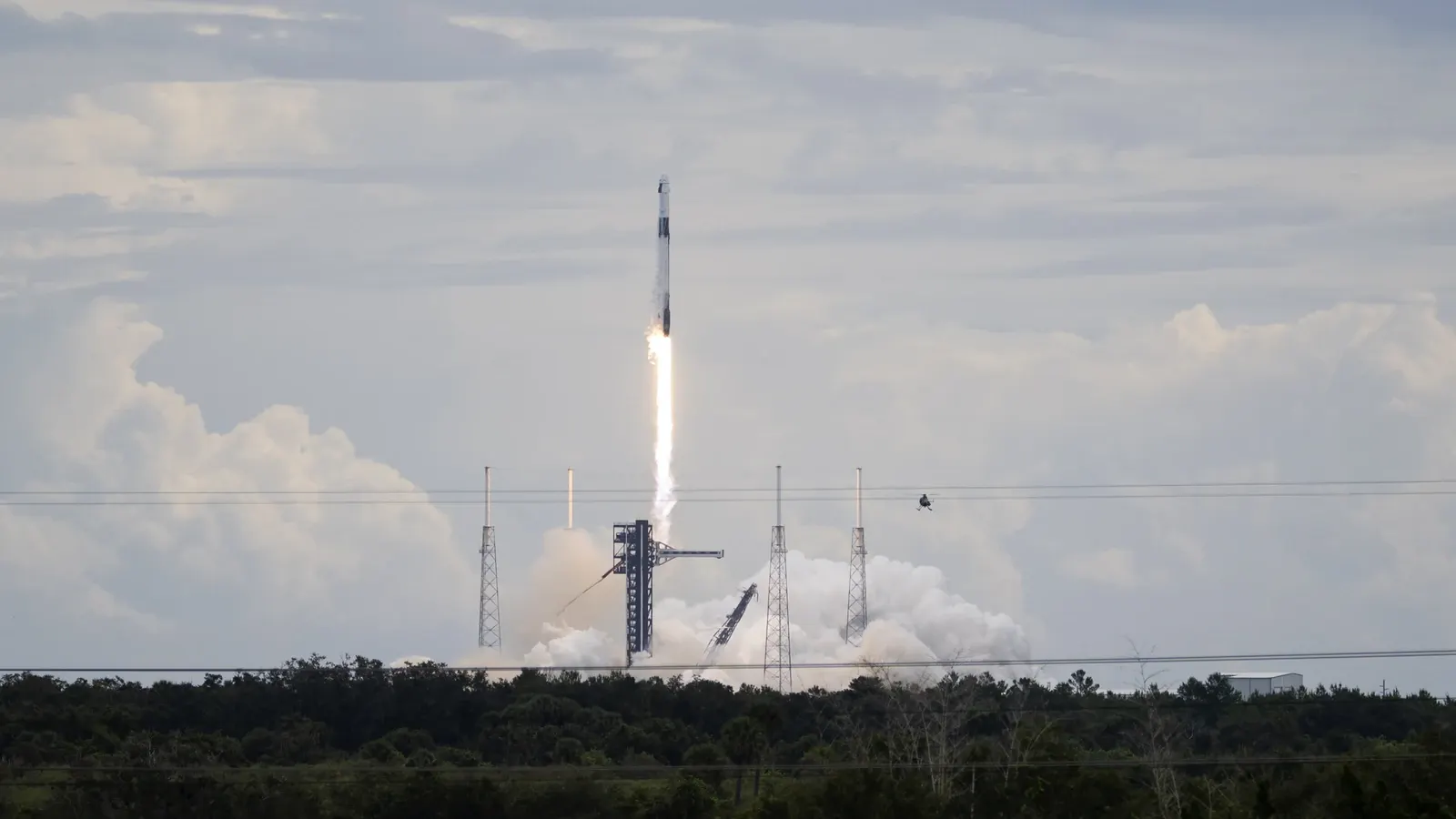
NASA’s SpaceX Crew-13 is aboard the International Space Station after completing a same-day journey from Florida. Dragon docked at 7:05 p.m. EDT on October 1, 2026, seven hours and 55 minutes after launch. NASA describes that as the fastest launch-to-docking by a U.S. spacecraft in the station’s history. NASA’s docking confirmation establishes the completed arrival, rather than an estimated rendezvous time.
The four crew members have since entered the station. Dragon’s hatch opened at 9:19 p.m. EDT, according to NASA’s subsequent crew-entry update. The arrivals are NASA astronauts Jessica Watkins and Luke Delaney, Canadian Space Agency astronaut Joshua Kutryk and Roscosmos cosmonaut Sergey Teteryatnikov.
Crew-13’s confirmed timeline
- Launch: October 1 at 11:10 a.m. EDT, or 15:10 UTC, from Space Launch Complex 40 at Cape Canaveral Space Force Station in Florida.
- Docking: October 1 at 7:05 p.m. EDT, or 23:05 UTC, at the forward port of the station’s Harmony module.
- Hatch opening: October 1 at 9:19 p.m. EDT, or 01:19 UTC on October 2. NASA then confirmed the astronauts had entered the station.
The date changes for UTC readers between docking and hatch opening. NASA’s earlier launch announcement had forecast docking around 7 p.m. and hatch opening around 8:45 p.m. The later station posts supply the actual event times.
What the speed record covers
The seven-hour, 55-minute figure measures launch to docking. NASA’s claim is specifically a U.S. spacecraft record at the ISS; it should not be broadened into an all-spacecraft or all-spaceflight record. Hatch opening and crew entry are separate milestones that followed docking.
What happens next
The incoming team joins Expedition 75. NASA’s launch release says Crew-12 will return to Earth after a brief handover. The official updates checked for this article do not establish a firm Crew-12 return date.
Crew-13’s planned research includes producing stem-cell-derived tissues for disease modeling and pharmaceutical testing, exploring plant-growing systems, studying blood-flow abnormalities in microgravity and testing an inflight diagnostic device. These are research objectives, not announced medical findings.
For subsequent station activity and departure arrangements, follow NASA’s International Space Station updates.
KEEP THE CONVERSATION GOING
A good story is worth sharing.
Send this story to someone who values the bigger picture.
See more from GlobeBriefly on Google
Choose us as a preferred source in your Google preferences.