Audio
Listen to the article
- Ethiopian jets and drones have hit Tigray almost daily since August 20, injuring 13 in Mekelle and destroying a school in the south on August 26.
- No war has been declared — phones and flights to Mekelle still operate — and neither side is pursuing peace talks; the TPLF calls the 2020-22 deal “dead”.
- With air superiority, Addis Ababa can sustain a bombing campaign while the TPLF, weakened by defections and infighting, looks to Eritrea and Sudan’s armed forces for support.
A spate of strikes on Tigray pushes the country into dangerous territory
In Ethiopia’s northernmost province, August should bring Ashenda, the Orthodox Christian festival of family reunions, street parades and concerts. This year public parties were cancelled and private ones muted as a campaign of air strikes returned to Tigray.
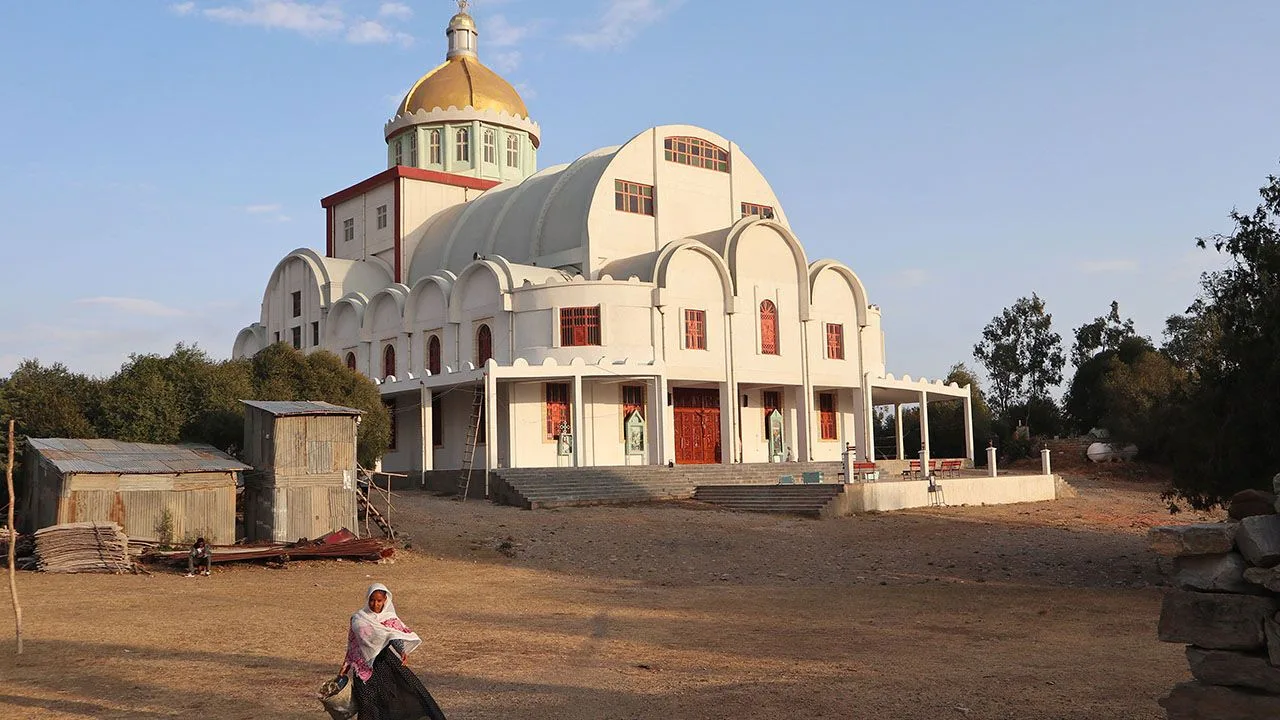
On August 20th the Ethiopian government attacked Mekelle, Tigray’s capital, with fighter jets and drones. The strikes reportedly injured 13 people, including children. From August 24th to August 27th, Tigray was bombed at least once a day. One drone strike in the south on August 26th destroyed a school. “They are trying to terrorise and humiliate the public,” says a senior official in the Tigray People’s Liberation Front (TPLF), Tigray’s ruling party. “The only way out is to fight back.”
A grey zone between peace and war
The escalation has been a long time in the making. Between 2020 and 2022 the Ethiopian government and the TPLF fought a brutal civil war, which is thought to have killed hundreds of thousands of people. The peace deal that ended the fighting failed to resolve the core of the dispute between Abiy Ahmed, Ethiopia’s prime minister, and the TPLF’s leaders, who had dominated Ethiopian politics for decades until Mr Abiy elbowed them aside in 2018. In recent months the Ethiopian army has engaged in several skirmishes with forces loyal to the TPLF. To many observers, a return to civil war has long seemed almost inevitable.
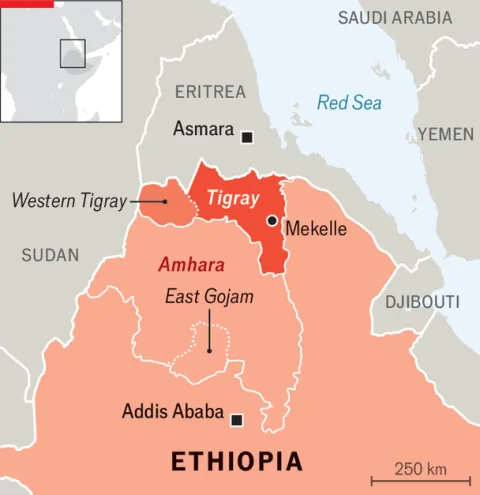
Yet the recent attacks are also puzzling. Unlike during the previous war, the Ethiopian government has not cut off telecommunications in Tigray. Commercial flights between Addis Ababa, Ethiopia’s capital, and Mekelle continue. In 2020 Mr Abiy declared war on the TPLF on national television before sending the tanks in. This time his government has not even commented publicly on the drone strikes. Instead, months of unresolved tensions have quietly given way to what is in effect an undeclared blitz. Tigray is now a grey zone: no longer at peace, if not quite at war.
Why Abiy has not declared war
Part of the reason for the ambiguity may be that Mr Abiy is more cautious this time round. His bellicose rhetoric in 2020, as well as a slew of atrocities committed by Ethiopian troops, tarnished his one-time reputation as a peacemaker. Crucial economic support from the IMF and the World Bank could be imperilled if he were blamed for starting another war.
Fortunately for Mr Abiy, the TPLF has auditioned energetically for the role of perceived aggressor. It has been forcibly conscripting young Tigrayans for months, threatening to “bury” Mr Abiy’s regime.
Shifting alliances around Tigray
Mr Abiy may also be reluctant to rush in because regional alliances have shifted. In the previous war, militias from the Amhara region, to the south of Tigray, and troops from Eritrea (to its north) fought alongside Mr Abiy against the TPLF. Both have since formed an improbable alliance with their erstwhile foe.
Eritrea, in particular, has emerged as Mr Abiy’s chief antagonist. Although Isaias Afwerki, its veteran dictator, loathes the TPLF, he is now more worried about the Ethiopian prime minister’s desire to annex part of his coastline. “The Eritreans are not stupid,” says the TPLF official. “They see the regime in Addis as an existential threat.”
Neither side seems interested in peace talks. The TPLF says the deal that ended the last war is “dead”. Ethiopian state media say the TPLF is “defunct”. On August 24th the TPLF’s chairman half-heartedly met Olusegun Obasanjo, a former president of Nigeria and one of the mediators of the moribund accord. The TPLF said the discussions “produced neither new proposals nor evidence of tangible progress”.
What comes next: an air war and a fight for Western Tigray
Loth to launch a ground war against multiple foes on multiple fronts, Mr Abiy seems likely to focus on Tigray’s skies. The Ethiopian army has near-total air superiority over the TPLF. It has relied heavily on aerial bombardment in its war against rebels in Amhara, where many civilians have died. Last year a drone strike in East Gojam killed 16 people, including an eight-year-old boy. Such incidents have become so common in Amhara that they barely attract media coverage.
The TPLF, for its part, has vowed to reconquer Western Tigray, a swathe of fertile land that was ethnically cleansed by militias allied with Mr Abiy during the previous war. Yet many doubt whether it can, having been weakened by years of infighting. Several political leaders and military commanders have defected to Mr Abiy since the start of 2025. This has doubtless given his government a wealth of intelligence on the TPLF’s military infrastructure and planning. Some observers reckon the relentless drone strikes have left the group in disarray. “They are too weak to respond,” says an analyst in Addis Ababa.
Much will depend on how much support the TPLF gets from Eritrea — an uncertain prospect, given its long history of enmity with Mr Isaias. It may also be hoping for cross-border support from the Sudanese Armed Forces (SAF), Sudan’s national army, which resents Mr Abiy for backing its rival, the Rapid Support Forces, in Sudan’s civil war.
On August 1st the TPLF and the Ethiopian army clashed in Shererina, a pocket of Western Tigray on the border with Sudan. A think-tank with close ties to the Ethiopian government later accused the SAF of aiding the TPLF. Last week the SAF said it had shot down three hostile drones launched from Ethiopian territory. The TPLF’s leaders insist that Eritrea and the SAF are committed to removing Mr Abiy from power. The grey-zone crisis in Tigray may yet paint the region red. ■
KEEP THE CONVERSATION GOING
A good story is worth sharing.
Send this story to someone who values the bigger picture.
See more from GlobeBriefly on Google
Choose us as a preferred source in your Google preferences.