Audio
Listen to the article
Family-run conglomerates make the stock market a tricky place to invest

A record-breaking initial public offering is heading for the stock market. Retail investors are expected to pile in. The company’s prospects depend upon a single influential businessman, trusted by his devotees to come good, but reviled by his detractors.
This is not America and SpaceX but India and Jio, a company that brought hundreds of millions of Indians online and may soon list. It is a thrilling story of the new Indian economy, featuring a tech entrepreneur hoping to get rich and ordinary Indians using the stock market to get a stake in his success. Yet beside all the reasons to celebrate sits one big reason to worry: India’s corporate governance is dismal.
- Jio, which brought hundreds of millions of Indians online, may soon list in a record-breaking IPO expected to draw retail investors.
- Promoters still hold roughly half the equity on the National Stock Exchange, and Jio may list by floating just 2.5% of its shares.
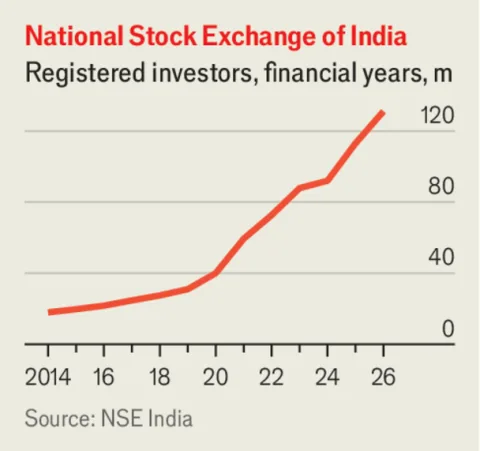
- Retail investors rose from around 40m in 2020 to 130m in 2026, entrusting savings to companies they have little power to influence.
Boardroom drama at Tata, Adani and Reliance
Problems dog India’s family-run conglomerates. The Tata Group, long the gold standard of corporate probity, has been consumed by a boardroom drama. The regulator may force it to list, too.
Gautam Adani, perhaps India’s best-connected infrastructure mogul, has spent years battling allegations that have cast a pall over his business success. Reliance, the parent company of Jio and much else, has an issue with succession. The three children of its boss, Mukesh Ambani, are on the board and in prominent operating roles. Yet the empire still seems to depend on Mr Ambani.
Half the market is still in promoter hands
Family-run conglomerates dominate India’s economy; the three most prominent could be joined by the Godrejs, Mahindras, Birlas and many others. Promoters, who control listed companies, still hold roughly half the equity on the National Stock Exchange; the share of “free-float” is among the lowest globally.
The regulator has changed the rules to let Jio list by floating just 2.5% of its shares. That may help bring giant firms to market, but it raises awkward questions about price discovery, market discipline and shareholders’ rights when only a sliver of a company is available for trading.
130m retail investors face old risks
This matters beyond the wealthy enclaves of South Mumbai. Between 2020 and 2026 the number of Indian retail investors rose from around 40m to 130m. First-time investors are now being asked to entrust their savings to companies whose governance they have little power to influence.
When promoters dominate boards, related-party transactions, opaque group structures and succession decisions can be shaped around family interests rather than the company’s. No wonder many Indians would still rather put their trust in gold.
Governance also matters to Indians who could never dream of opening a brokerage account. Weak governance raises the cost of capital and makes it harder for their country to develop. India wants more foreign money, deeper domestic markets and a broader equity-owning culture, all of which is harder to achieve with dynastic leadership and pliant boards.
The government rightly boasts that India is “the world’s fastest-growing large economy” yet it still struggles to attract foreign capital. The sort of investment that leads to durable growth requires India to be an easy place to do business for all, not just a handful of well-connected families.
What stronger governance would mean
That means independent boards with real authority; tougher scrutiny of related-party transactions; clearer disclosure of group debt, guarantees and cross-holdings; succession plans that allocate responsibility rather than merely anoint heirs; and stronger protection for minority shareholders.
Institutional investors should act more like stewards and less like passive passengers in a soaring market. Investors, whether in India or overseas, should not have to worry about family dramas to buy into India’s growth story.
KEEP THE CONVERSATION GOING
A good story is worth sharing.
Send this story to someone who values the bigger picture.
See more from GlobeBriefly on Google
Choose us as a preferred source in your Google preferences.