Audio
Listen to the article
- Lawmakers from Argentina to Sweden are pushing the age of criminal responsibility downwards, even as young as 10 in Northern Ireland.
- The move is unjust for children who cannot fully grasp consequences, and evidence shows it does not cut crime.
- Rehabilitation that addresses learning difficulties and early social risks prevents reoffending better than prosecution.
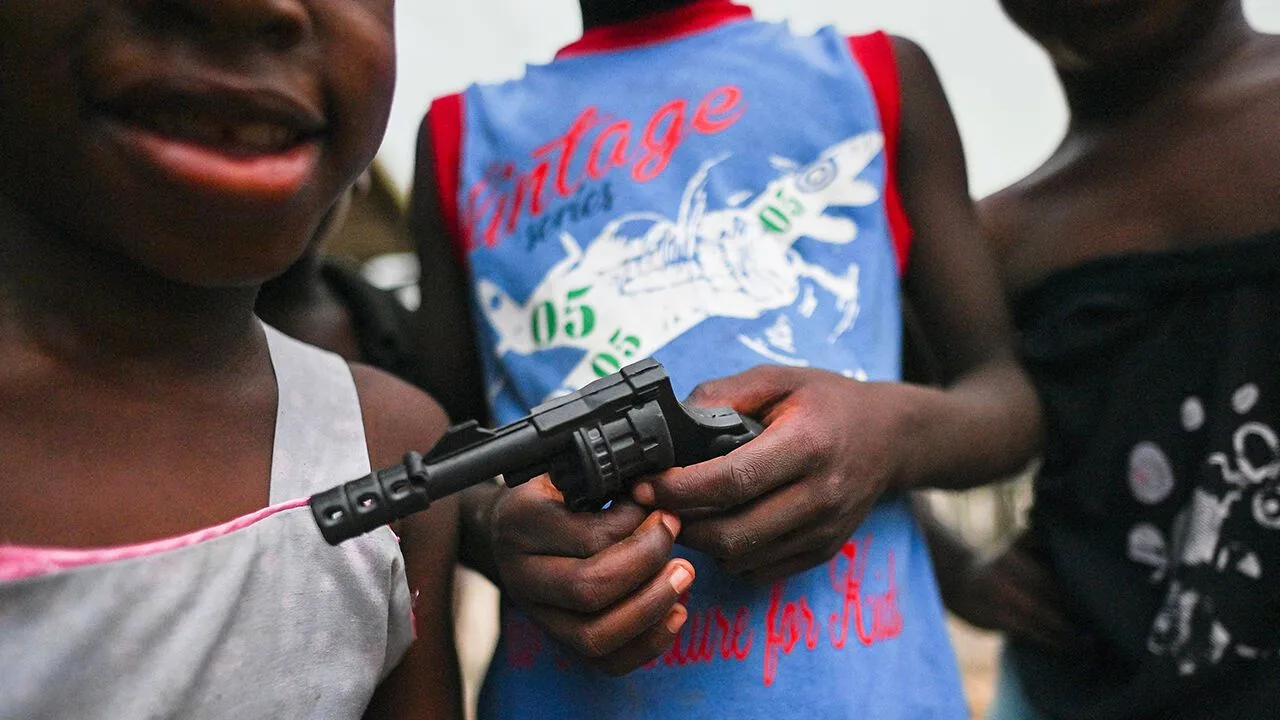
How do you judge whether children are responsible for their actions? Most legal systems agree that the youngest cannot be held criminally responsible even for heinous acts, because they cannot grasp the consequences of what they do. The principle is called doli incapax — incapable of evil — and it rests on the slow development of human character.
doli incapax — a legal doctrine that children below a certain age are deemed incapable of forming criminal intent and therefore cannot be held criminally responsible.
The harder question is how old is old enough. Countries answer it in wildly different ways, and a worrying trend is now emerging: the age is being pushed down.
A global push to lower the age
Lawmakers in many places are pushing the age of criminal responsibility downwards. In February Argentina lowered its age from 16 to 14. Others, from the Maldives to South Korea, may do something similar.
In Sweden, where gangs have been a scourge for many years, the government now plans to reduce the age of responsibility for the most serious crimes. Last month Northern Ireland blocked a motion that would have raised the age from just ten — the joint-lowest in Europe — to 14.
Why politics favours punishment — and why gangs exploit children
Politicians are responding to voters angered by dramatic, well-publicised crimes. Indonesians were horrified when a 12-year-old stabbed her mother 26 times, killing her. In Colombia a 15-year-old boy last year shot and killed a senator campaigning to be president. In Sweden and elsewhere, gangs use children to attack properties or people.
Criminals recruit young foot soldiers because they are cheap and pliable. Children and teenagers often lack the impulse-control and judgment that most adults possess. Neuroscientists suggest the brain keeps developing well into adulthood, perhaps even into the mid-20s, which may help explain why so much crime is committed by the young.
Teens are often enticed into gangs by the promise of quick money. Criminals also calculate that the youngest may dodge punishment if caught. In Britain drug-dealers use children precisely because they are under-age.
Lowering the age is unjust — and it does not work
That logic makes it tempting for authorities to criminalise ever younger people, in the hope of removing the incentive for gangs to recruit them. They should reconsider.
Lowering the age of responsibility is unjust, especially when it involves children younger than the low teens who cannot fully understand consequences. Even if that moral argument is set aside, the practical case fails.
When Denmark lowered the age from 15 to 14 in 2010, crime rates rose. The country reversed course soon after. Britain found that when the age of responsibility drops, gangs just recruit even younger children.
of children released from prison in Queensland, Australia — where ten-year-olds are counted as criminally responsible — go on to reoffend within a year. Prosecuting young children as criminals risks turning them into hardened villains.
Rehabilitation, not punishment, prevents reoffending
A wiser approach is rehabilitation. That will often mean securing young wrongdoers safely away from wider society, but the goal should be to tackle the social, educational and other factors that first drew them into criminality, rather than to punish.
One focus should be developmental needs. In Britain a fifth of children in the youth-justice system have learning difficulties. Another should be early intervention for social problems, for example by providing mentors.
Early warning signs are often visible. In Sweden around half of all children who are investigated for a serious crime were flagged to social services for worrying behaviour before the age of 12.
Nothing will stop all wrongdoing by children. There should be severe criminal penalties for adults who recruit and exploit the young. But the goal for children themselves should be to create better childhoods, with fewer reasons to go into crime, and to prevent criminal children from becoming criminal adults.
This is a Leaders article. The excerpt and audio above reflect the edited version for search and readability; all facts, numbers and attributions are as in the original publication.
KEEP THE CONVERSATION GOING
A good story is worth sharing.
Send this story to someone who values the bigger picture.
See more from GlobeBriefly on Google
Choose us as a preferred source in your Google preferences.