Audio
Listen to the article
Almost every American over forty can recall where they were when news of the September 11 attacks reached them. I was behind the wheel on my commute, with National Public Radio playing. At work, colleagues drifted in disbelief. A few wept. Others clustered in front of monitors. Every screen replayed the same loop: jets striking the towers, small figures who were people hurling themselves into the void, the buildings falling, billows of smoke and wreckage rising.
Little was known at the time. Al-Qaeda was unfamiliar to most people. Several days passed before officials identified Osama bin Laden’s network as responsible. Yet amid that first shock, one conclusion felt obvious: the world had shifted, toward something worse.
Twenty-five years on, the damage is easier to weigh. The attacks marked the beginning of the end of American global primacy, plunging the country into permanent fear and emergency — and helping to hollow out its democracy.
- Al-Qaeda was never an existential threat to the United States. The overreaction was the wound.
- Afghanistan, Iraq, the PATRIOT Act and torture outlasted the emergency that produced them.
- Emergency powers and a culture of fear left the country primed for an authoritarian president — and for January 6.
The 9/11 strikes in themselves, and al-Qaeda more broadly, were never a mortal danger to the United States. The world’s wealthiest nation absorbed the financial shock, and absorbed it easily. Judged by cold actuarial logic, in a population so vast that 15,000 to 20,000 homicides occur in a routine year, the 3,000 lives lost on September 11 — grievous as they were — were never going to disable the nation. What disabled us was our foreseeable overreaction.
The response that became permanent
Less than a month after 9/11, President George W. Bush ordered the invasion of Afghanistan, opening a 20-year war that claimed more than 6,000 American service members and contractors before ending in disgrace. A month and a half after the attacks, Congress passed the USA PATRIOT Act, authorising a widening of state surveillance and detention powers that had until then been unimaginable. Within half a year, Mr Bush endorsed an order declaring the Geneva Conventions out of scope in the fight against al-Qaeda. Twelve months later, America also went to war in Iraq, on the false claims that its ruler, Saddam Hussein, held weapons of mass destruction and had links to al-Qaeda. More than 8,000 American soldiers and contractors would die in that conflict.
Lives lost on 9/11
US troops and contractors killed in Afghanistan
US troops and contractors killed in Iraq
Before 2004 closed, the outpouring of international sympathy the United States had received after 9/11 had vanished. In part, the corpses had accumulated: besides the thousands of American and allied troops killed in Iraq, Afghanistan and other remote theatres of the global war on terror, hundreds of thousands of Afghans and Iraqis had died. By presiding over the open-ended imprisonment of terror suspects and the use of torture, the Bush administration had also forfeited any claim to moral authority: once seen, photographs of unclothed Iraqi detainees stacked as human pyramids could not easily be forgotten.
Yet the self-wounding persisted after Mr Bush left office. President Barack Obama reversed several of the Bush administration’s worst abuses, torture among them, but the “forever war” refused to end. Mr Obama conceded that swatting terrorists like whack-a-mole offered no durable answer, yet he appeared unable to quit; he widened drone strikes and other assassinations aimed at suspected militants around the world. Much like the Bush administration’s torture practices, the assassination programme — sustained under Donald Trump and Joe Biden — conspicuously lacked substantive legal process. The presidency claimed the authority to kill anyone, anywhere, at any time, on secret evidence it refused to reveal, appointing itself judge, jury and executioner.
Emergency powers that outlived the emergency
Domestically, the 9/11 attacks echoed as well. The 2001 PATRIOT Act merely opened the sequence: surveillance and confinement powers kept growing, while battlefield surveillance tools later migrated to federal, state and municipal policing. Judicial principles forged around national-security matters progressively seeped into everyday civil and criminal litigation. And while a passive Congress surrendered steadily greater control to the presidency, the “emergency” capacities bestowed after 9/11 became lasting.
A country organised around fear
Equally corrosive was the way America became a society organised around dread and reciprocal distrust. Shaken out of its sense of invulnerability, it turned on itself. Islamophobia and xenophobia climbed. Conspiracy narratives multiplied: the assaults had been staged from within, or were an Israeli scheme, or were orchestrated by Wall Street magnates enriched through insider deals. Partisan division deepened too. By 2014, more than a quarter of Democrats and a third of Republicans regarded the opposing party as a “threat to the nation’s well-being”. Extreme-right and white-nationalist movements picked up momentum.
Naturally, 9/11 alone did not produce America’s democratic deterioration, but it fostered the juridical, political and psychological conditions that quickened it. By 2015, when a New York reality-television star launched his ascent, the country stood primed for autocratic capture from within. Enfeebled by domestic rifts, accustomed to presidential excess and to breaches of due-process standards, how could American democracy withstand an authoritarian occupant of the White House?
When a brutal right-wing crowd invaded the Capitol on January 6th 2021, the reality became unmistakable: the most serious peril to American self-government was no longer a savage and murderous circle of Islamist radicals. It was fellow Americans, incited by an autocratic president into whose hands vast authority had been placed.
In 1776, the American colonists rose against what they saw as capricious and despotic rule by the British crown. Nearing America’s 250th birthday, one can hardly avoid picturing Mad King George staring toward Donald Trump’s America — and laughing. ■
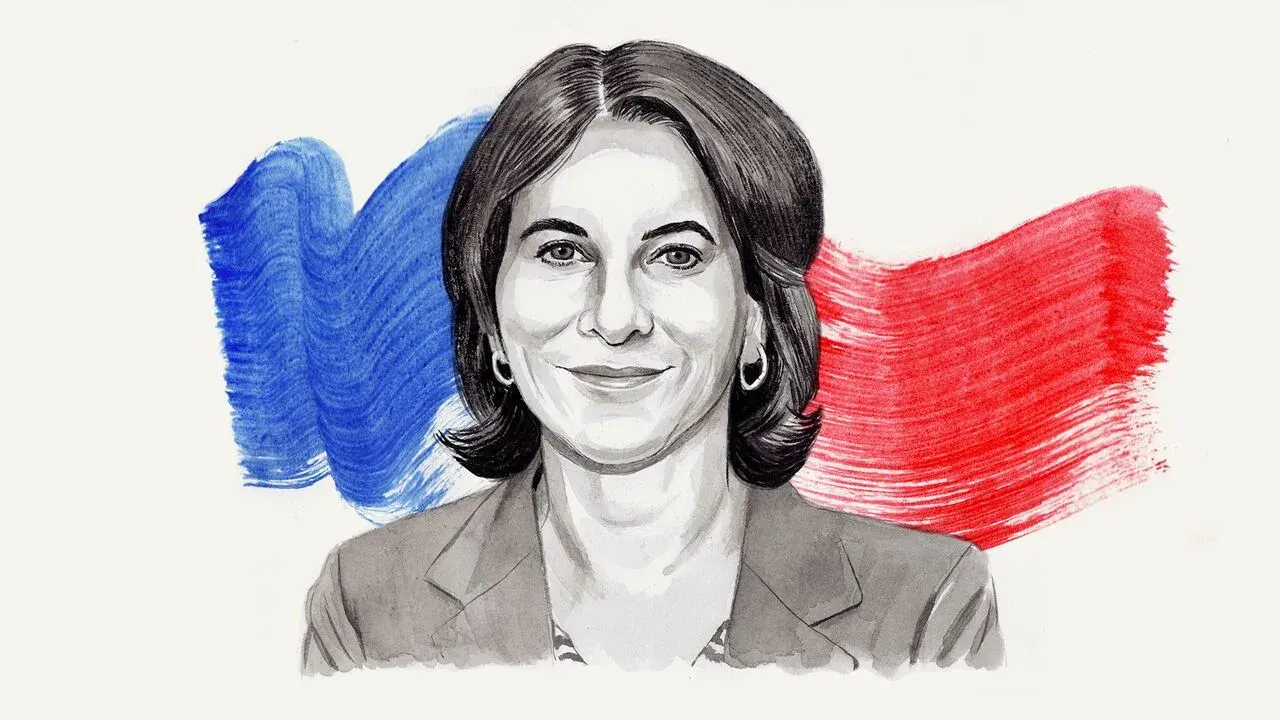
Rosa Brooks is the Scott K. Ginsburg chair in law and policy at Georgetown University.
KEEP THE CONVERSATION GOING
A good story is worth sharing.
Send this story to someone who values the bigger picture.
See more from GlobeBriefly on Google
Choose us as a preferred source in your Google preferences.