Audio
Listen to the article
- On August 19th Treasury Secretary Scott Bessent expanded buy-backs of long-dated Treasury debt, citing liquidity in a market that already looked liquid.
- That day total U.S. public debt surpassed $40trn — more than 120% of GDP — and the Treasury is reportedly considering using its $1trn general account to fund more purchases.
- Lifting bond prices to lower yields may help mortgages before the midterms, but risks weakening the dollar, stoking inflation and demanding a political-risk premium from investors.
Treasury Secretary Scott Bessent’s surprise expansion of long-dated Treasury bond buy-backs aims to lift bond prices and lower yields that set mortgage costs. With U.S. debt above $40trn, the political fix threatens America’s financial credibility — and more meddling is likely while debt stays high.
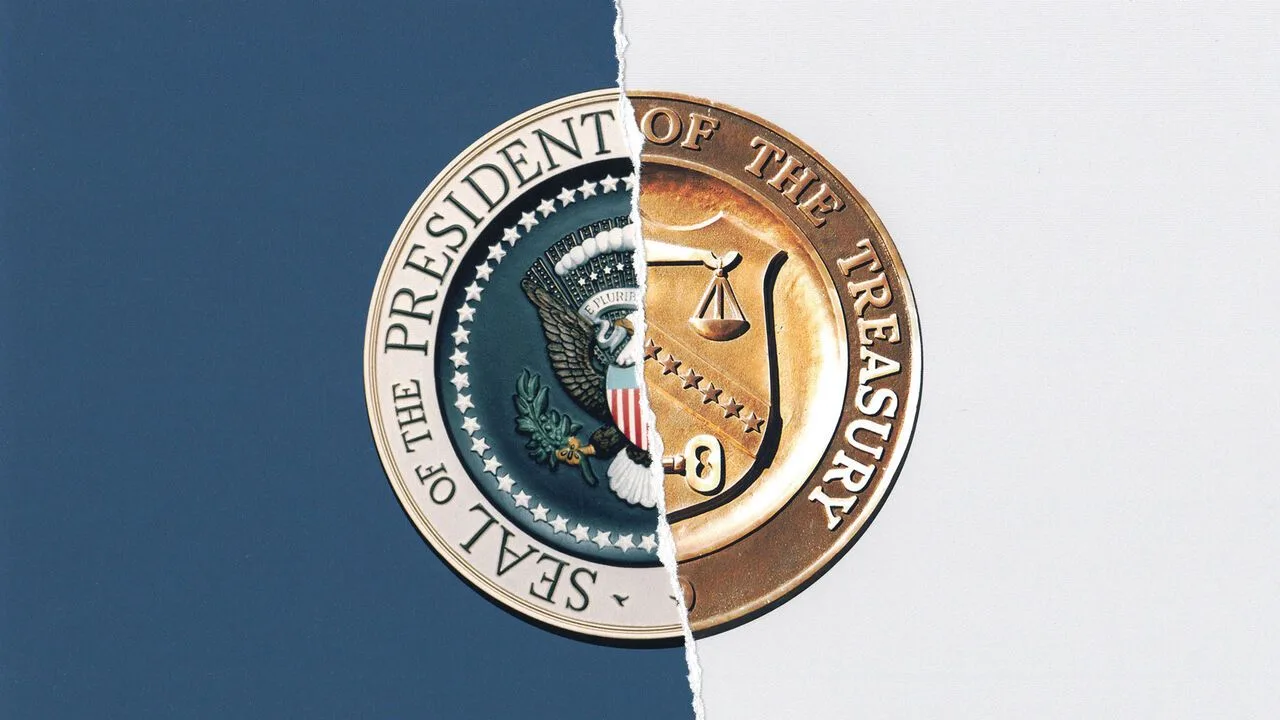
The soundtrack to Donald Trump’s second term has been the grinding of norms giving way. On economic policy alone, the president has wielded tariffs to seize Congress’s taxing authority and has waged a relentless campaign against the Federal Reserve’s independence, accusing it of holding interest rates too high. Eighteen months into the administration, it is tempting to turn down the volume. Yet this latest breach of convention deserves to reverberate.
Bessent’s surprise: expanding buy-backs of long-dated Treasuries
On August 19th Scott Bessent unexpectedly declared that the government would expand its buy-backs of long-dated debt. The official rationale — to ensure liquidity in a market for long-term Treasury bonds that already looked perfectly liquid — never rang true.
From the outset, the real motive appeared to be pleasing Mr Trump by lifting bond prices and thereby lowering yields, which set the cost of American mortgages. With midterm elections approaching and voters seemingly ready to punish the president’s Republican Party for stubbornly high prices, this also looks like the politicisation of the world’s most important asset market. Worse, Mr Bessent may not be done.
Yields are rising as debt mounts — over $40trn
Bond yields have been drifting upward lately, and not only in America. The causes are hardly mysterious. Inflation remains sticky, budget deficits are widening, and government debts are mounting.
On the day Mr Bessent waded into the market, America’s total public debt surpassed $40trn, equivalent to more than 120% of GDP. When the rich world’s central bankers gather in Jackson Hole on August 27th for their annual retreat, they will have much to commiserate about.
Total U.S. public debt
Debt to GDP
Treasury general account cash eyed for buy-backs
A political fix instead of deficit reduction
If Mr Bessent were serious about lowering yields, he would start by defusing this debt bomb, as he and Mr Trump have repeatedly vowed to do. Instead, his department is reportedly considering using cash from its $1trn general checking account to finance more buy-backs.
When asked about Mr Bessent’s interventions, Mr Trump suggested, apparently half in jest, unleashing American troops on the bond vigilantes.
The market risks: credibility, a weaker dollar and inflation
Traders need not fear SEAL Team Six. But Mr Bessent’s foray into the Treasury market does risk damaging America’s financial credibility, even if it keeps yields a touch lower for a while — as it seems to be doing.
Many investors are already on edge. After the surprise buy-back, the dollar weakened, and assets that rally on worries about the global reserve currency’s “debasement” — gold and bitcoin among them — surged.
A cocktail of lower yields and a weaker dollar would stoke inflation, unless the Fed moves against Mr Bessent — and infuriates Mr Trump — by raising short-term rates. And the secretary’s purchases could backfire if the market starts demanding extra compensation for holding an asset whose price is seen as reflecting political whim as much as economic reality.
Why more meddling is likely while debt stays high
Regrettably, in Mr Trump’s America and beyond, politicians and their voters have little appetite for the tax increases and spending cuts that would begin to balance budgets. Mr Bessent’s stop-gaps look more attractive.
Even if his bond purchases do not ultimately prevent yields from rising, they may suffice to kick the debt can a little further down the road, into the lap of the next administration.
Every one-hundredth of a percentage point of yield suppression is a subsidy to procrastination.
Stanley Druckenmiller, in the Wall Street Journal, on his former protégé Scott Bessent
The past is still the same country: post-war financial repression
The last time America managed to chip away at unsustainable debt, in the decades after the second world war, it also meddled even as it tightened its belt. The government held yields down first through an explicit ceiling, then with subtler forms of financial repression such as Regulation Q, which capped the interest banks could pay depositors. Meanwhile, bursts of inflation eroded the real value of government debt.
Mr Bessent knows his economic history well; for several years he taught a course on it at Yale University. He surely understands that, sooner or later, the past will catch up with him. ■
KEEP THE CONVERSATION GOING
A good story is worth sharing.
Send this story to someone who values the bigger picture.
See more from GlobeBriefly on Google
Choose us as a preferred source in your Google preferences.