Audio
Listen to the article
Jackson Hole, Wyoming
- Fed Chair Kevin Warsh used the Kansas City Fed’s August 27th-29th Jackson Hole gathering to deliver hawkish guidance on inflation, lifting near-term rate-hike odds while longer-term yields kept climbing.
- Record public debt and higher borrowing costs threaten sovereign bonds as havens and revive pressure on central banks to fund the state.
- Artificial intelligence is framed as “macro woke 2.0” — inflationary via data-centre spending and a near-term risk to financial stability through opaque algorithmic trading.
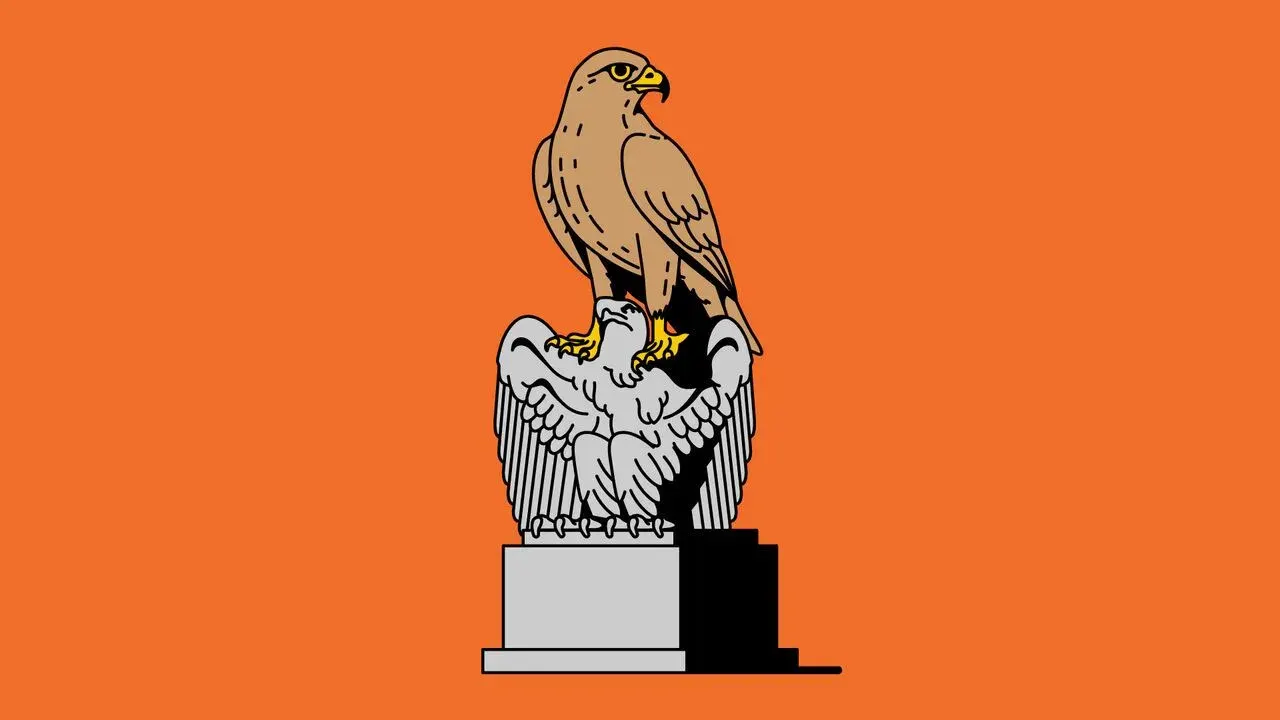
Bulls, bears, doves, hawks: the full menagerie of macro fauna roams the mountains, meadows and cattle country around Jackson Hole, Wyoming. At the Kansas City Federal Reserve’s yearly gathering of central bankers on August 27th-29th your columnist glimpsed a black bear and picked up the basics of lassoing cattle — roping a bull, apparently, comes down to judging the moment to release. Conversation in town centred on a hawk: Kevin Warsh.
Warsh’s hawkish turn buys breathing space after a shaky start
Kevin Warsh, the relatively new Fed chair, travelled to the Grand Tetons following an awkward opening chapter. Investors had been perplexed by his cryptic and at times inconsistent briefings. Doubts persisted over whether he possessed the spine to stand up to Donald Trump.
Seven days before the gathering, Scott Bessent, the treasury secretary, had intervened in America’s bond market, an episode with the scent of pre-midterm manoeuvring. For all that intervention, yields kept climbing.
Luckily for Mr Warsh, modest expectations carry the benefit of being easier to surpass. Judged on that basis, the hawk took flight. Having restated his aversion to narrating policy for markets, Mr Warsh proceeded to do precisely that. He assessed inflation (worrying) and unemployment (less so): exactly the kind of “reaction function” he had renounced, and a hawkish variant at that.
He stressed the Fed’s preferred inflation measure rather than quirky substitutes. Veterans detected the fingerprints of long-serving staff. The tough rhetoric partly succeeded. That day traders raised the probability of a rate hike but, encouragingly, longer-term yields did not climb further. Even so, stern words have limits: the next week yields continued their ascent.
Markets price a September move as credibility debate lingers
Did Mr Warsh now corner himself? Attendees in Jackson Hole divided. One camp argued that after such resolute guidance he must lift interest rates. Otherwise, doubts over his credibility and political autonomy would intensify.
The other camp observed that even a pre-Warsh Fed would hesitate over dramatic action this near an election. Moreover, tightening in September rather than December carries scant macroeconomic significance. Markets currently assign a September hike odds a shade above fifty-fifty.
Whatever room for manoeuvre Mr Warsh secured owed much to a return to first principles of central banking. The conference’s formal agenda, though, looked ahead: “Financial Innovation: Implications for Payments and Policy”.
Debt, bonds and fiscal pressure dominate the agenda
Speakers weighed whether stablecoins and tokenised deposits could transform market infrastructure. Darrell Duffie of Stanford University argued that programmable money might improve coordination of intricate multi-stage deals. It might perhaps ease cross-border payments. Wenxin Du of Harvard Business School replied that orthodox financial technology could achieve the same outcome, frequently with greater simplicity and lower cost.
Kenneth Rogoff, also of Harvard, captured a broad mood by brushing aside stablecoins — an arid subject, even for central bankers — to dwell on bond yields and debt. Echoing Alexandria Ocasio-Cortez, a left-wing figurehead who lately labelled the early-2020s social-justice wave of “woke 1.0” as “crazy”, Mr Rogoff condemned “macro woke 1.0”: claims from that period that borrowing costs would remain low, thereby excusing heavier public borrowing.
He also took shots at former foes: “I wish I was as sure of anything as Paul Krugman is about everything.”
Today borrowing costs have risen while public debt stands at record peaks: a grim mix, above all for monetary policymakers. One danger is sovereign bonds ceasing to function as a haven. In a paper, Eswar Prasad of Cornell University observed that the “convenience yield” investors once sacrificed for safety has disappeared. Even so, his research concluded, the dollar stays robust and monetary novelties such as bond markets innovations like stablecoins could reinforce that supremacy.
Any lift to American assets from stablecoin-driven buying would be overshadowed by a second hazard of heavy indebtedness: debt tempting elected leaders to interfere with central banks. Mr Rogoff illustrated the concern via Elizabeth Warren, another left-wing emblem (whose more radical advisers “make her look like Ronald Reagan”). Yet the challenge runs deeper. With large liabilities, pressing central banks into funding the state grows tempting. Left unspoken was that the sharper dangers now, illustrated by Mr Bessent’s actions, emanate from Ms Warren’s political opponents rather than her allies.
AI as ‘macro woke 2.0’ and a near-term threat to stability
If “macro woke 1.0” lies dead, how about “macro woke 2.0”? That, Mr Rogoff proposed, could be faith that artificial intelligence cures economic ills. Mr Warsh had sounded thoroughly AI-enthusiastic when campaigning to lead the Fed; speaking in Wyoming, markedly less so. His comments on AI came largely as open questions, and he suggested the technology’s near-term impact would likely prove inflationary by turbocharging data-centre spending.
AI brings nearer-term perils as well. Markus Brunnermeier of Princeton University unveiled research contending that sophisticated AI may strike markets soon, threatening financial stability. Algorithmic traders enjoy “asymmetric understanding”, he maintained: they comprehend humans completely yet remain utterly opaque themselves.
From that premise Mr Brunnermeier drew bold proposals: trading venues reserved for humans and barred to AI, plus randomised central-bank moves that AIs cannot gain an advantage by forecasting. Those ideas proved divisive. Raghuram Rajan of the University of Chicago noted markets already teem with humans driven by contradictory, frequently hidden motives; AI might actually assist people in decoding AI. And markets themselves already resemble something of an alien superintelligence.
A forbidding path to the 50th Jackson Hole
Next year marks the 50th edition of the Jackson Hole symposium. Bears and hawks will still populate the Tetons. Plenty of familiar human participants will return as well: central banking hardly suffers rapid personnel churn. Fiscal strains and AI dangers will endure, and likely deepen.
Should Mr Warsh sustain his fresh persona as an orthodox central banker, he might at least command greater authority to chart a mountain passage through them. ■
KEEP THE CONVERSATION GOING
A good story is worth sharing.
Send this story to someone who values the bigger picture.
See more from GlobeBriefly on Google
Choose us as a preferred source in your Google preferences.