Audio
Listen to the article
- Mykhailo Drapaty, 43, was appointed commander-in-chief of Ukraine’s armed forces on July 21st, replacing Oleksandr Syrsky.
- His reputation rests on front-line actions in 2014 at Mariupol and along the Russian border, and later on reforms to shift command from a culture of fear to a culture of responsibility.
- The change follows a clash between Syrsky and defence minister Mykhailo Fedorov, protests after Fedorov was sacked on July 15th, and unresolved tensions over drones, conventional forces and manpower.
Famous commanders from George Patton, who paraded in cavalry boots with twin ivory-gripped revolvers, to the austere Bernard Montgomery understood that soldiers’ morale rests heavily on the persona their chief displays. Few have assumed command with the mythic standing of Mykhailo Drapaty, appointed commander-in-chief of Ukraine’s armed forces on July 21st, replacing Oleksandr Syrsky.
His arrival has fuelled expectations of renewal in Ukraine’s military machine. Since Russia’s full-scale invasion in 2022 the forces have shown surprising ingenuity and flexibility, yet they have never fully discarded the suffocating inflexibility inherited from Soviet-era hierarchies.
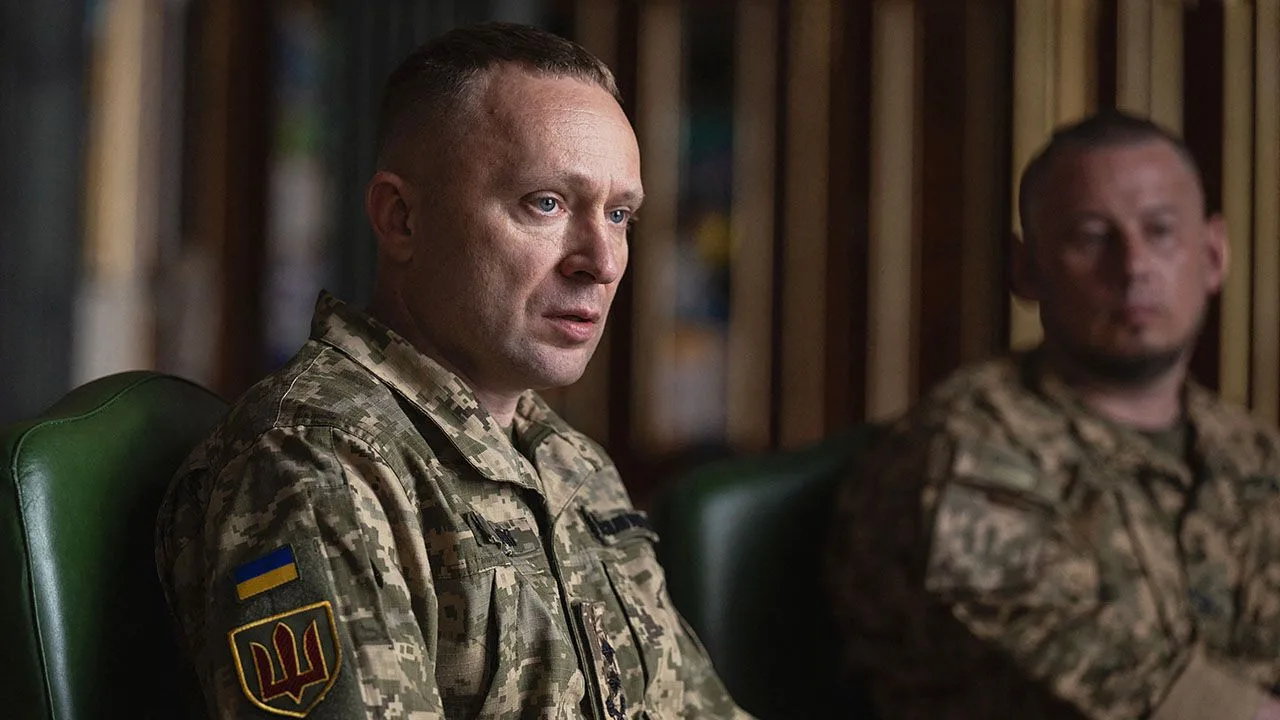
Who is Mykhailo Drapaty: Ukraine’s new armed forces chief
General Drapaty, aged 43, first became celebrated as a young major in 2014 when separatists backed by Russia attempted to capture Mariupol, a city on the south-east coast. At the head of a column of four armoured vehicles and directing from the front, he crashed through insurgent roadblocks and entered the city.
Later that year he guided his battalion in a thrust along the Russian border intended to isolate separatist fighters. His unit, together with others, drew fire from Russian troops and became surrounded. After a sister battalion capitulated, he brought some 260 troops back to Ukrainian lines.
A reformer promising to replace Soviet-style command
His standing is built on compassion as well as courage. In late 2024 he became commander of the ground forces, a post centred on training and preparing troops rather than leading them in battle. His opening directives sought to better their conditions, overhaul recruitment and introduce technology to reduce losses.
He also tried to install a Western style of command, giving subordinates more authority.
The command is gradually shifting from a culture of fear to a culture of responsibility. For the first time, the initiative from below has ceased to be a threat, and has begun to become a resource.
Mykhailo Drapaty · Facebook post
While delegating greater authority, he applied the same benchmark to himself. In 2025, after a Russian missile killed 12 soldiers on a training base, he resigned, saying he should be held accountable.
He was afterwards assigned to a position more directly involved in planning combat operations, where he earned the admiration of subordinate brigade commanders for listening to them and offering support.
He is a critic of Soviet-style thinking and micromanagement
Rob Lee, expert on the Ukraine war
Why Oleksandr Syrsky was replaced
That style marked a sharp break from General Syrsky, who was dismissed by Volodymyr Zelensky, Ukraine’s president, amid big protests calling for him to go. General Syrsky had been unfairly labelled “the butcher”, partly because of the losses suffered during his dogged defence of the city of Bakhmut in 2023.
Many commentators frame the contrast between Generals Drapaty and Syrsky as a generational struggle between a young tech-savvy drone enthusiast and a Soviet-style traditionalist. That framing misses the main points of difference between the two.
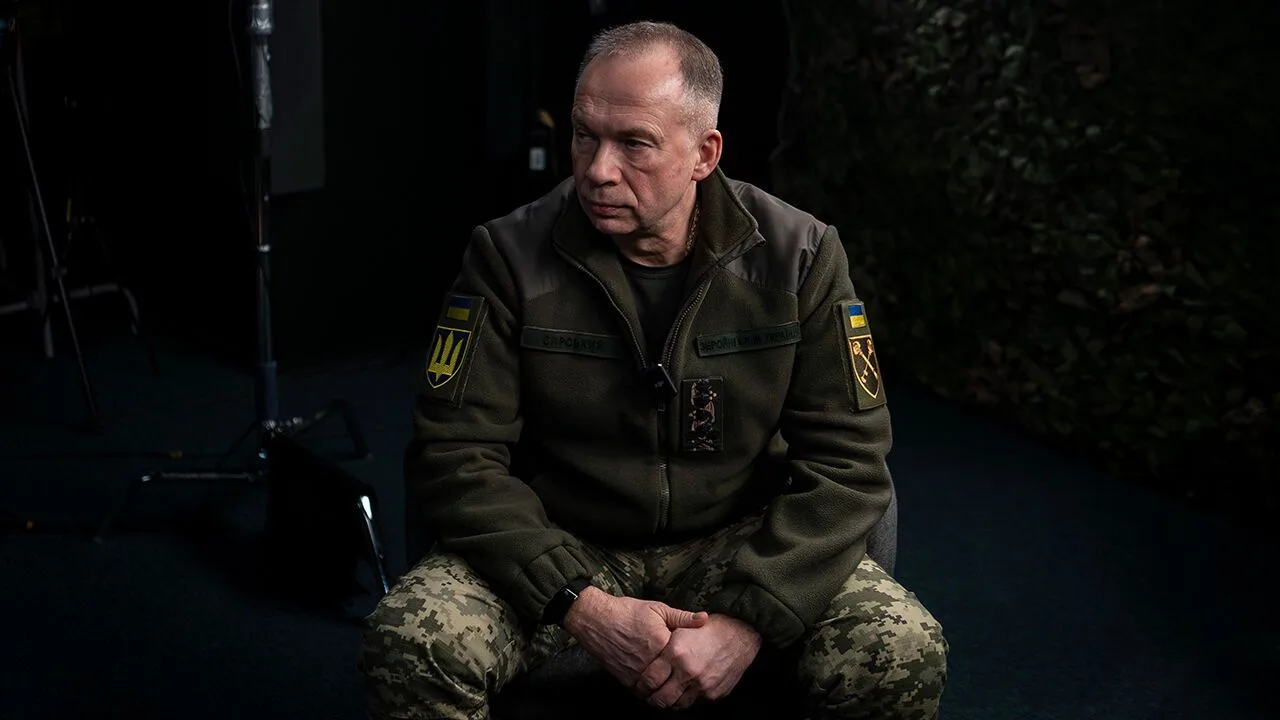
The Syrsky legacy: drones, tanks and tactical skill
General Syrsky presided over the broad uptake of drones across the Ukrainian armed forces and the tactic of employing medium-range drones to isolate Crimea and long-range drones to hit oil installations deep in Russia. Yet he likewise recognised the merit of channelling resources into more conventional equipment, such as tanks and artillery, since these are required to blunt and break up attacks that would overwhelm defenders armed only with drones.
He is additionally regarded as a gifted tactical commander, who skilfully led the defence of Kyiv in 2022 and an offensive into Russian territory near Kursk two years later.
Strategic doubts and the battle for resources
The larger doubts over General Syrsky’s leadership concern what some viewed as strategic blunders as well as favouritism in the allocation of reinforcements and other resources. Western officers involved in the planning of Ukraine’s big summer offensive in 2023 accused him of diverting troops to Bakhmut instead of concentrating forces for an attack in the south. Allies of the general counter that he was tying down Russian troops and that, if there was any misallocation of forces, blame should fall on Valery Zaluzhny, who was the chief commander at the time.
Syrsky took several of Ukraine’s best units and deployed them as a split formation across opposite ends of the front
Jack Watling, Royal United Services Institute, London
General Syrsky also acquired a name for micromanagement and a refusal to fully accept the authority of the defence minister, Mykhailo Fedorov, another young moderniser. When Mr Fedorov tried to consolidate weak and poorly led units, General Syrsky formed new brigades, diluting already-scarce manpower.
Clash with defence minister Mykhailo Fedorov and political fallout
After clashing with General Syrsky and failing to oust him, Mr Fedorov was sacked on July 15th by Mr Zelensky. The decision provoked the protests demanding General Syrsky’s departure — and Mr Fedorov’s return.
Mr Zelensky has reportedly offered Mr Fedorov a new job, though it is unclear whether he will take it. The dispute has altered his relationship with Mr Zelensky, which was once trusting and loyal. The outcry over Mr Fedorov’s sacking and its chaotic aftermath has hurt the president’s authority.
The demonstrations included soldiers such as Andriy Syry, aged 27, who lost his foot in a drone strike. He attached a banner to his crutch reading: “I can’t stand up but I won’t shut up.”
Whatever the talents of the new commander-in-chief, the problems he faces have no easy fix.
To stay on top of the biggest European stories, sign up to Café Europa, our weekly subscriber-only newsletter.
KEEP THE CONVERSATION GOING
A good story is worth sharing.
Send this story to someone who values the bigger picture.
See more from GlobeBriefly on Google
Choose us as a preferred source in your Google preferences.