Audio
Listen to the article
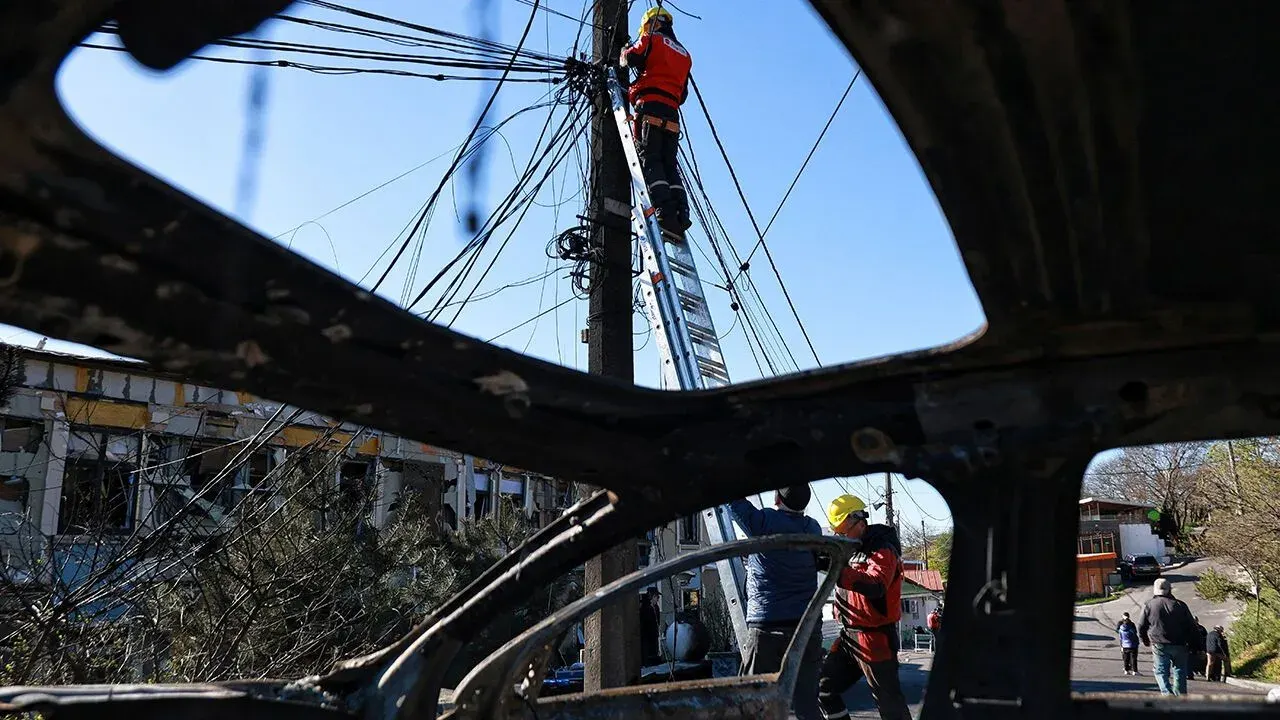
Sunlight falls hard on a utility repair team in Bereznyaky, a district of Soviet-era prefabricated housing on Kyiv’s east bank. Making the power network winter-ready is painstaking labour, unearthing hundreds of metres of old Soviet cable and substituting heavier-duty lines capable of absorbing an emergency load. Yet foreman Roman Kravchenko refuses shortcuts; he remembers collapse firsthand. The previous winter, after Russian missiles wrecked the neighbourhood heating plant, residents turned to electric heaters that overloaded and burned through the system. Heat and electricity vanished from hundreds of apartment blocks for weeks. At one moment, furious locals surrounded Mr Kravchenko’s men. “They said they wouldn’t let us go until there was light,” he recalls.
- Half of Ukraine’s winter hardening tasks are already finished, and the country heads into the cold with 14bn cubic metres of gas in reserve.
- Russia is producing roughly 100 ballistic missiles a month while Ukraine’s interceptor stocks fall; Kyiv is seeking 300 more Patriot missiles.
- Russia’s new jet-powered drones fly at up to 600km/h, and only about 30% were shot down in recent attacks.
- 2,500 of the capital’s 15,000 buildings have no back-up heat source.
A record push to fortify the grid
Encouragingly for Mr Kravchenko, Ukrainian readiness has never been stronger. A record push to fortify the grid is ahead of plan, with half the tasks already finished. The nation should head into cold weather holding spare generating capacity, 14bn cubic metres of gas reserves, stronger physical defences at critical grid junctions, and fresh private air-defence firms to assist the strained air force. The difficulty is that Russia’s menace has advanced even quicker. Ukraine’s deficit of interceptors against ballistic missile strikes creates one weak spot. Another is Russia’s new jet-propelled drones, which have terrified Ukraine during the past week.
Even before the prior winter ended, Ukraine’s security council vowed against a repeat. Starting in April, authorities and power firms began carrying out a resilience blueprint. It concentrates on four goals: sufficient local generation to sustain essential services in every large city; physical shielding of vital components; dispersed heating; and dispersed electricity supply. Backup water reserves fall under a separate scheme. The approach is bearing fruit, helped in part by improved stewardship from the new energy minister, Denys Shmyhal, a former prime minister.
“By December we will have done three times more than in any year before,” says Oleksandr Kharchenko, an energy expert. The State Restoration Agency has operated with striking agility. Its contribution counts above all in Kyiv, where municipal officials had trailed counterparts in places like Kharkiv.
110-kilovolt transformer — equipment that steps current down from high-tension lines to the voltage used in households and local networks.
Until this year none of the capital’s 110-kilovolt transformers had been protected. Labouring around the clock, the agency has now screened two dozen of them with netting and concrete reinforcements, while also fortifying power plants. Serhiy Sukhomlyn, its director, says the new defences should withstand anything short of a direct missile hit.
Russian ballistic missiles a month
Jet drones shot down in recent attacks
Patriot missiles Ukraine is seeking
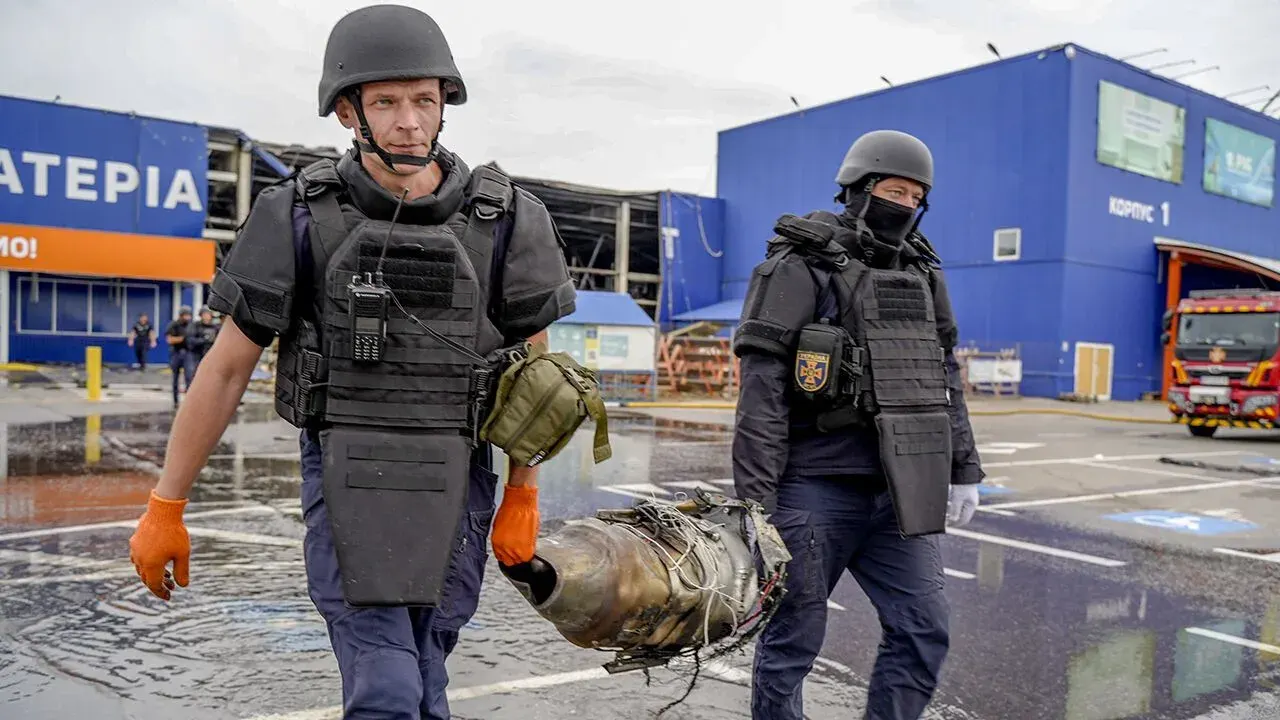
Russia’s growing missile and drone advantage
Ballistic missiles outpace interceptors
Conditions in the sky look far bleaker. Russia has raised ballistic missile output—now roughly 100 a month—precisely as interceptor stocks have dropped. Ukraine is seeking a further 300 Patriot missiles from partners for this winter, but there is no guarantee. Efforts to manufacture domestic ballistic interceptors are unlikely to deliver for years. Ukraine hopes to dull the danger by striking launchers and production facilities inside Russia, and has had some success. Yet Russia’s campaign this year will almost certainly be more destructive than last. “Strikes have set monthly records for the last four months,” says Maxim Timchenko, CEO of DTEK, the company that runs Kyiv’s grid. The capital’s huge thermal power stations are too large to protect fully. “A concentrated ballistic strike can destroy any one of our power plants.”
Jet-powered drones outrun Ukraine’s defences
Then come the jet-powered drones, fired by the hundreds in recent attacks. Ukraine had largely blunted propeller-driven Shahed-type kamikaze drones, shooting down more than nine of every incoming ten. The new pilot-guided jet models fly much quicker, at up to 600km/h rather than 200km/h. The shift was long expected, but Ukraine has not yet deployed a cost-effective countermeasure. It is testing several new interceptors; most resemble miniature missiles. For now, the only effective defence comes from expensive fighter jets, shoulder-mounted air-defence missiles or automated anti-aircraft guns at key targets. A source in Ukraine’s air defence command says that in recent attacks that combination shot down only 30% of the jet-powered drones. More troubling, the drones were able to hit high-value assets that ballistic missiles had missed for four years.
The challenge will probably intensify. Contrary to Western forecasts, Russia appears to have found a way to produce the jet engines at scale. The air-defence source says the Kremlin has managed to circumvent sanctions to obtain 3D-printing machinery for turbines, comparable to the kind in Western Rolls-Royce factories. The unit cost for these drones has fallen by half or more to around $50,000-70,000, and will decrease further. “Ukraine failed to properly prepare for the threat,” the source says, “but the failure is on our partners too.”
Where Kyiv’s power system is still exposed
For now, Russia’s main focus is probably on 140 or so substations run by Ukrenergo, the state electricity company, which convert high-voltage electricity to lower voltages for use on local networks. Ukraine may have more power than it needs through the winter, if only because of depressed industrial demand. The bigger problem will be getting power to vulnerable cities such as Kyiv, Odessa and Kryvyi Rih, if Russia destroys their local generating capacity. The capital is particularly exposed. Some substations around Kyiv lack backups. So do the city’s connections to nuclear plants, which provide most of its electricity. Power for the water system is vulnerable, too. Without it, sewage and central heating services will fail.
2,500
of the capital’s 15,000 buildings have no back-up heat source.
No guarantee that this winter will be better
One senior government official sees no reason why this winter would be better than the last; the capital will be “tormented” once the frosts arrive. Mr Timchenko is more measured, but concedes that no one can guarantee that last year’s problems will not be repeated. The repair crew in Bereznyaky, filling in their trench, has reached much the same conclusion.
We’ll have done our work, that’s all we can do. Now it’s down to the guys in air defence.
Roman Kravchenko · Foreman, Bereznyaky repair crew, Kyiv
KEEP THE CONVERSATION GOING
A good story is worth sharing.
Send this story to someone who values the bigger picture.
See more from GlobeBriefly on Google
Choose us as a preferred source in your Google preferences.