Audio
Listen to the article
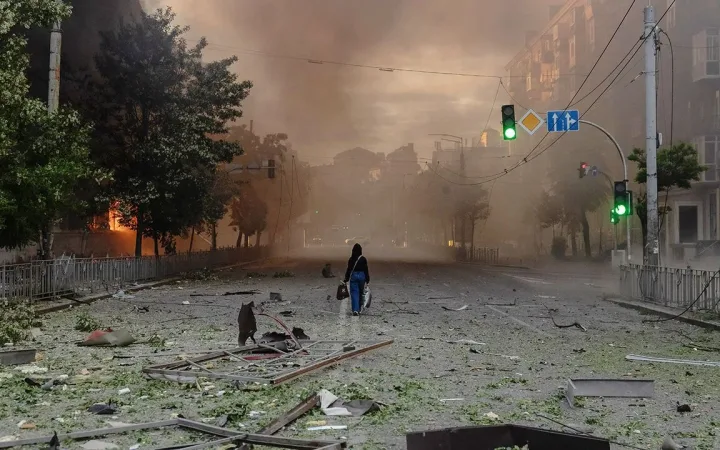
Almost one-third of the wheat traded internationally departs from Russian and Ukrainian harbours on the Black Sea and Sea of Azov. After Moscow’s invading troops struck regional infrastructure in Ukraine in 2022, worldwide prices for wheat and other cereals surged, before a Turkish-mediated agreement plus a safeguarded Ukrainian sea lane pulled them lower. Fresh combat in recent weeks has once more interrupted shipments — and on this occasion Ukraine’s trade is not the sole casualty. Specialists are now asking whether another worldwide grain squeeze may be approaching.
- Both Russian and Ukrainian Black Sea wheat shipments face fire, with combined August volumes down sharply from 6.3m tonnes last August to around 2.5m tonnes.
- Alternative routes via the Danube, Constanta, and Baltic and Caspian ports are constrained and can absorb only a small share.
- Wheat values are at two-year highs, roughly 25% higher than at the start of the year, but still about half the 2022 peak.
Both Russian and Ukrainian shipments face fire
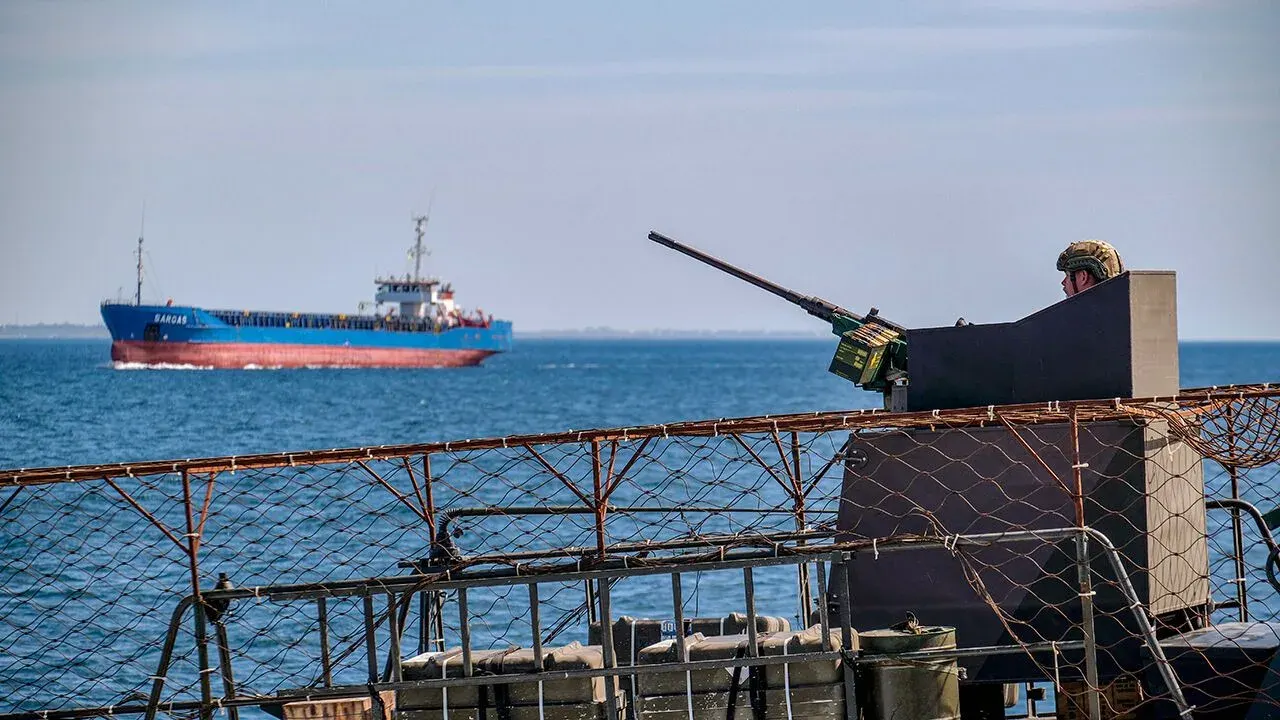
Earlier Russian assaults sent missiles toward facilities in Odesa and additional Ukrainian harbours. Then, from July onward, Moscow started aiming at the cargo vessels bound for them. Very few crews remain prepared to accept that danger.
The intensified Russian campaign partly answers Ukrainian operations against Russian objectives. Kyiv’s drones have essentially shut Russian navigation out of the Sea of Azov. This month Ukraine also heavily impaired grain terminals at Novorossiysk, Russia’s Black Sea harbour — the planet’s biggest wheat-export port, handling more than 30% of Russian wheat shipments.
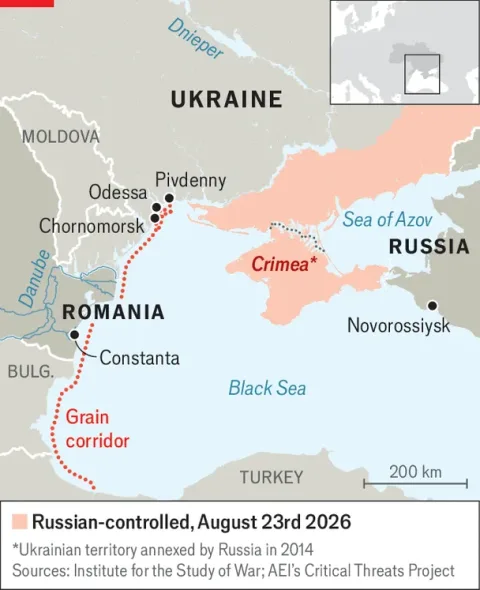
Wheat exports plunge to worst disruption on record
Of internationally traded wheat from Russian and Ukrainian harbours
Tonnes combined August shipments, down from 6.3m tonnes
Wheat values since start of year to two-year highs
Last August, Russia and Ukraine together shipped 6.3m tonnes of wheat, a large share of the 16m tonnes that moved across frontiers globally during that month. This August their combined total might reach merely around 2.5m tonnes, and may drop further should fighting persist, estimates Ishan Bhanu of Kpler, a data firm.
Interruption to farm exports departing the Black Sea is “the worst it has ever been” since the area emerged as a principal channel for world food.
Carlos Mera · Rabobank analyst
Alternative routes offer limited relief
Both nations are seeking other paths to deliver products to buyers. They confront major obstacles in that effort. During the 2022 crisis Ukraine turned to road and rail to carry grain toward the Danube River, from where it could proceed to Black Sea harbours deemed secure from strikes, including Constanta in Romania. Yet space along that course is constrained, especially this year amid shallow water levels.
In addition, growers elsewhere in eastern Europe complain that the detour generates added demand for vessels and trucking; that lifts their haulage expenses while depressing appetite for their output, notes Joseph Glauber of the International Food Policy Research Institute, a Washington-based group. For its part, Russia’s agriculture ministry says it is attempting to redirect further grain toward harbours on the Baltic and Caspian seas. But those alternatives can likely absorb only a small portion of the backlog.
Wheat prices hit two-year highs
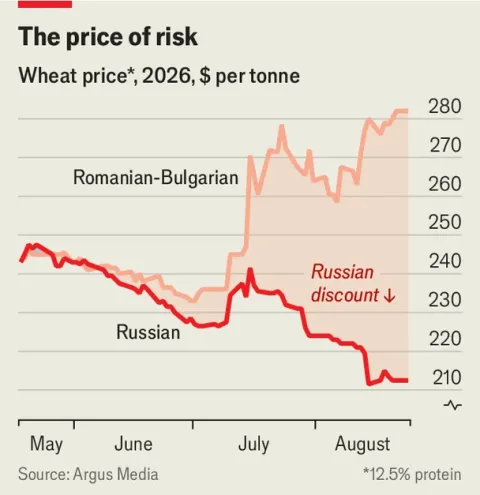
What that implies for world prices is vigorously disputed. Wheat values have climbed for weeks, touching two-year highs in recent trading sessions, roughly 25% higher than their level at the start of the year. Still, they stand at merely about half the peak witnessed during the 2022 crisis.
Several influences have, up to now, restrained prices. One involves the calendar of the shock: buyers in the northern hemisphere have just completed gathering their domestic harvests, so they can delay certain purchases, says Mr Bhanu. And 2025 delivered an abundant global wheat harvest, leaving many nations with substantial reserves to tap.
How long will the stoppage last?
At present, markets anticipate that the stoppage affecting Russian and Ukrainian exports will prove brief. Whether that wager proves correct hinges on a jumble of unpredictable factors, says Mr Mera: how the war evolves, Danube water levels, repair times for wrecked port infrastructure and the attitudes of insurers, among others. He observes that specialists’ projections for Ukraine’s grain exports across the entire season presently diverge widely.
While the preceding year’s worldwide wheat harvest proved generous, the current year’s looks set to underwhelm. Shipments from America, Canada and the European Union are likely to decline this year, partly owing to dry conditions and partly because cultivators wagered that different crops would earn greater returns, notes Mr Glauber.
He says Australia’s wheat output might drop by over 20% because of the El Niño weather pattern and higher fertiliser costs, triggered by hold-ups in the Strait of Hormuz. The planet remains well short of the grain crunch from four years earlier. Yet should Black Sea interruptions endure, prices will continue moving upward.■
KEEP THE CONVERSATION GOING
A good story is worth sharing.
Send this story to someone who values the bigger picture.
See more from GlobeBriefly on Google
Choose us as a preferred source in your Google preferences.