Audio
Listen to the article
- The World Cup survived as a cosmopolitan project by serving state objectives, from Italy in 1934 to Germany in 2006.
- The 2026 World Cup in America, Canada and Mexico brings unprecedented firsts — conflict with a qualified team, entry bans and threats between hosts.
- FIFA is already split between Europe’s money and the rest’s votes, leaving it vulnerable to a single incident turning tension into schism.
Cross-border cooperation is fraying as ethnic nationalism advances and global bodies shed authority. The World Cup has endured as the planet’s largest entertainment spectacle and a rare cosmopolitan project thought to float above parochial pressures. Ahead of the 2026 World Cup in America, Canada and Mexico from June 11th to July 19th, fissures in that veneer are widening — prompting an uncomfortable question: could this be the last World Cup as we know it?
The myth that football floats above politics
That may sound absurd, yet the argument deserves attention. The competition flourished partly because it offered governments an exceptional instrument for pursuing state objectives.
The 1934 edition under Mussolini and the tournament staged by Argentina’s junta in 1978 rank among the most infamous illustrations. More benign triumphs also worked because they served domestic agendas: France in 1998 promoted multiculturalism, while Germany in 2006 advanced reunification and a softer, friendlier patriotism.
FIFA itself has long pursued political goals, whether by pressuring Japan and South Korea into joint hosting in 2002 or by orchestrating Africa’s inaugural World Cup in 2010.
Why the 2026 World Cup is different
Across the last ten years the planet has shifted into a darker, more unsettling era. The sport is now approaching a third consecutive World Cup shadowed by demands for a boycott tied to a host country’s human-rights or foreign-policy behaviour.
Notwithstanding hostile coverage before their finals, Russia and Qatar eventually delivered effective tournaments in 2018 and 2022 respectively. Whether the upcoming edition shared by America, Canada and Mexico will unfold equally calmly is far from certain — or it could pitch the competition into an unrecoverable nosedive.
Consider only a few of the never-before-seen features of what the authors call “Trump’s World Cup”: for the first time a host state is fighting an unlawful conflict against a qualified team; for the first time nationals from four qualified teams face an entry prohibition imposed by a host state; and for the first time a host leader has publicly menaced one fellow host with annexation while ripping up commercial deals with the other.
And while the World Cup celebrates itself as a carnival of overseas travel, Washington’s admission rules, plus its pursuit of migrants at home — alongside sickeningly steep ticket prices — have made many fans hesitate.
Often a doom-laden media build-up gives way to an event that runs according to script. But Mr Trump follows a distinctive pattern of his own, and this time predicted calamities may genuinely come to pass. Combine the abnormalities listed above with the president’s volatility and unconstrained authority, and the odds rise that something goes seriously awry. Were that to happen, latent tensions inside the FIFA family might harden into something beyond repair.
FIFA’s family is already fracturing
That family is already troubled. The bond between Europe, home to most of the cash, and the remainder of FIFA, holder of the votes, is strained.
FIFA seeks to weaken UEFA, Europe’s governing authority, and seize its income flows — last year’s Club World Cup represented FIFA’s bid to eclipse UEFA’s Champions League. FIFA is progressively looking past Europe, with its president, Gianni Infantino, devoting growing stretches in Miami.
Such rifts have prompted formation of a fresh players’ union, set to rival FIFPRO, the largely European body allied with UEFA. As FIFA enlarges the scale and quantity of competitions under its control, that too generates friction with UEFA around fixture load and exhaustion.
And as FIFA gazes beyond Europe, several of its supposedly rising divisions are themselves convulsed. African football’s governing body, CAF, is staggering after its absurd move to deprive Senegal of the African Cup of Nations and award the title to host Morocco — two months after the final whistle.
History warns that expansion does not last forever
Is a schism, or an abrupt collapse in FIFA’s legitimacy, inconceivable? There is a close historical parallel: the Olympic Games expanded impressively, then almost disintegrated after the second world war. Serial boycotts in 1976, 1980 and 1984 nearly finished it off.
Other sports have splintered under rival pressures, with boxing a striking instance, featuring competing sanctioning organisations and alternative contest formats.
Bear in mind as well that FIFA amounts to scarcely more than the aggregate of its member associations, and America’s fiercely disputed immigration policies, enforcement tactics and newly revived militarism could impose intolerable stress on the organisation’s partnerships and voting coalitions.
How a single incident could unravel the tournament
Crises rarely reveal their precise origins in advance, but imagine this chain of events. A Spanish supporter is seized while entering a stadium to see her national side, moved to an ICE detention centre, assaulted and dies from an untreated infection.
Spain insists on penalties against the US Soccer Federation as the host association. FIFA, closely connected to the Trump administration, declines to act. Spain, together with 2030 co-hosts Portugal and Morocco, opts to bar American supporters from admission during the World Cup.
FIFA menaces Spain with punishment, UEFA backs Spain and various African nations — still furious that Morocco received the African Cup of Nations — choose to shun the World Cup entirely. Far-fetched? Perhaps, yet we inhabit a period when truth appears wilder than invention.
Nothing expands forever
The World Cup has grown without interruption since its launch in 1930. Nothing expands indefinitely, and once expansion halts, contraction typically ensues — and can arrive swiftly.
One certainty stands out: the present tournament will concentrate everything people resent about the competition’s extravagance.
Naturally, the likeliest result is a World Cup in 2030. Yet that is not assured. And should a tournament occur, what form would it take? How many nations will care enough or trouble themselves to attend? And if a decisive number pull out, would it carry any significance? Very possibly not.
FIFA has turned into a farce, and the curtain has to descend sooner or later.
Szymanski & Malhotra · Soccernomics
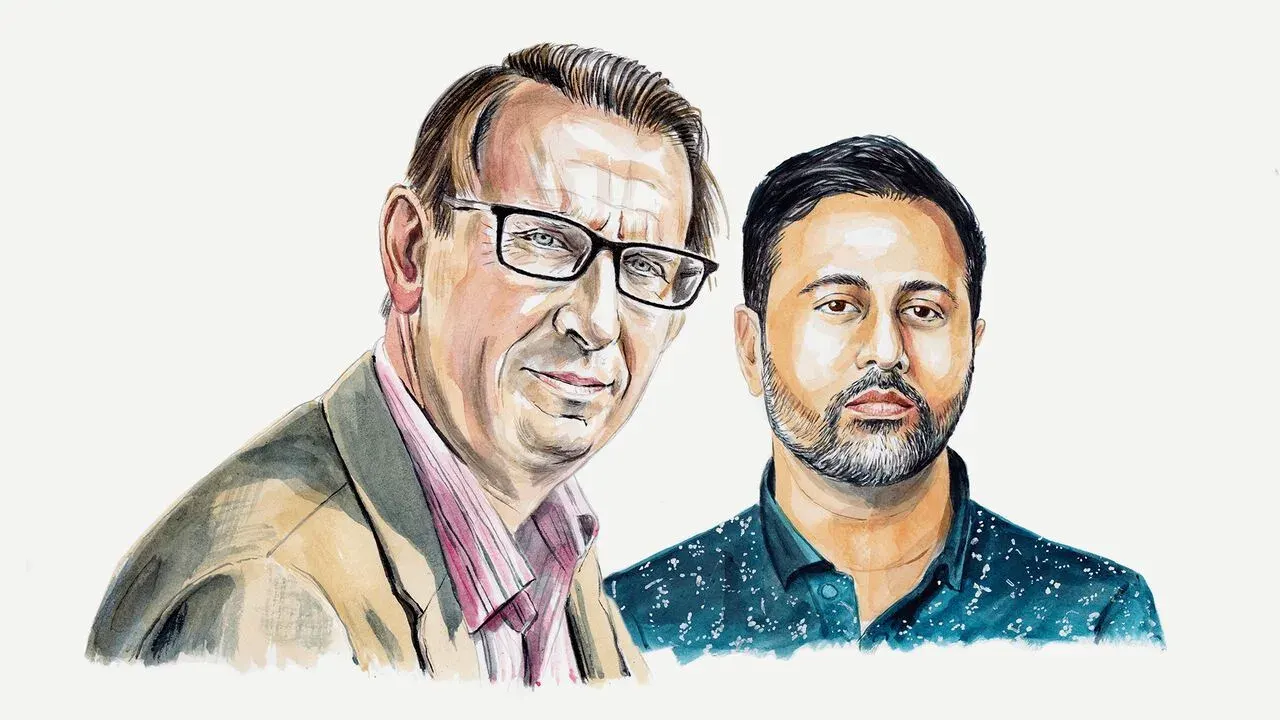
Stefan Szymanski is a professor of sport management at the University of Michigan and co-author of “Soccernomics”. Ashish Malhotra is a journalist and series creator of “The Dark Side of The World Cup” for Zeteo. They co-host The Soccernomics Podcast (with Simon Kuper).
KEEP THE CONVERSATION GOING
A good story is worth sharing.
Send this story to someone who values the bigger picture.
See more from GlobeBriefly on Google
Choose us as a preferred source in your Google preferences.