Audio
Listen to the article
- Russia’s war economy will not collapse, but it will not recover: it is in negative equilibrium.
- Military industries get labour, capital and imports; private business is left in the cold.
- With growth at 1%, defence at 8% of GDP and Urals crude deeply discounted, each year at altitude raises systemic risk.
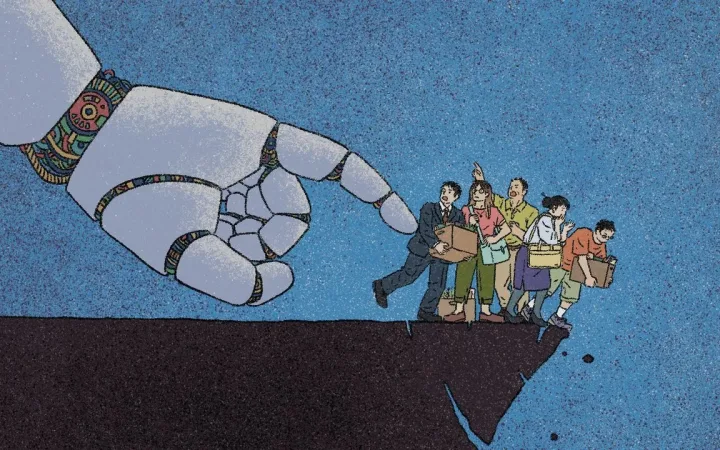
As Russia’s war against Ukraine enters its fifth year, the Russian economy that sustains it has been transformed in ways that will be difficult — perhaps impossible — to reverse without another crisis. Westerners keep waiting for collapse. It won’t happen. But recovery won’t happen either.

It has entered what mountaineers call the death zone: the altitude above 8,000 metres at which the human body consumes itself faster than it can be repaired. The Russian economy is stuck in negative equilibrium: holding itself together while steadily destroying its own future capacity.
Economic expansion in 2025
Defence sector share of GDP
Budget deficit in 2025
Export revenues are falling, and economic weakness means budget gaps cannot be filled with additional tax revenues. The economy expanded by just 1% in 2025. The forecast for this year is worse.
A split war economy: military priority, private-sector cold
Over the past four years the Russian economy has bifurcated into two distinct metabolic systems. The first comprises military and military-adjacent industries: the vital organs that receive priority blood flow.
These sectors are hiring and investing. They get first access to labour, capital and imports. The second system contains everything else: private enterprise, small businesses, consumer industries. These are the extremities left in the cold.
Military rent is consuming Russia’s future capacity
The most dangerous feature of this new structure is the fuel it burns. Russia’s economy now runs on “military rent”: budget transfers to defence enterprises that generate wages and economic activity. Functionally, this resembles the oil windfalls of the 2000s.
But there is a difference. Oil rent came from outside the system, foreigners paying for a tradable asset, and the money circulated through the economy with real multiplier effects. Military rent is internal redistribution towards assets designed for destruction. The body is metabolising its own muscle tissue for energy.
A recession is like fatigue: rest and you recover. Russia’s condition is like altitude sickness: the longer you stay, the worse it gets.
Alexandra Prokopenko · Russia’s death-zone economy
This is not a cyclical downturn that monetary or fiscal policy can fix.
Why Russia cannot demobilise without another crisis
Consider the arithmetics of descent. Russia’s defence sector now accounts for 8% of GDP. Demobilising without falling into a crisis would require five conditions to be met simultaneously: credible security guarantees that satisfy the Kremlin’s threat perceptions; mass demobilisation with effective retraining; sanctions relief for technology access; a defence-procurement revolution that prioritises efficiency over budget absorption; and a healthy ecosystem of smaller firms capable of absorbing reallocated resources.
The probability of all five converging is near zero.
Falling oil revenue and a widening budget deficit
Meanwhile, the fiscal oxygen is thinning. The budget deficit has widened rapidly to 2.6% of GDP for 2025 — the largest since the pandemic. Interest payments on government debt this year will exceed spending on education and health care combined.
Oil prices are increasing the pressure. With Urals crude, Russia’s main grade, trading at a discount of 25-30% to Brent, Russia’s export revenues are heading towards their lowest level since 2020.
But energy-price weakness is not primarily a Russian story. It reflects China’s deflationary slowdown, Europe’s stagnation and America’s trade wars. The thin air at altitude is a global condition. Russia suffers disproportionately, but so do other petro-states.
Why economic pain reinforces Putin’s war logic
This global context creates perverse incentives. Standard economic theory suggests that deteriorating conditions should push the Kremlin towards talks on ending the war. A rational actor facing rising costs seeks an exit. But Vladimir Putin is not only watching his own oxygen gauge. He is watching the other climbers.
What Mr Putin sees is this: Europe struggling with its own structural crisis, politically fragmented and unable to agree on strategic issues — including Russia; Ukraine exhausted and dependent on Western support that wavers with each election cycle; a global economy in which many are short of breath, anticipating a crisis triggered by lofty debt and the weaponisation of trade.
If your competitors are also weakening — and if you believe you can tolerate the pain longer than they can — the calculus flips. Economic pressure that should drive compromise instead reinforces the logic of persistence.
Permanent confrontation and the question for the West
There is a deeper layer still. Across Russia’s elites, not just the Kremlin, there is near-universal conviction that regardless of how this war ends, the West’s ultimate goal is Russia’s permanent strategic containment, and perhaps the killing of its development potential. This belief has become hard to debunk. Western policymakers openly discuss plans for containing Russia. Four years of confrontation have created path dependence on both sides.
If both sides expect permanent confrontation, they act accordingly, and confrontation becomes the only stable outcome. Russia’s revealed preference — continuing the war despite mounting costs — is rational under these expectations. It makes sense to keep fighting and hope something changes: that the Western coalition fractures, that Ukraine exhausts itself, that President Donald Trump’s priorities shift.
Russia can probably continue waging war for the foreseeable future. But no climber can survive the death zone indefinitely — and not all climbers who attempt the descent survive it. For the Kremlin, avoiding economic degradation requires, at a minimum, ending the war. That alone does not guarantee recovery.
But every additional year at this altitude raises systemic risk: of fiscal crisis, of institutional breakdown, of damage so severe that no post-war policy can repair it. The question Western policymakers must ask is what kind of Russia will emerge when the descent finally begins — and whether anyone has a plan for what comes next.■
Alexandra Prokopenko is a fellow at the Carnegie Russia Eurasia Centre and the author of “From Sovereigns to Servants: How the War Against Ukraine Reshaped Russia’s Elite” (forthcoming).
KEEP THE CONVERSATION GOING
A good story is worth sharing.
Send this story to someone who values the bigger picture.
See more from GlobeBriefly on Google
Choose us as a preferred source in your Google preferences.