Audio
Listen to the article
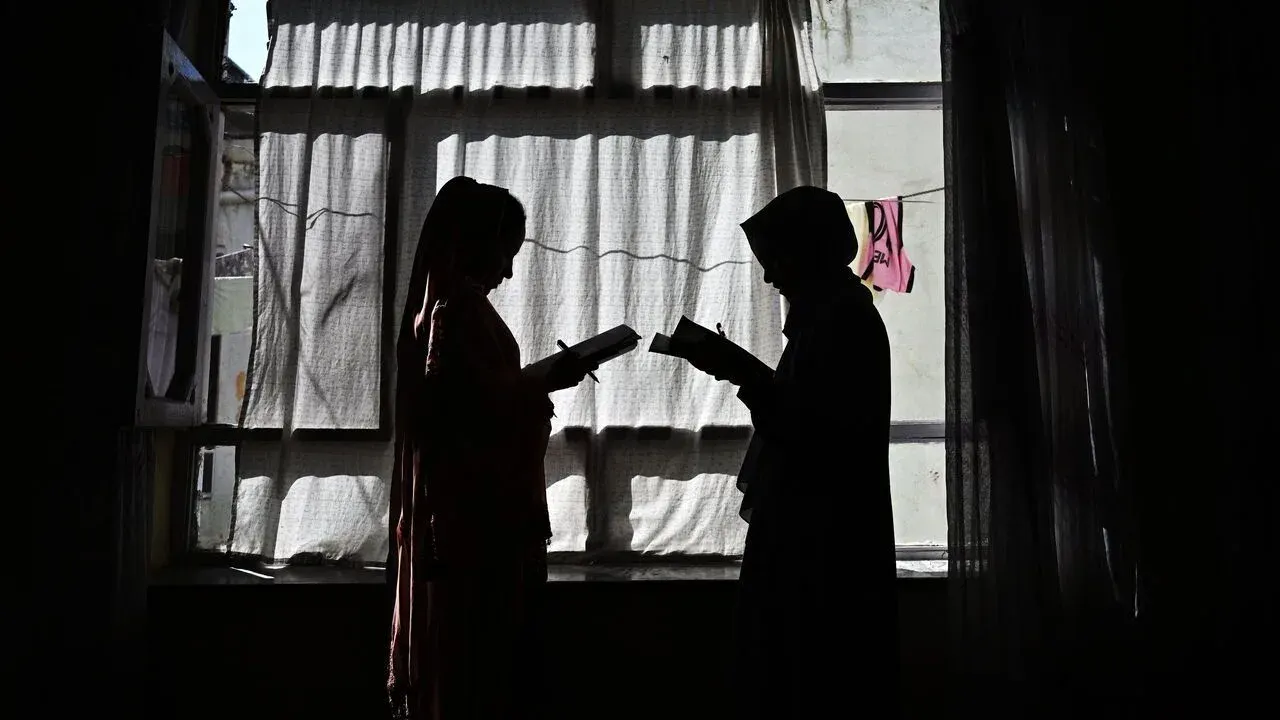
Five years after America pulled out of Afghanistan, our leader and briefing judged that it was about time for democracies to start working with the Taliban, as vile as the regime is. Functioning embassies can watch out for terrorist threats, and create useful channels of communication, we argued. Here are a few thoughtful responses from our readers, edited for brevity.
- A former British defence attaché in Kabul says humanitarian aid props up the regime and diplomatic links should be conditional on human rights.
- A law professor says the CEDAW case against Afghanistan has stalled before arbitration and must move expeditiously to the International Court of Justice.
- Two readers cite the Taliban ban on opium poppies and the roughly 95% fall in cultivation since 2022, but draw different lessons on engagement.
No aid or recognition without human-rights conditions
We should increase humanitarian aid to Afghanistan and improve diplomatic links with the Taliban so that we can communicate with them, you say. You could not be more wrong. Our abandonment of Afghanistan in 2021 was a disgrace and there is no doubt about the misery suffered by many Afghans, especially women and girls.
Humanitarian aid, even delivered through the UN or international NGOs, simply props up this odious regime. No aid should be provided for Afghanistan unless strictly hypothecated to a significant improvement in human rights. As for diplomatic recognition, that also should be conditional on the Taliban’s behaviour. The militants are currently beyond the pale, not least because they are continuing, despite the British government’s claims to the contrary, to viciously persecute anyone who worked with us.
After all the misery that Afghanistan has endured, Taliban 2.0 may seem like the last straw. Awful though they are, they are not monolithic and with sufficient pressure, cracks will widen. These are already apparent in the north of the country. Then may be the time for carrot, as well as stick. For the time being though we should have nothing to do with the Taliban regime. Western virtue-signalling politicians can look elsewhere for their validation.
Simon Diggins
Colonel (retired)
Defence attaché, Kabul, 2008-10
Tring, Hertfordshire
Holding the Taliban to account under CEDAW at the ICJ
Some governments are holding the Taliban accountable for its regime of gender apartheid. In September 2024, Australia, Canada, Germany and the Netherlands agreed to initiate a legal case by formally invoking Afghanistan’s obligations under CEDAW, the UN convention on eliminating discrimination against women, which Afghanistan ratified in 2003. This initiative, supported by 22 other countries, is the first time any state has attempted to hold another accountable for gender discrimination before the International Court of Justice.
Two years on, however, the initiative has yet to reach the ICJ because of the prerequisites of negotiation and arbitration. If these fail, the case can proceed to the ICJ. When Canada and the Netherlands pursued a similar case against Syria under the UN Torture Convention they moved through each stage without delay. Once negotiations stalled, they promptly requested arbitration. When Syria failed to engage within the required six-month arbitration window, they filed the case before the ICJ and secured a binding order.
After invoking a similar procedure against Afghanistan under CEDAW, negotiations have not visibly given way to a request for arbitration, and the initiative seems to have stalled. If countries want to ensure that the international legal order is sufficiently resilient to provide justice for Afghan women and girls they must support this initiative to ensure that it moves expeditiously to the ICJ.
Rebecca Cook
Professor emerita
Faculty of Law
University of Toronto
The opium ban and Afghanistan’s economic pressure
You did not mention the Taliban’s religious edict banning the cultivation of opium poppies in Afghanistan. According to the UN the acreage devoted to poppy growth has fallen by roughly 95% since 2022, with farmers’ income also dropping precipitously.
Surely, given Afghanistan’s historic role in the global opium trade before the current Taliban regime the loss of poppy income is contributing to the economic pressures you described.
Jonathan Gafni
McLean, Virginia
The case for pragmatic engagement on drugs
I lived and worked in Afghanistan and Pakistan from 1998 to 2002 as regional director for the UN Office on Drugs and Crime. In 2000 the UNODC helped secure the complete eradication of opium poppy cultivation in the territories under Taliban control.
Numerous mistakes were made by the international community that contributed to the resurgence of opium poppy cultivation following the fall of the Taliban regime in 2001 and throughout the following 20 years of civilian administrations. When the Taliban returned in 2021 they once again imposed a total ban on poppy cultivation. UNODC has documented the remarkable decline in cultivation since then. Five years later, this policy appears to have proved remarkably sustainable.
Of course, such a measure comes at a considerable cost to Afghan farmers. This is precisely why the international community and democracies should consider providing credible economic and financial support to alleviate the consequences for rural communities, while using this issue as an opportunity for pragmatic engagement with the Taliban.
The experience of 2000 demonstrates that, even in the most difficult circumstances, engagement can sometimes produce concrete results.
Bernard Frahi
Former UNODC expert
Paris
KEEP THE CONVERSATION GOING
A good story is worth sharing.
Send this story to someone who values the bigger picture.
See more from GlobeBriefly on Google
Choose us as a preferred source in your Google preferences.