Audio
Listen to the article
- A Chinese and Russian flotilla ran live-fire drills inside Japan’s EEZ on July 19 — the first such exercise Japan has captured and publicised.
- Since Donald Trump met Xi Jinping in South Korea last October, Washington has avoided harsh words about China and been slow to defend allies.
- America’s Asian allies must strengthen themselves, each other and America’s commitment — and none of them has nuclear weapons or a NATO-style pact to fall back on.
On July 19, a flotilla of Chinese and Russian warships steamed side-by-side through Japan’s southernmost exclusive economic zone (EEZ). Japanese sailors on a nearby vessel photographed them running drills, with fire spitting from a Chinese destroyer’s turret. It was the first time Japan had captured and publicised a Chinese live-fire exercise inside its EEZ. The images were grainy, but the signal was unmistakable: Chinese pressure is mounting.
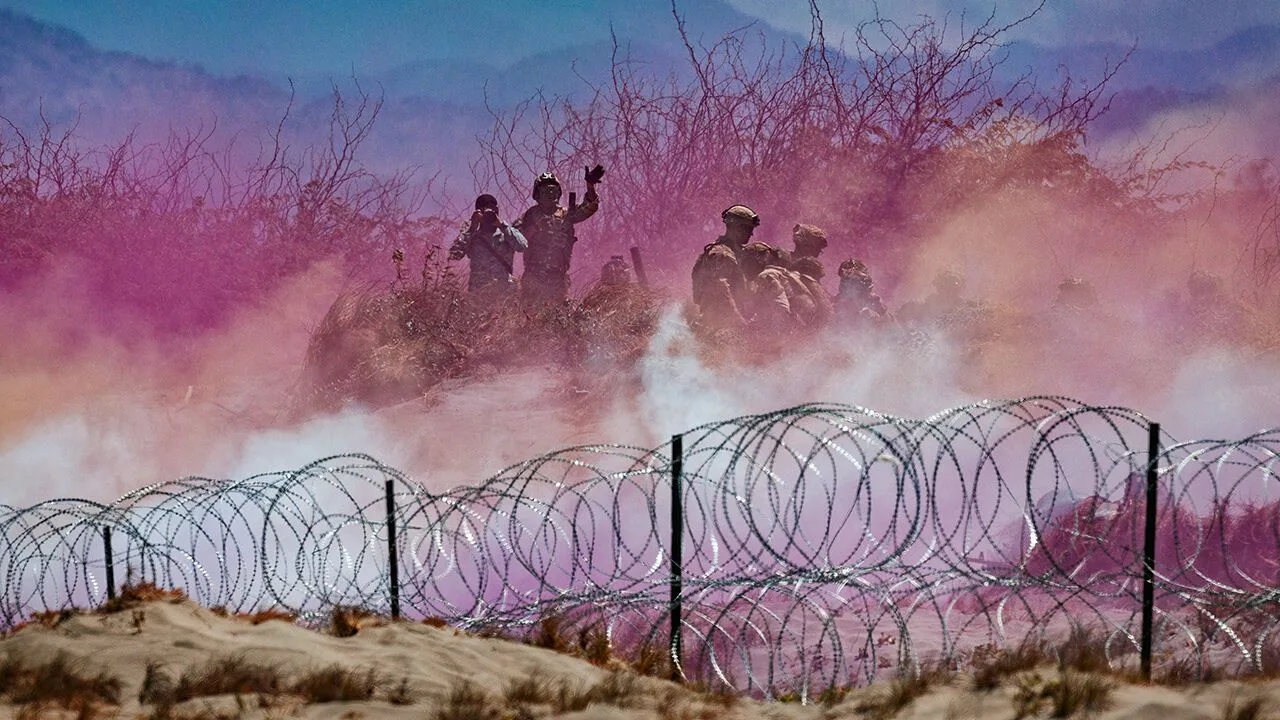

The episode was merely the latest in a string of recent provocations against America’s Asian allies, especially the Philippines, Japan and Australia. In late June, Chinese and Russian air forces flew nuclear-capable bombers together over the Sea of Japan and the East China Sea, then passed between Japan’s south-western isles into the Pacific—the second such passage since December. China has also intensified coastguard patrols east of Taiwan. In early July, it fired a ballistic missile from a submarine off its southern coast, over the Philippines and into the Pacific—only the second time since 1980 that it has launched a ballistic missile into international waters. Days later, Chinese and Philippine sailors clashed with oars and water cannon over two disputed islets in the South China Sea.
A pattern, not a one-off
Chinese assertiveness is hardly new. But a pattern has emerged since President Donald Trump met Xi Jinping in South Korea last October and signalled a desire to improve ties, followed by a cordial meeting in Beijing in May. Since then, Mr Trump and many of his officials have contorted themselves to avoid a harsh word about China, and have been slow to defend allies facing Chinese bullying—apparently hoping that three further summits planned for this year will go more smoothly. Mr Trump is also entangled in Iran, diverting resources and attention from the Pacific. Now China appears to be probing America’s defence lines and testing its commitments in the region.
NATO members left once America is excluded
Their combined defence spending against Russia’s
Nuclear-armed members among America’s Asian treaty allies
Strengthen themselves, each other and America’s resolve
Facing an unreliable America and an aggressive China, America’s Asian allies need to do three things to improve their security: strengthen themselves, strengthen their ties with each other, and strengthen America’s commitment to them. Progress on the first two fronts has been substantial, though still insufficient. Australia, Japan and the Philippines are all raising defence spending and modernising their armed forces; Australia and Japan are both offering aid to the Philippines to help build up its maritime defences.
Why Asia cannot build its own NATO
But that will be too little if America chooses to be absent. In Europe, uncertainty over American reliability triggers talk of Plan Bs. Even without America, the remaining 31 NATO members’ combined defence spending is more than three times that of Russia, their main adversary, and two of them—Britain and France—have nuclear weapons. But allies in Asia rightly understand that they are too small to form a coalition that can maintain the balance of power in their backyard. There is no NATO-style collective-security pact, only a series of bilateral security treaties with America. The cumulative defence spending of America’s treaty allies is less than half that of China; and none of them has nukes.
The case to make to Trump
That makes the third task as essential as the first two. One strategy is to collaborate more deeply with the parts of the American system that still care about deterring China, such as the military brass. But credible deterrence must come from the top—and China hawks fret that Mr Trump seems to have lost all interest in getting tough on Chinese expansionism, not least because he has learned that China is willing to use its grip on the supply of rare earths as a chokepoint. Can he be persuaded to change his mind? Perhaps. Volodymyr Zelensky has convinced him, for example, that Ukraine does in fact hold some cards.
The best evidence that Mr Trump could flip on China again is that he has done so before. During his first term, he attacked China as the destroyer of American jobs and the thief of American intellectual property. He was egged on by Asian leaders such as Abe Shinzo, Japan’s late prime minister, who spent hours encouraging him to take a hard look at the military threat China poses.
Asian leaders need to make the case directly to the president that China threatens America’s position as the world’s leading superpower—and that its military ambitions go hand in glove with its industrial, technological and economic ambitions. If Mr Trump accepts that China remains a shrewd and potentially dangerous competitor, he may be willing to take a broader view of America’s interests in the Pacific.
KEEP THE CONVERSATION GOING
A good story is worth sharing.
Send this story to someone who values the bigger picture.
See more from GlobeBriefly on Google
Choose us as a preferred source in your Google preferences.