Audio
Listen to the article
- We tested 14 variants of ChatGPT, Claude, Gemini and Grok released since 2024 on 55,940 sentences and 1.2m words against our own writing.
- AI writing is getting more human — old tells like em-dashes and “leveraging” are fading — but sycophantic, baggy prose remains.
- With LLMs tripling new Amazon e-books to 300,000 a month, the premium is now on editing: commission well, sweat details, know your audience.
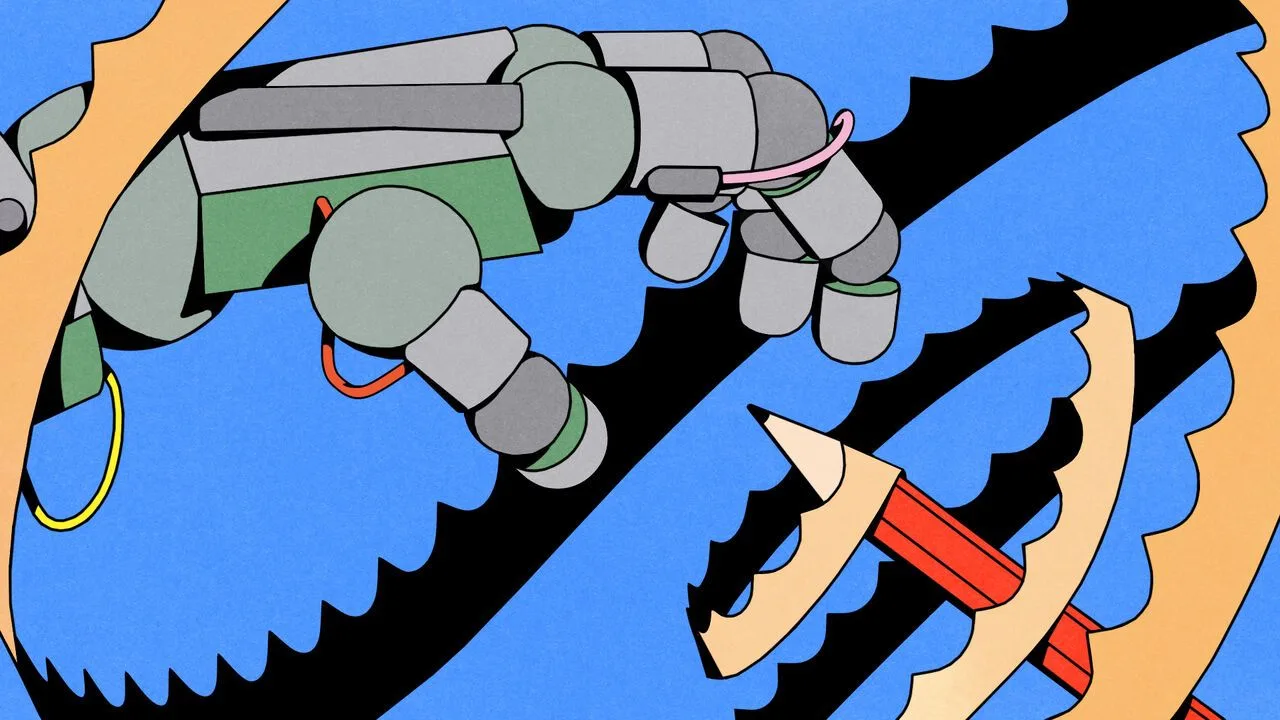
Writing is a notoriously difficult craft. Franz Kafka described the process as one of “unending torments”; George Orwell likened it to “a long bout of some painful illness”; Hunter S. Thompson, a journalist, called it the opposite of sex: “only good when it’s over.” Now artificial intelligence has stepped in to help. Large language models (LLMs) eagerly produce reams of text without any pain or torment. Bots can dash off emails (excellently), longer prose (passably) and poetry (poorly). For them, writer’s block is a 500-sheet pack of paper: any user of an LLM can generate as many words in a day as Kafka did in his entire lifetime.
For human writers, this is both a blessing and a curse. If you claim to be an author but use AI, you risk being exposed as a fraud — bot-busting tools like Pangram are adept at detecting when someone has had an AI helping hand. Consider the hundreds of people who have used LLMs to write applications for The Economist’s internships, or the government ministers who have submitted AI-generated works to our By Invitation column (it’s tempting, but we won’t name them).
Our investigation: how we compared AI writing to human prose
We compared the outputs of LLMs to prose we know is produced by humans: our own. We asked 14 variants of ChatGPT, Claude, Gemini and Grok released since 2024 to write versions of our articles without consulting the web. We compared our corpus across 55,940 sentences and 1.2m words, and checked our results against other newspapers and hit fiction books.
We found that AI writing is getting closer to human writing with each update. Some of AI’s former tricks — using lots of em-dashes, for instance, or words like “leveraging” — are no longer leveraged much in its writing.
Test corpus: 14 LLM variants (ChatGPT, Claude, Gemini, Grok, released since 2024) asked to write versions of our articles without web access. Comparison: 55,940 sentences, 1.2m words, benchmarked against our archive, other newspapers and bestselling fiction. Focus: stylistic quirks and changing patterns over model updates.
Why better AI writing still creates more editing work
It’s a good thing that AI writing is improving. Sifting through today’s slop is a drain on your brain and your time. LLMs have tripled the number of new e-books published on Amazon every month, to 300,000, a recent study found, and draft more than a third of new websites by one count.
LLM variants tested since 2024
Words compared (55,940 sentences)
New Amazon e-books per month
If LLMs keep improving, in a few years they could be as good as professional wordsmiths. In the meantime, though, their baggy prose puts a premium on editing skills. After all, even the best writers need a good editor to keep them sharp. Editing is something The Economist deals with day in, day out, so here are our tips for re-writing AI prose.
How to rewrite AI prose: three editing rules
1. Commission well — clip the wings and give direction
George R.R. Martin once said the job of editors is to “clip the wings” of writers, and “tell them in which direction to fly”. When it comes to LLMs, that means giving clear instructions about exactly what you want, and asking them to refine their output as many times as necessary. You’ll get less pushback from machines than men. Mr Martin said editors were “the writer’s natural enemy”; AI would probably say “great observation!” and “love the enemy analogy!”
2. Sweat the details — cut clichés, Latinate padding and the rule of three
AI writers will make mistakes and offer phrases that sound good but mean nothing. They like to lavish their prose with Latinate words, talking about the “bi-directional flow” and how to “expedite grid enhancements”; remind them that Anglo-Saxon words are often punchier.
They like clichéd metaphors: there are lots of “Achilles’ heels”. And AI tends to use the “rule of three” far more than humans. The Economist also likes this rhetorical trick. But whereas we try to group three sensible bits of advice, AI offers such redundant sentences as: “The mystery has been solved — not partially, not ambiguously, but definitively.” Such lines should be cut — definitively.
3. Know your audience — match tone to the reader, not the sycophant
The editor is an intermediary between writer and reader. LLMs are sycophants and their smarmy tone is often off-key. If you are writing an email to break some bad news to your boss, tell your bot to skip the exclamation marks. AI can be pretentious or pontificating (it was trained on human writing, after all). Most people are short of time, but a verbose AI pins you to the wall like a bore at a party.
“Write drunk, edit sober.”
Old writers’ maxim — and the AI-human division of labour
If that’s right, when the AI-human team gets down to work, the AIs will have all the fun. ■
KEEP THE CONVERSATION GOING
A good story is worth sharing.
Send this story to someone who values the bigger picture.
See more from GlobeBriefly on Google
Choose us as a preferred source in your Google preferences.