Audio
Listen to the article
- Congress is weighing curbs that would amend the COINS Act to cover licensing deals with Chinese biotech firms and push the FDA to disregard China-generated clinical-trial data.
- China ran nearly a third of the world’s clinical trials last year, up from 6% a decade ago, and is now the second-largest source of new drugs behind America.
- Blocking that innovation would raise costs and slow cures; with development costing about $2.8bn and taking well over a decade, patients benefit fastest when innovation crosses borders.
A patient whose life is saved by a new medicine rarely pauses to ask where it was invented. Yet American policymakers are increasingly treating China’s biotechnology sector as the next battleground in the technology war. A bill before Congress would amend the COINS Act — which already restricts American investment in sensitive technologies abroad — to cover licensing deals with Chinese biotech firms. Some lawmakers want the Food and Drug Administration (FDA), America’s drug regulator, to ignore clinical-trial data generated in China.
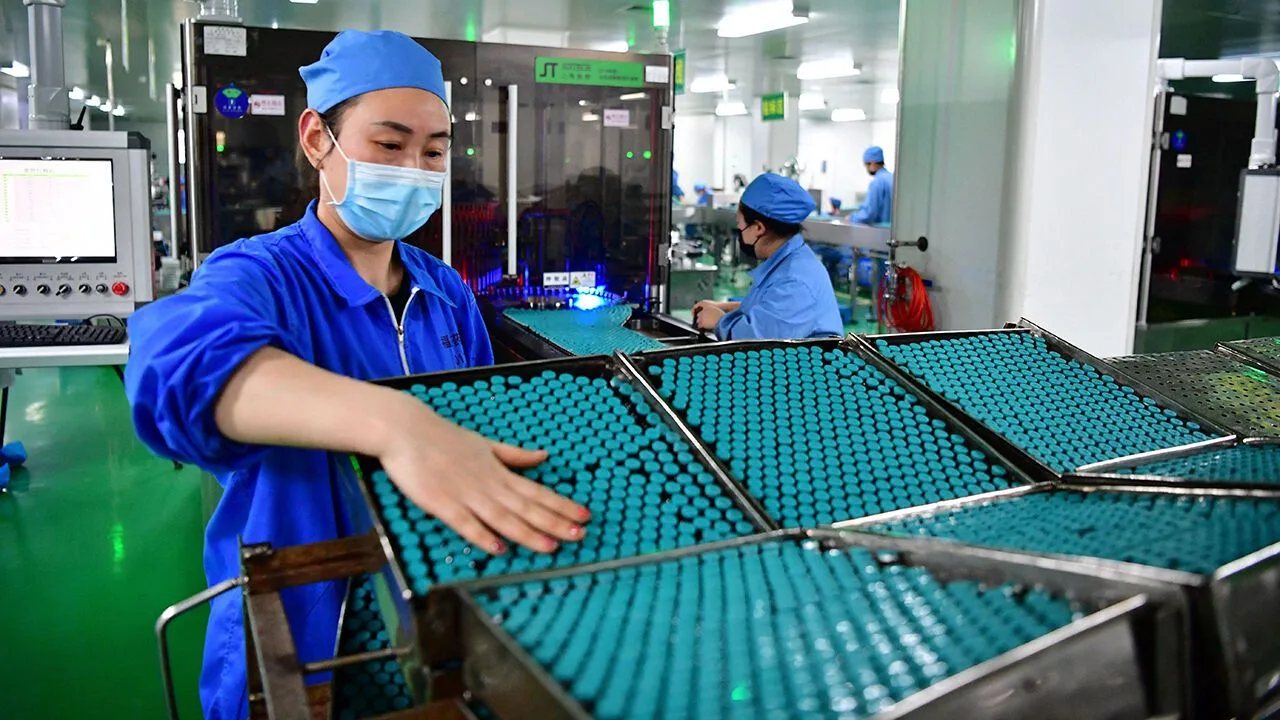
China’s rapid rise in drug discovery
The concern follows a dramatic shift in the geography of innovation. Chinese companies ran nearly a third of the world’s clinical trials last year, up from just 6% a decade earlier. China is now the world’s second-largest source of new drugs, behind only America.
In 2025 nearly half of licensing deals worth $50m or more were struck with Chinese firms, up from none in 2020. In some categories, such as antibody-drug conjugates — a promising class of cancer treatments — Chinese firms accounted for almost all the licensing.
Share of global clinical trials run by Chinese firms last year
Licensing deals ≥$50m with Chinese firms in 2025
Share of active pharmaceutical ingredients for essential drugs from China
Why shutting out Chinese biotech would backfire
Treating Chinese medical innovation as anything other than good news would be a mistake. In AI and semiconductors, America worries about its intellectual property leaking to China. In biotechnology the flow of information runs in the opposite direction.
While anxiety about China’s dominance in the physical supply chain for drugs is understandable — the country accounts for over 70% of the active pharmaceutical ingredients for essential drugs — manufacturing resilience and scientific collaboration are different issues. America cannot lose from gaining new knowledge.
The approximate cost to bring a new medicine to market, a process that can take well over a decade. Policymakers who complain about rising medicine costs would lengthen timelines and raise costs further by disregarding Chinese clinical-trial data.
Shutting out Chinese advances would be especially foolish given that drug development suffers from poor productivity. Proposals such as disregarding Chinese clinical-trial data would lengthen development timelines, raise costs and make drug discovery less productive. Does Congress really want pioneering treatments to be available in Europe or Asia before they reach Americans?
Investment is not a fixed pie
Some politicians fear that if drug firms spend their research budgets licensing Chinese molecules, less capital will be available for American biotechnology. But investment is not a lump to be divvied up. As the AI boom shows, when opportunities grow, so capital flows in. What matters is to make sure that American biotech is not hindered by bad policies.
Fortunately, American firms remain the world’s leaders in drug discovery. They possess deep expertise in taking promising molecules through late-stage clinical trials, regulatory review and commercial launch. Chinese biotechnology executives privately acknowledge the FDA as the global regulatory leader.
America’s self-inflicted drag on innovation
America’s recent choices are blunting its edge. The FDA has suffered high turnover among senior officials, including the resignation of Marty Makary, its head. Decision-making has been politicised: firms can receive “priority vouchers” that speed up reviews in return for lowering their prices and investing in domestic manufacturing.
Funding for the National Institutes of Health, the largest funder of biomedical research in the world, has been slashed. Research programmes have been cancelled for ideological reasons. At the same time, immigration policies are making America a less attractive destination for the scientists on whom the industry depends, including many talented researchers from China.

Fix domestic policy, keep global cures
America should fix those problems rather than locking out Chinese innovation. The best world for patients is one in which both China and America develop cheap and effective drugs. Diseases cross borders. So should their cures.
KEEP THE CONVERSATION GOING
A good story is worth sharing.
Send this story to someone who values the bigger picture.
See more from GlobeBriefly on Google
Choose us as a preferred source in your Google preferences.