Audio
Listen to the article
- England has 16% of homes in social housing — more than any other G7 country — yet 1.3m households wait for a council home.
- Discounted, lifelong tenancies create a £20bn implicit subsidy that favours the lucky, not always the neediest.
- Charging market rents and targeting help through means-tested benefits, plus building more homes overall, would be fairer and free billions.
London
Young Britons are a gloomy bunch. One poll found that 38% expect to lead worse lives than their parents — only 36% think they will do better — and much of the blame can be laid at the locked door of unaffordable housing. In big cities, where the good jobs are, rents are extortionate. In London the average is around half of mean earnings. Anger about housing frays the social contract and leads some to scapegoat vulnerable groups, such as refugees.
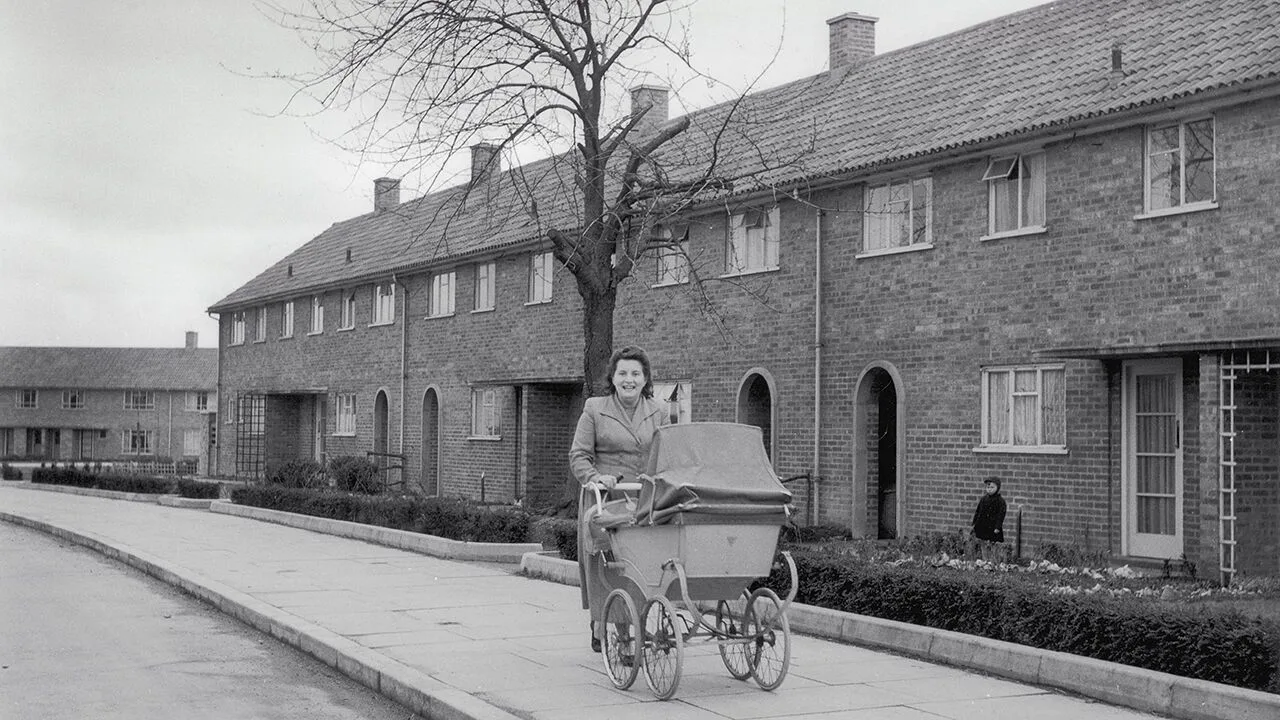
Andy Burnham’s promise: the biggest council-house boom since the war
Andy Burnham, the man almost certain to be the next prime minister, has an answer. He has promised “the biggest council-housebuilding programme since the post-war period”. The policy is popular: 72% of the public support more social housing, which in England means homes owned by councils or charities and let at below-market rents. Over 1.3m households are on waiting lists for such homes.
Yet Mr Burnham’s plan would be like adding a floor on top of a crumbling tower block. England does not have too little social housing. It has too much: at 16% of the total stock, more than any other G7 country. In some London boroughs nearly 40% of homes are social housing. And far from being “the foundation for everything”, as Mr Burnham says, the council-housing system is wasteful, unfair and a barrier to growth.
Of English homes in social housing — the highest in the G7
Share of homes that are social housing in some London boroughs
Households on social-housing waiting lists
How the system works — and why it is so costly
England has two types of housing support. First, tenants in social housing enjoy discounted rents. Second, anyone deemed needy after a means test, whether in a private home or a social one, can receive a rent subsidy (“housing benefit”). The Economist crudely calculates that discounted rents to the first group add up to an implicit subsidy of £20bn ($25bn) a year.
For the two-thirds of social-housing tenants who are on welfare, this saving is mostly recycled within government, lowering the benefit bill needed to cover rent. But for the remaining one-third not on welfare, it’s a bonanza.
Annual saving per household on new social lets in Kensington and Chelsea in 2024-25, where rents were nearly 80% below market rates.
Social tenancies are often for life and can even be inherited. Once you’re in, there’s no more means-testing, regardless of how much your fortunes improve. Of the 4m households in social housing in England, more than 10% have incomes in the national top 40%. Some are rich. The wife of the president of Sierra Leone, who lives in a palace, was recently found to have a council home in London as well.
Thus, some high earners enjoy ultra-cheap social housing, while more than 1m households on benefits rent from private landlords. In much of the country, housing benefits are stingy and rents are high, so this latter group is at risk of homelessness. A system that arbitrarily foists feast on some and famine on others is not just.
Antisocial housing: why it kills mobility and growth
It also slows economic growth by making people less mobile. If you have a lifelong council tenancy, you don’t want to lose it. So you are less likely to move elsewhere in search of a better job. And many of the council homes in city centres are occupied by pensioners, who are also frozen in place, blocking young jobseekers from moving in. Some 60% of adults in social housing do not work.
Mr Burnham seems to think immobility is a virtue: he vows to build a country where “No one has to leave to get on in life.” That vision keeps people where they are, even when opportunity is elsewhere. A housing system that penalises moving makes the labour market less dynamic and cities less accessible to those who need them most.
A fairer alternative: market rents, targeted help
Rather than spending vast sums on building new council homes, Mr Burnham should instead raise all social rents to market rates. Then, those who truly need support could be given extra means-tested benefits to cover the difference.
When the Tories tried and failed to introduce a similar scheme in 2015, opponents labelled it “social cleansing”. Yet the proposal is not to evict tenants, merely to charge them market rents. It would direct spending to people as and when they need it, instead of pinning it to a pile of bricks and mortar. Such a reform should be phased in gradually, to give people time to adjust. It would free up billions.
Social housing in England: homes owned by councils or housing associations let at below-market rents. Housing benefit: means-tested subsidy to help cover rent, in private or social housing.
What England still needs: more homes, not just different subsidies
Fixing social housing would not solve all England’s housing woes. To do that, the country also needs to let builders put up more homes. Sir Keir Starmer enacted some reforms to make England’s planning system less insanely slow and obstructive. But other changes, such as stricter safety rules, gummed it up again. Fewer new homes were added last year than the year before.
To pick up the pace, England needs a nationwide zoning system, in which it is harder to veto development, and looser quotas for “affordable housing” in private projects, which currently make many of them unprofitable.
Mr Burnham has given no sign of entertaining such ideas. On the contrary, he has said that “undue weight” has been placed on planning reform. That’s a pity. For too long England has been failed by cuddly-sounding housing policies that are in fact toxic. Social housing is one example; another is the “green belt” restriction around cities, which chokes off housebuilding, even on wasteland.
Our proposal to scrap sub-market rents is the opposite kind of policy. It sounds harsh, but would act like a tonic. ■
Sources
Polling on young Britons’ expectations and 72% support for more social housing; London rents vs mean earnings; 1.3m households on waiting lists; 16% social-housing share and borough-level figures; The Economist £20bn implicit subsidy estimate; Kensington and Chelsea new lets data 2024-25; tenure and income data for 4m social-housing households.
KEEP THE CONVERSATION GOING
A good story is worth sharing.
Send this story to someone who values the bigger picture.
See more from GlobeBriefly on Google
Choose us as a preferred source in your Google preferences.