Audio
Listen to the article
London
- The 11th-century Bayeux Tapestry has never before left France. Its loan to the British Museum is the centrepiece of Emmanuel Macron’s cross-Channel charm offensive.
- A new French screen biography of Charles de Gaulle recalls London’s wartime sanctuary at 4 Carlton Gardens and the BBC airwave — history Paris is invoking to argue Britain and France must hold together again.
- The thaw now spans Ukraine’s “coalition of the willing,” deeper nuclear co-operation and EU ties, even as populist challengers rise in both countries.
Few things unsettle the British quite like a charm offensive from the French. The neighbours across the Channel are normally cast as troublesome competitors, maddening collaborators and annoyingly elegant besides. Yet this week Paris made a conspicuous bid to win London over — and, after years of Brexit rows and Channel spats, London looks ready to reciprocate.
Tapestry diplomacy at the British Museum
On September 2nd President Emmanuel Macron joined King Charles at a prominent ceremony at the British Museum to open the Bayeux tapestry exhibition, poised to become London’s hit of the season. The 11th-century embroidery showing the Norman conquest of England in 1066 had never before departed France.
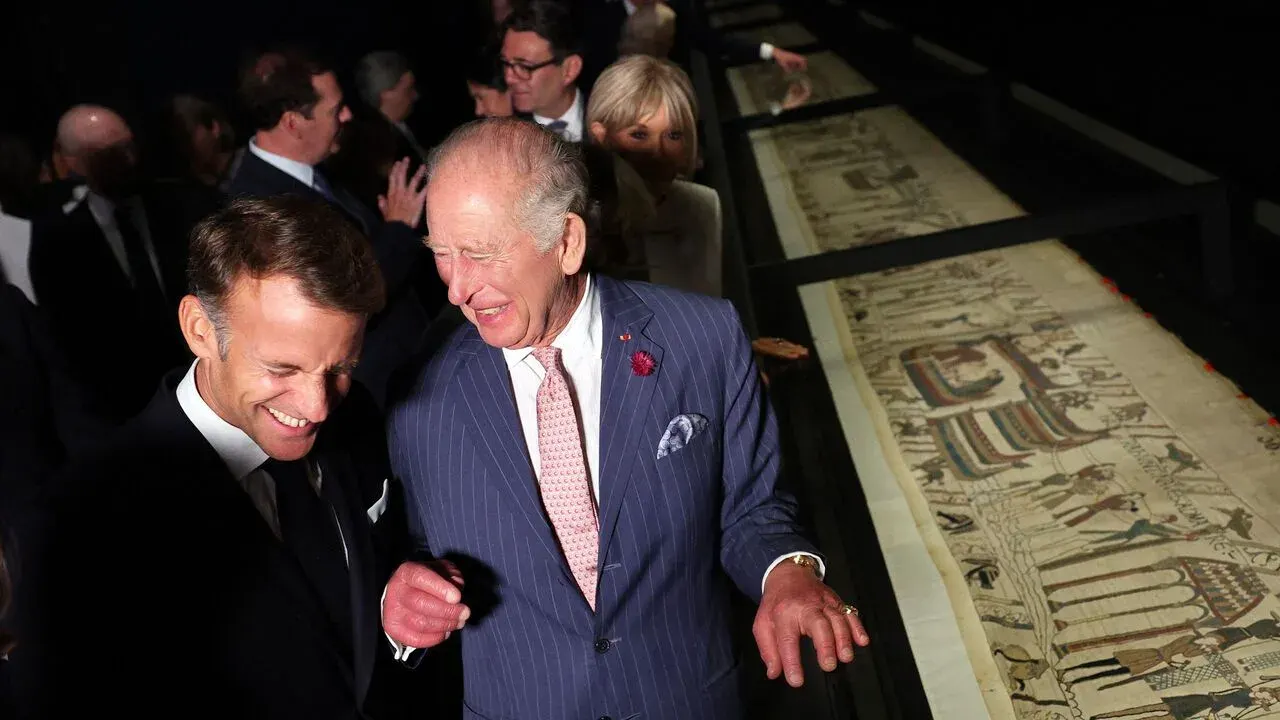
The loan “took probably more years” to negotiate than Brexit, Mr Macron joked last year; he has turned it into a personal pillar of cross-Channel statecraft. “When we come together around one table,” he said of Anglo-French ties after announcing the exhibition in 2025, “then everything is possible.”
Why Paris is courting London now
What explains this French warmth toward Britain? Old adversaries, the pair have clashed lately over Brexit, submarine contracts, small boats and more. Asked if Mr Macron was friend or foe, Liz Truss, briefly Britain’s prime minister, once replied, “The jury’s out.”
Now London appears eager to match the gesture. Under Sir Keir Starmer, Mr Macron received a state visit, a Windsor Castle banquet and a collaborator for building a “coalition of the willing” for Ukraine. Mr Macron was scheduled on September 3rd to become the first overseas leader to call on Andy Burnham, Sir Keir’s successor, at Downing Street. Ukraine, security and Britain’s relationship with the EU were on the expected agenda.
De Gaulle in Hampstead: history as soft power
An insight into the renewed rapprochement might actually be found beyond the British Museum, in a splendid new French two-part screen life of Charles de Gaulle, “La Bataille de Gaulle”. Made by Antonin Baudry, a former diplomat, it is — unusually for French cinema — adapted from a British biography, “A Certain Idea of France: The Life of Charles de Gaulle”. Penned by Julian Jackson, a historian at Queen Mary University of London, the 928-page volume emerged from years of meticulous work in the archives.
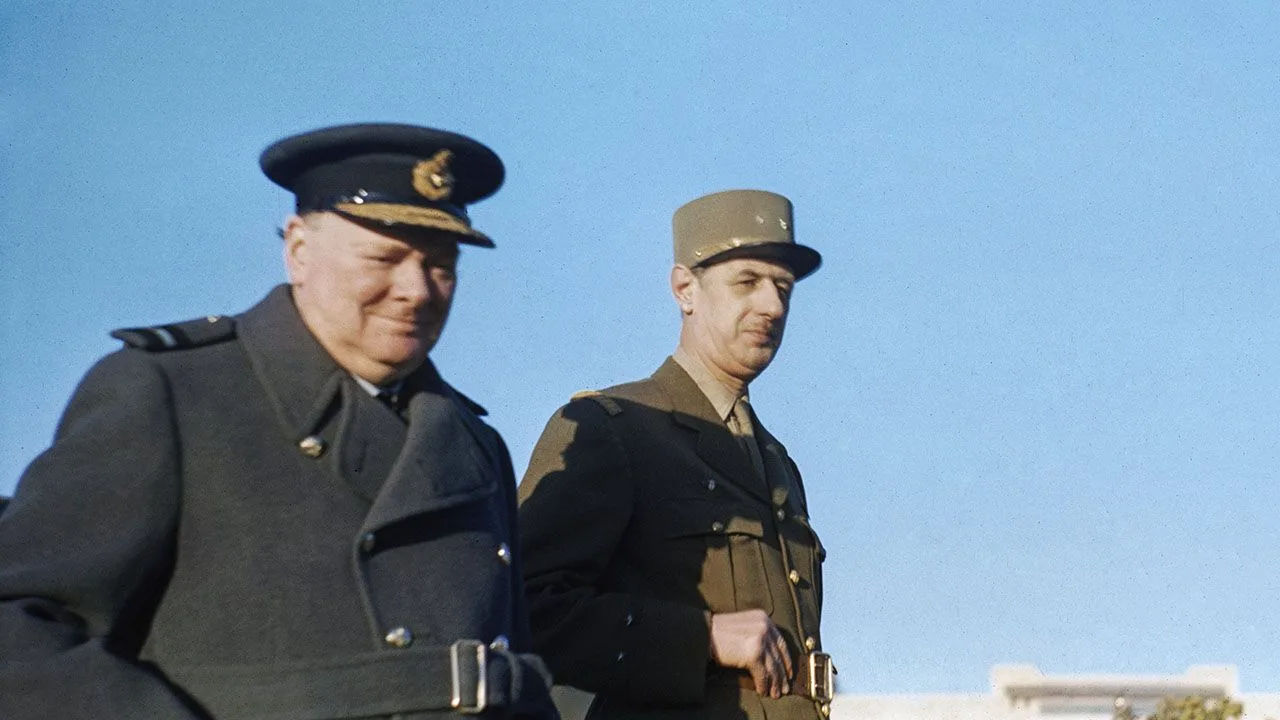
The cinematic double bill, with Simon Abkarian as the lead and Sir Simon Russell Beale as a marvellously grumpy Winston Churchill, is naturellement a rousing story of bravery and ethical certainty. That is the legend that still envelops the resistance hero and creator of modern France. But, perhaps owing to its foreign biographer’s perspective, it is also a balanced portrait of both the far-sighted grandeur and the mortal vulnerability of the general.
Hampstead, Carlton Gardens and the BBC
Especially engaging for British audiences, the opening instalment, “L’âge de fer”, lingers on De Gaulle’s exiled years in Hampstead, in north London, following France’s collapse to Nazi Germany in 1940. It does not smooth away the lofty general’s tempestuous dealings with Churchill. “Betting on De Gaulle seems something of a leap of faith, don’t you think?” Anthony Eden, the secretary of state for war, asks the prime minister. “This is not my first war,” Churchill snaps back, adding coolly: “If he fails, we’ll get rid of him.” The general and the premier exchange a good many barbs. Yet they also enjoy flashes of shared comprehension, respect — and a hint of fondness.
After all, London gave De Gaulle sanctuary, headquarters (4 Carlton Gardens), an airwave (the BBC), support (usually) and authority (which the Americans opposed). France has not overlooked that. In 2020 Mr Macron bestowed on London, “totally exceptionally”, the Croix de la Légion d’honneur, France’s supreme distinction, in token of “eternal gratitude”. London, he said, stood as “the last bastion of hope when all seemed lost”.
Sovereignty, Trump and the coalition of the willing
Mr Macron’s apparent argument is that, notwithstanding Brexit, notwithstanding Donald Trump, or maybe partly because of each, France and Britain must hold together today as they did at that time. The De Gaulle film, seen by more than 5m cinema-goers in France, recalls not just yearning for an era of extraordinary heroism. It additionally resonates with present-day anxieties over sovereignty, reliance and democratic principles.
Fiercely self-reliant, De Gaulle raged at Roosevelt’s wartime scheme for American military administration of France, concealed from him. The picture features the scene where Churchill bluntly informed the general that Britain would invariably prefer America to Europe. Still, De Gaulle’s creed of self-determination carries fresh relevance at a moment when Mr Trump’s America threatens to abandon Europe to its own devices.
Although the populist-right Reform UK party is pressing him hard, Mr Burnham has declared that Britain must “be bolder” in moving nearer the EU. Mr Trump has already driven Britain and France nearer to one another. Last year both states deepened co-operation on nuclear deterrence. Together they head the “coalition of the willing”.
A joint front against nationalism
The picture conveys a further lesson as well: that the sinister pull of nationalism is defeatable. The populist right is advancing in each nation. Marine Le Pen is presently the frontrunner to claim next year’s French presidential election. On September 4th Jordan Bardella, her deputy, is set to appear alongside Nigel Farage, Reform’s chief, at the party’s gathering in Birmingham.
Mr Macron enjoys urging France to reject the “spirit of defeat”, an allusion to Marc Bloch’s volume on France’s 1940 downfall, Bloch being a dissident shot by the Gestapo. The historical analogy may be inexact. Yet this remains another contest that Britain and France confront side by side. ■
For more expert analysis of the biggest stories in Britain, sign up to Blighty, our weekly subscriber-only newsletter.
KEEP THE CONVERSATION GOING
A good story is worth sharing.
Send this story to someone who values the bigger picture.
See more from GlobeBriefly on Google
Choose us as a preferred source in your Google preferences.