Audio
Listen to the article
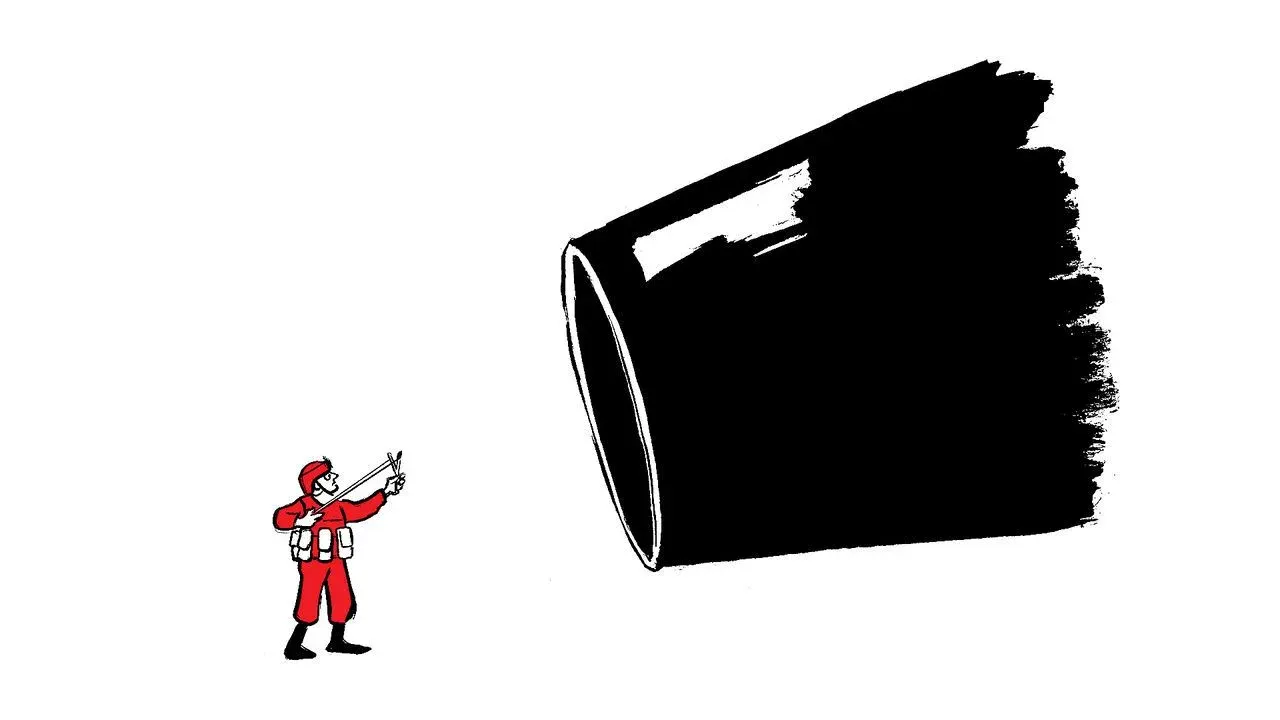
illustration: nishant choksi
- Readers say Europe has underinvested in defence for years and now faces pressure from both Washington’s new security doctrine and Russia’s war on Ukraine.
- On China trade, a reader argues the EU should not rely on services alone and needs industrial measures as Chinese export volumes have risen about 40% in five years.
- Also in this week’s postbag: favourite jargon, UK parties as retail brands, AI and truth, the return of paper, Santa letters, Homer and The Wizard of Oz.
Correspondence is invited by email to letters@economist.com
Learn more about how we process your letter.
A rift across the Atlantic: Europe and America’s new security doctrine
You are correct to argue that Europe ought to feel unease over Washington’s fresh national security doctrine (“An unreliable ally”, December 13th). Mr Trump’s manner may be abrasive and discourteous, yet the complaint that America is tired of Europeans shirking on security while striking poses internationally long predates him.
In 2011 Barack Obama was exasperated by Europe’s inability and unwillingness to resolve Libya. That same year he announced a strategic turn toward Asia. After Vladimir Putin seized Crimea in 2014, Europe responded by trimming military budgets and deepening gas reliance on Moscow. Confronted with that muted response to a transformed world, the first Trump administration doubted NATO and Europe; the second evidently doubts them more.
Still today, after almost four years of Russia’s unprovoked assault on Ukraine plus extensive grey-zone operations around Europe, our leaders have barely started to sound resolute, while genuine action remains promised for later. Britain might hit 3.5% of GDP for defence, though not until 2035. Western tankers still transport a third of Russian oil exports and EU states will keep buying Russian gas until late 2027. Hardly proof of deadly seriousness against a grave danger.
Simon Diggins
Colonel (retired)
US Combined Joint Task Force, Horn of Africa, 2011
Rickmansworth, Hertfordshire
The strategy openly aims to “cultivate resistance” to Europe’s leaders from inside their societies, signalling a covert and profound menace. Whatever one thinks of the White House, the geopolitical fact is that Europe faces pressure from two directions: narrowed by short-term politics above, and pushed from below by disruptive home-grown forces increasingly encouraged by a great power.
European policymakers need to halt the weakening of institutional safeguards, a trend flagged by the European Ombudsman and shown in the rising wish to sidestep EU unanimity requirements in the name of “urgency.” Such shortcuts only embolden detractors and forge instruments that illiberal movements will gladly pick up and wield if, as Washington expects, they gain office.
Bodies delivering vital functions, from universities to banks, share the duty too. Many have slipped into acting as combatants in political fights. That has to end. They should go back to institutional discipline and concentrate on their central tasks. Borrowing the cybersecurity idea of “attack surface reduction,” they should understand that self-restraint alone can keep our institutions from being ripped apart by the divisiveness Washington hopes to exploit.
Yohan Benizri
451 Institute
Brussels
What struck me in your piece on the battle over MAGA’s foreign policy was the closeness between Mr Trump’s outlook and those of Xi Jinping and Vladimir Putin (“Deals and ideals”, December 13th). The trio all look intent on building the imaginary states of Oceania, Eurasia and Eastasia from George Orwell’s “1984”. In the novel those three blocs fought endlessly, yet never truly sought to defeat each other. Instead, each used the menace of the other pair to sustain a permanent emergency that excused dictatorial, totalitarian rule at home. Orwell now looks remarkably prescient.
Doug Archerd
Brighton, Michigan
Handling commerce with China: tariffs, industry and services
The Economist advised that Europe should avoid new import barriers against China’s swelling shipments of cars, machine-tools and other factory goods (“From customer to killer”, November 22nd). The EU, Germany included, should supposedly shift toward services and imitate Britain, in your view.
Yet this is not The Economist‘s 19th-century campaign against the Corn Laws on behalf of Manchester capitalism. And urging a 21st-century British prescription carries little weight for the EU. The British economy has languished for years, while the poorly handled erosion of industry helped drive Brexit.
China itself would surely dismiss such advice outright. The country keeps redoubling costly yet effective industrial programmes. Paired with soft domestic demand, those programmes have lifted China’s export volumes by roughly 40% over the past five years, while China’s manufactured imports relative to GDP have declined for two decades. A China that sells almost everything abroad, buys far less back and subsidises high-tech manufacturing heavily does more than stretch the rules-based trading system; it warps partners’ industrial bases and deepens strategic dependence.
Why should Europe intensify its bet on services and increase dependence on Chinese factories precisely as it rearms to back Ukraine and сдерживать Russia, China’s ally? To deter aggression Europe will require drones and tanks, not merely additional consultants.
The EU should not copy China’s approach, but nor should it let the China shock run its course without action to brake it. Brussels will need industrial measures to channel demand toward domestic output and weigh wider sectoral tariffs on China as incremental product-by-product trade remedies are failing, as shown by the EU’s landmark duties on electric vehicles.
It is comprehensible that The Economist, with its free-trade roots, hesitates to admit it. But holding fast to an original doctrine is hazardous when the winner is not Manchester capitalism but a mercantilist China.
Sander Tordoir
Chief economist
Centre for European Reform
Berlin
Quite the stonker: on favourite jargon
I consistently relish The Economist‘s wordcraft. Startups once called “scrappy” have become “plucky”, while “lofty” valuations turn “dizzying”. But my favourite has been “stonking”. I had not encountered this treasured slang for ages, so I was delighted to spot it again recently in Schumpeter (November 29th).
I have pondered the expression at length. Would the author of such outsized gains be a “stonker”? Can it function plainly as a verb, as in “to stonk”? Might “stank” serve as its past tense?
Chris Ryan
Calgary, Canada
Doing the political shop: UK parties as retail brands
Your Blighty newsletter of November 18th requested the finest likenings of political parties to familiar brands. My entries: John Lewis for the Conservatives; formerly comfortingly dull, presently suffering an identity crisis and pushing products nobody requested. ASOS for Labour; once fashionable, then chaotic, currently straining to appear responsible again. Vows improved returns. IKEA for the Liberal Democrats; the concept appeals to all, yet nobody commits for the major purchase. This passage touches on why parties endure even when voters claim to dislike them.
Sports Direct for Reform UK; noisy, peddling easy answers and perpetually holding a sale. Patagonia for the Green Party; pricey, sincere and adored by cycling commuters. BrewDog for the Scottish Nationalists; brash, proud, once insurgent, now weathering embarrassing stories. And Le Creuset for Plaid Cymru; fashionable, specialist, and possessed mainly by devotees of origin.
Nick Heath
San Miguel de Allende, Mexico
Labour and the Conservatives both resemble British Leyland during the 1970s. Constant strife between bosses and staff, while market share and product quality slide together. They have lost sight of their essential mission.
Martin Smith
Andover, Hampshire
Setting the record straight: facts, corrections and AI
A Free exchange column (December 6th) claimed that in the press era preceding artificial intelligence, fact and falsehood were simple to tell apart. They were not, and never have been. Even the most careful newsroom can print something factually incorrect or later shown to be so. Respected papers, your distinguished publication among them, issue corrections. An AI sludge factory never does. Press corrections supply the anti-misinformation marker you seek. That distinction matters for debates over machine rights and accountability.
Georg Blaha
Munich
Back to paper: Denmark’s post and the return of print
Scrapping postal delivery in Denmark (“Final letter”, November 29th) marks another victim of the gradual fading of everything paper. Yet paper lovers like myself, who cherish a tangible note all the more in a digital era, can take heart. My husband and I, Gen Z and younger millennial, created and printed bespoke Christmas cards for the first time this year for friends and relatives. And it is younger riders who more often clutch a paperback underground, while their elders read on Kindles. If print defies expectations and grows fashionable again, the smartphone cohort will deserve credit.
James Hill-Jiang
New York
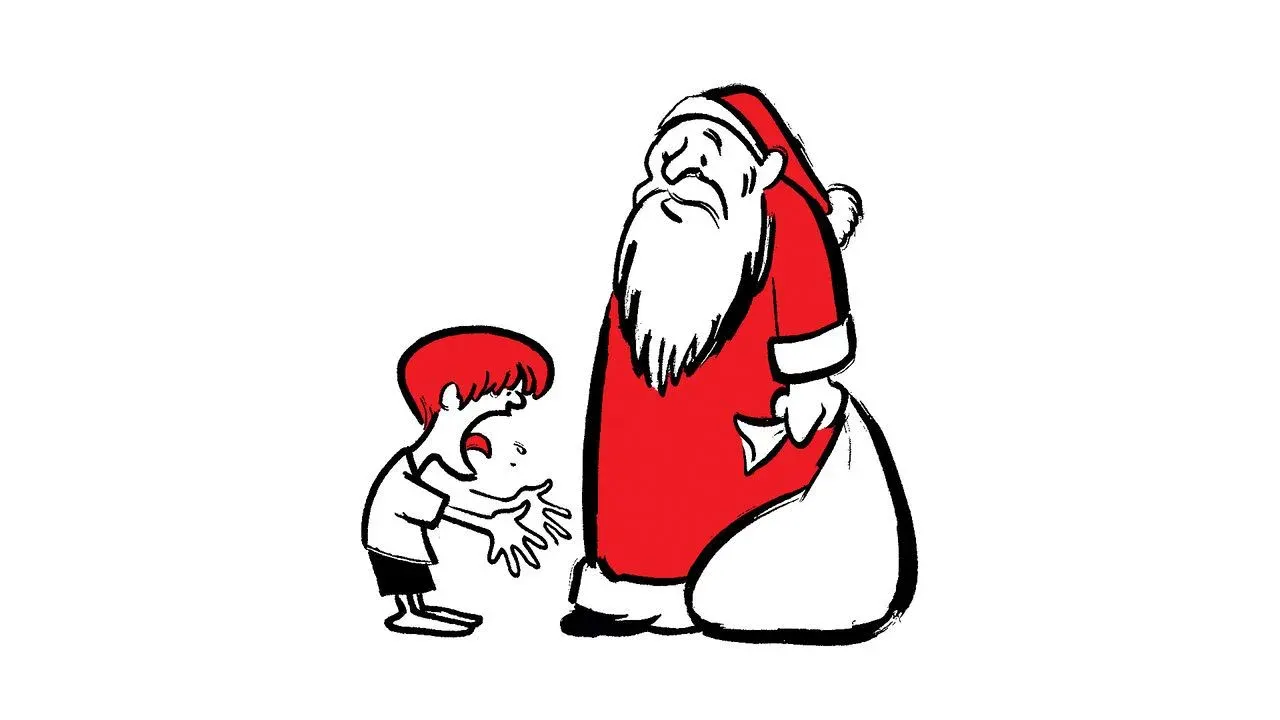
Through snow to Santa: AI and children’s letters in Canada
On worries over AI (The World Ahead 2026), children in Canada who address a note to Santa Claus at North Pole, H0H 0H0, and drop it unstamped in the box get a tailored reply from him. Last winter our mail system walked out and our neighbourhood flying club volunteered to ferry the Santa mail. We launched a school-wide effort plus a special “flight to the North Pole”. Seven grown-ups employed AI to draft, print, sign, fill and reseal hundreds of individual replies in one afternoon, ready for return to youngsters the following day.
While feeding the children’s particular wishes into the AI prompt, we either got rebukes for selfishly requesting an X-Box, or got hearty pledges that an X-Box would await them Christmas morning. The episode shows why fluent chatbots lack inner experience even when they sound confident.
As we weigh how to embed ethics in AI, firm parenting and curbs on misleading youngsters belong on the agenda.
Meagan Balaneski
Vermilion, Canada
Yes, in conclusion: reading Homer and Joyce today
I appreciated your reading of Homer’s “The Odyssey” for our times (The World Ahead 2026). You find that Odysseus, the protagonist, is flawed yet hopeful. You might have strengthened that upbeat point with James Joyce’s “Ulysses”, modelled on Homer’s epic. It closes purposefully on “Yes”, as Molly recalls saying yes to her husband’s proposal, conscious of his many faults and despite her daytime sexual meeting with her lover.
That “Yes” embodies her husband’s calm victory over numerous foes and gives hope to us all.
William Macilwraith
Worcester
My sole regret was that room ran out for Penelope as an early feminist. She is nearly as cunning as Odysseus, her spouse, managing to retain authority over her body while likewise deploying needlecraft to prefigure the many overlooked women sustaining the arts-and-crafts tradition.
Advice on self-improvement boasts ancient roots.
Peter Bloxham
London
Wickedly good: Salman Rushdie on The Wizard of Oz
Your assessment of Salman Rushdie’s latest story collection rightly noted his playfulness (“Mightier than the knife”, November 8th). I once chanced on his piece on “The Wizard of Oz”. Amid plentiful droll remarks, Mr Rushdie admitted loathing Toto, “That little yapping hairpiece of a creature, the meddlesome rug!” The dog cast as Toto reportedly suffered a breakdown while shooting.
Mia Mclean
New York
KEEP THE CONVERSATION GOING
A good story is worth sharing.
Send this story to someone who values the bigger picture.
See more from GlobeBriefly on Google
Choose us as a preferred source in your Google preferences.