Audio
Listen to the article
- Pope Leo XIV’s first AI encyclical, Magnifica Humanitas, offers Silicon Valley a bargain: build safeguards for plural beliefs and gain legitimacy for AI.
- Author Glen Weyl argues faith can steady volatile regulation and decide the US-China contest for adoption across religious societies.
- Asia’s engineering cultures show technology rooted in heritage spreads faster — and with more public optimism — than a disruptive, secular alternative.
Why technology can only thrive by embracing moral purpose, by Glen Weyl
Silicon Valley needs faith to make AI flourish. Pope Leo XIV has just issued the age of AI in Magnifica Humanitas, the Catholic Church’s inaugural encyclical devoted to digital technology, and the text offers a bridge between faith and engineering that could be society’s strongest chance to govern AI well.
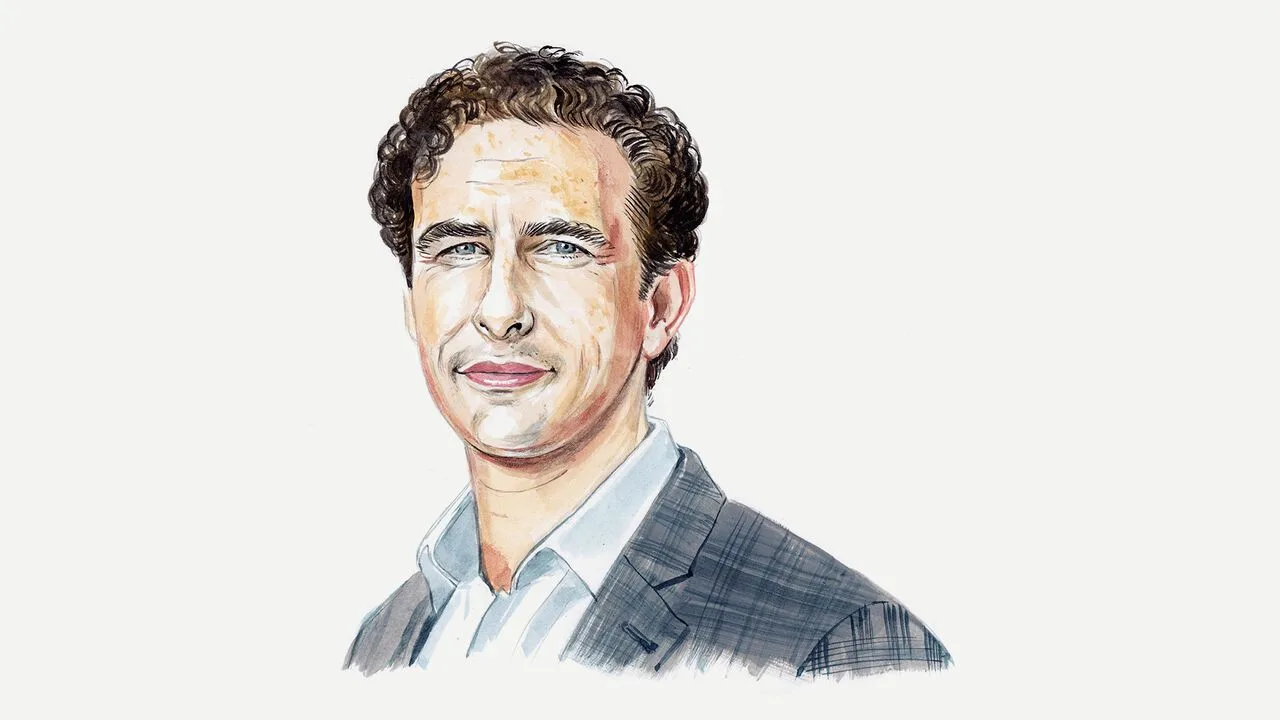
Secular detractors in Silicon Valley protested that the pontiff squandered an occasion to humble mankind before artificial superintelligence. Yet, as Glen Weyl argues, the encyclical contains something far more constructive: an argument for closing the gap between the sacred and the worldly, on principle and on pragmatism.
Unpredictability, not regulation, is AI’s biggest risk
Certain figures across the tech business have dismissed the encyclical’s protective, rule-setting instincts. Weyl says that reaction overlooks the larger opening it creates.
The most acute danger confronting the AI sector now is not regulation but unpredictability: rules that veer sharply between administrations and legal systems. Enduring spiritual traditions exert a steadying and persistently powerful influence, giving technology the grounding required for expansion. They offer foreseeability for needed safeguards and a shield from political whim.
Beyond that, alliance with faith communities amounts to more than fleeting political expediency. Instead, Weyl presents it as a path to direct and validate technology in a wider sense — accepting a degree of near-term velocity in exchange for much broader uptake and prevention of a ruinous public revolt.
The Vatican’s offer: pluralism over a Tower of Babel
That was the exchange Leo proposed: the Church may welcome and even bless AI provided its creators erect barriers safeguarding plural beliefs instead of a Tower of Babel dwarfing them.
Such an approach would entail, among other things, designing online offerings to defend and reinforce rather than unsettle local groups, and rendering jobs more dignified and imaginative rather than obsolete.
Notably, among parties submitting amicus briefs supporting Anthropic while it fought America’s Department of War over lethal autonomous weapons and mass surveillance were coalitions of faith leaders, including one Weyl co-directs, the Faith Family Technology Network.
A geopolitical edge the US is wasting
In geopolitical terms the logic grows even more pointed. Nations that must decide between an American or a Chinese technology stack, spanning Africa, the Middle East, Latin America and South and South-East Asia, remain profoundly religious. They feel no desire to register their offspring in an automated atheism.
China has woven suppression of belief into its most sophisticated apparatus, from monitoring mosques in Xinjiang to tracking unregistered churches.
Religious freedom ranked among America’s most effective tools of soft power throughout the cold war. Within the technological rivalry it sits virtually untapped, wasted by a sector that regards the beliefs held by most people as a source of shame, Weyl writes.
What Asia’s engineering culture reveals
Japan, India and Singapore: heritage as accelerant
Such reasoning stays theoretical, Weyl notes; what convinced him directly, as a political economist embedded in tech, came through contact with Asia’s engineering culture. That environment is permeated by an understanding of innovation as custodian and expression of heritage — for example Japan’s Doraemon robot cat reflecting traditional kami (spirits) — not as a substitute for heritage.
The pattern repeats throughout Asian modernization. Japan, during the Meiji era of 1868 to 1912, industrialized more rapidly than every country, rallying behind “Japanese spirit, Western technology.” Fresh plants received blessings at Shinto shrines. India, as this newspaper has reported, sustains a thriving faith-tech sector. Singapore, ranking among the globe’s most sophisticated nations, also counts among its most diversely pious, and acknowledges faith within its civic structures more completely than nearly any government beyond the Middle East.
Audrey Tang and Taiwan’s model of plurality
The ablest technologist Weyl says he has encountered is Audrey Tang, Taiwan’s first digital minister and the first openly non-binary cabinet minister anywhere, whose efforts on digital “plurality” the pope cited repeatedly throughout the encyclical. Her existence embodies the teaching of a holy book more fully than any other he has witnessed: it is guided by the “Tao Te Ching,” a central text of Taoist philosophy.
Still she has supervised the planet’s most sophisticated digital exporters, whose employees observe religion more than surrounding societies do — a stark contrast to the “closeted” Christians depicted in the American television show “Silicon Valley.”
Americans more concerned than excited about AI — Pew Research
Britons more concerned than excited
South Koreans more concerned than excited
Little wonder, therefore, that citizens of those nations view technology with markedly greater optimism. About 50% of Americans, 45% of Canadians and 39% of Britons are “more concerned than excited” about AI, against only 28% of Japanese, 19% of Indians and 16% of South Koreans, according to a global survey by Pew Research.
Grounding transformation in heritage need not retard a community, Weyl argues. Often it enables greater speed, by bringing more citizens forward together and sidestepping the boom, gloom and retaliation cycles that intermittently immobilize the West.
Silicon Valley’s own faith — and a call for toleration
None of this demands conversion by Silicon Valley. It asks merely for acknowledgment of its present identity. The industry’s creed around advancement, around disruption, around sovereign personal choice and around a tomorrow freed from history constitutes a faith in its own right. And it is every bit as culturally specific as any rival.
This moment demands not demolition of one dogma to enthrone a supposedly purer successor, but an equivalent of the Edicts of Toleration that concluded Europe’s religious conflicts: acceptance that no solitary creed monopolizes truth, and that space must exist for alternatives within bodies now shaping tomorrow.
That shift would imply a more open engineering ethos and milieu: crafting offerings for the vast, neglected devout consumer bloc and, as an illustration, permitting parents from those groups to guide AI models to their standards.
The hand has been extended. The tech industry would be wise to close the deal.
E. Glen Weyl · By Invitation
E. Glen Weyl is an economist in the technology industry, a co-founder of the Faith Family Technology Network and co-author with Audrey Tang of “Plurality” (2024).
Sources
Pope Leo XIV, Magnifica Humanitas; Pew Research global survey on AI attitudes; Faith Family Technology Network amicus brief in Anthropic case.
Author disclosure as stated in original article.
KEEP THE CONVERSATION GOING
A good story is worth sharing.
Send this story to someone who values the bigger picture.
See more from GlobeBriefly on Google
Choose us as a preferred source in your Google preferences.