Audio
Listen to the article
- Saudi Arabia’s Public Investment Fund spent $5bn on LIV Golf to rival America’s PGA Tour and last month withdrew backing; LIV is widely expected to seek bankruptcy protection within days.
- Money did not buy affection: LIV failed to win fans from the PGA Tour and could not generate sustainable broadcast income, a warning also seen in FIFA’s scrapped $4.2bn sell-off.
- Saudi strategy is pivoting: the PIF’s 2026-30 plan mentions “sports” only seven times in 50-odd pages — six prefixed by “e-” — as Riyadh leans into e-sports and a $55bn Electronic Arts buy-out.
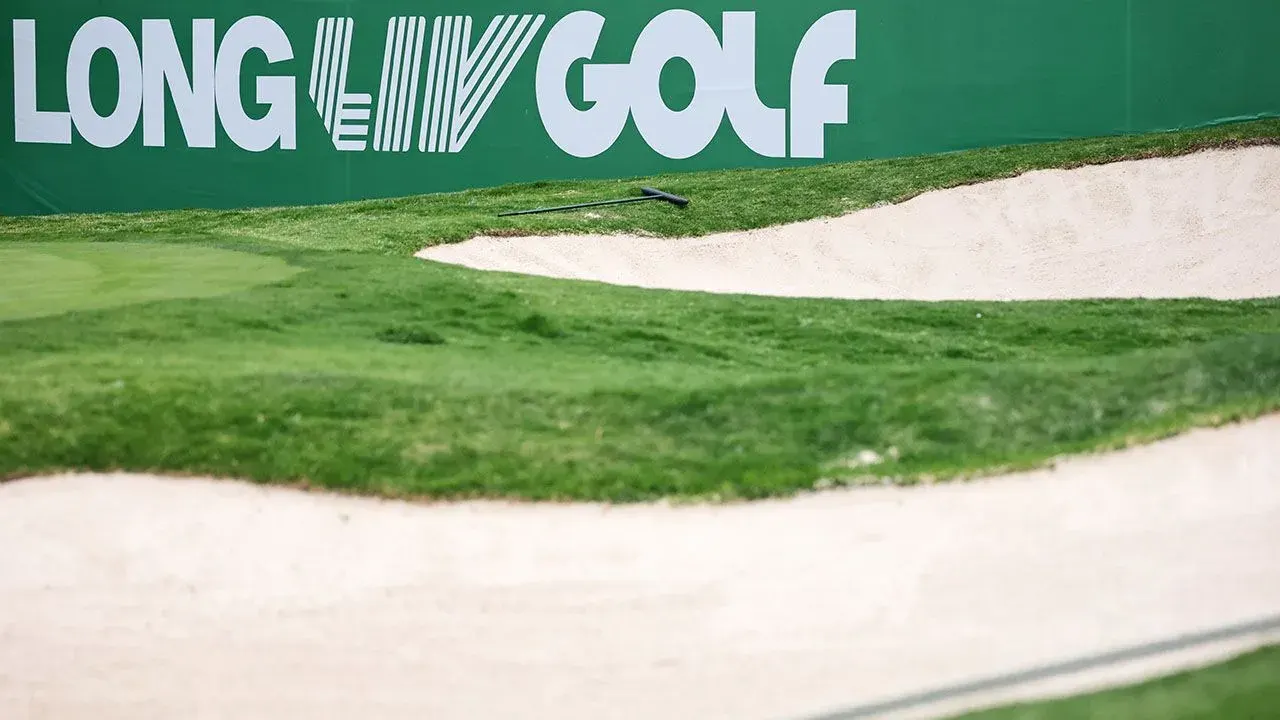
LIV Golf always retained audacity: Saudi Arabia, a nation resembling a sand trap yet lacking any golf heritage, tried to upend one of the world’s most elite pastimes with huge pay packets, a “Golf but louder” tagline and blaring fairway playlists. The $5bn gamble has collapsed. Last month the Public Investment Fund, Saudi Arabia’s $900bn sovereign-wealth fund, withdrew its backing, and LIV Golf is widely expected to seek bankruptcy protection within days.
Spent on LIV Golf to rival PGA Tour
Public Investment Fund assets
Electronic Arts buy-out led by Saudi
Golf was only part of a broader bet. Over the previous five years the PIF spearheaded a kingdom-wide push into football, tennis, boxing, martial arts and motor racing, alongside e-sports, as video-game tournaments are known. Critics accused Muhammad bin Salman, the Saudi crown prince, of “sportswashing” the country’s thuggish reputation by pouring petrodollars into athletes’ pockets. That captured only part of the picture. The PIF also hoped to use sport to make young Saudis more active and to host marquee events that would attract tourists and diversify its oil-soaked economy.
At present, traditional athletics have slipped down the table. The PIF’s recently published strategy for 2026-30 mentions the word “sports” only seven times in 50-odd pages — on six occasions prefixed by “e-”. As private-equity firms and other investors pour so much money into sporting franchises that some perceive a bubble, the retreat offers three lessons.
1. Money cannot buy fans — and fans can block deals
Owning an almost limitless balance sheet is one thing; winning a place in fans’ affections is another. The PIF blew $5bn on LIV Golf hoping to create a rival to America’s PGA Tour, using lavish prize money, faster games and more razzmatazz to attract younger fans. Although it recruited several marquee players, LIV alienated golf’s well-heeled supporters, who like the PGA’s genteel traditions and prestige. With too few fans, it could not generate the broadcast income to be sustainable.
Supporters can also become formidable opponents. FIFA, football’s global governing body, recently scrapped an attempt to raise $4.2bn by selling off chunks of the beautiful game, including the World Cup. That prompted a backlash among national federations, which feared, among other things, football supporters’ wrath.
2. Sport resists creative destruction
Within athletics, creative destruction is hard. Like many centuries-old businesses, it is tempting to think sports are ripe for disruption. Beyond the PIF, others have sought to shake up established leagues by launching snazzy alternatives, only to fail.
Grand Slam Track, an alternative to the Diamond League in athletics started by Michael Johnson, an American sprinter, filed for bankruptcy in December less than a year after its first fixture. Only a few upstarts prosper, such as Ultimate Fighting Championship, an American mixed-martial-arts organisation that has taken cage fighting to a new level. It created a new market rather than trying to muscle into already popular terrain.
3. Timing beats speed: franchises take generations, flipping is risky
Developing a winning sports franchise can take generations. More than 50 years have passed since Pelé, a great Brazilian footballer, first played for the New York Cosmos. Only now is American soccer coming into its own — and Pelé’s Cosmos have long been defunct.
The quickest way to make a buck today may be to buy a well-known franchise and sell it shortly afterwards. That is what Mark Walter, a financier, did with the Los Angeles Lakers, selling the basketball team last month to two fellow billionaires for $12.5bn, $2.5bn more than he had paid for it a year earlier. But in a frothy market, flipping is a risky strategy.
Why Saudi Arabia is pivoting to e-sports
When nothing else works, look forward. Saudi Arabia has a mixed record investing in sports that have been around for centuries. But in the past five years it has taken a more methodical approach to the emerging field of e-sports, including leading a $55bn buy-out of Electronic Arts, a gaming powerhouse, which was completed last month.
Watching gaming tournaments may not get young Saudis off the couch — but they love it. As an investment, it is less quixotic than LIV Golf.
To track the trends shaping commerce, industry and technology, sign up to “The Bottom Line”, our weekly subscriber-only newsletter on global business.
KEEP THE CONVERSATION GOING
A good story is worth sharing.
Send this story to someone who values the bigger picture.
See more from GlobeBriefly on Google
Choose us as a preferred source in your Google preferences.