Audio
Listen to the article
- Ukraine has sent more than 1,000 balloons over Russian territory since last autumn for munitions release, air-defence diversion and communications relay.
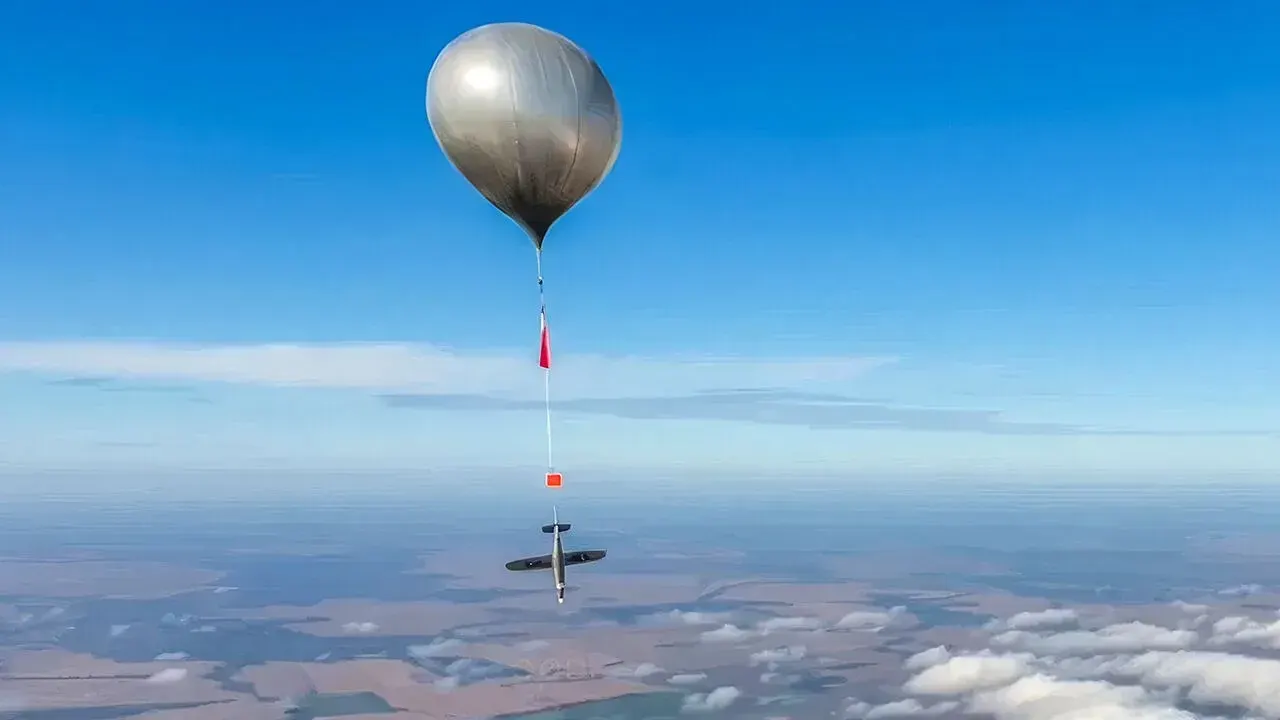
- Balloon-launched drones can be released from up to 18km high, gliding onward before starting their motors to extend strike range.
- A Hornet drone hauled 42km and released at 8km used only 5% of its battery in transit, reportedly doubling its 150km ground-launched range.
Ukraine has lofted more than 1,000 balloons toward Russia since last autumn, and now appears to be using them as airborne launchpads. Carried aloft and released at altitude, small drones can glide farther and strike deeper.
From 1783 to surveillance over Taiwan and Lebanon
Military use of balloons in Europe began soon after their creation in France in 1783. China’s “sky lanterns” go back much further, but are not believed to have lifted passengers.
They served as lookout platforms and afterward, in the form of captive “aerostats”, as barriers to enemy aircraft. More recently, China has used them for surveillance over Taiwan, and Israel for watching Lebanon. The American military is showing curiosity as well. Yet Ukraine is probably the keenest current operator.
What Ukraine’s balloons already do over Russia
Kyiv has deployed balloons throughout its conflict with Moscow. In May came word that the country had sent over 1,000 of them over Russian territory since last autumn.
They are able to release munitions, divert air-defence systems and function as communications relays, forwarding orders to drones that would otherwise lie beyond reach.
How balloons ferry drones farther
Ukraine has lately trialled a variation of that final tactic by employing balloons to physically transport drones, thereby lengthening the reach of the drone raids that are inflicting such harm on Russian facilities.
With cooperative winds, a balloon can both hoist a drone part of the way toward its objective and, once there, deploy it from high up, up to 18km high, letting it soar onward still further before it must start its motors.
Evidence of airborne drone launches
This airborne ferry system looks to have been under development in Ukraine for much more than a year. In March 2025 an image surfaced showing a drone suspended beneath an aerostat built by a Ukrainian company.
In September Russian Telegram channels and officials said swarms of balloons were observed coinciding with long-range drone assaults. And this May Ukrainian troops were said to have used a balloon to haul an American-made Hornet drone roughly 42km before letting it go at an altitude of 8km.
Why the Hornet test matters for range
Informants report the drone concerned consumed just 5% of its battery on electronic housekeeping while riding the balloon, retaining nearly a full charge for its task. A Hornet launched from the ground travels about 150km. Adding a balloon reportedly doubles that distance.
For now, balloons are built to haul only lighter drones, like the Hornet, which are not fully autonomous. But that limitation disappears if the drone-bearing balloon is equipped to serve as a relay.
Why winds favour Ukraine
Russia is also testing balloons, but the dominant winds work against it.
KEEP THE CONVERSATION GOING
A good story is worth sharing.
Send this story to someone who values the bigger picture.
See more from GlobeBriefly on Google
Choose us as a preferred source in your Google preferences.