Audio
Listen to the article
Domanove, Ukraine
Two figures emerge along a snowbound lane flanked by birch and pine toward Ukraine’s frontier with Belarus. Leading is an elderly man in a wheelchair, followed by a young woman. She propels the chair forward for a stretch, then walks back to haul luggage across the snow, repeating the effort again and again. Over the last 100 metres of the 2km walk, Ukrainian border personnel step in to help and take down their particulars. The teenager, Sofia, 17, is entering government-controlled Ukraine to start over after four years living under Russian occupation in the Kherson region. The man she assists is Serhiy, a retired engineer in his 70s from Sloviansk. He had intended to see his daughter in Simferopol, in occupied Crimea, yet border guards refused him entry and he suffered a stroke during the ordeal. Trembling down his left side, he considers going back to his house in front-line Donbas, even though Russian drones have struck it and heating has been lost. “The walls are still mostly intact,” he says.
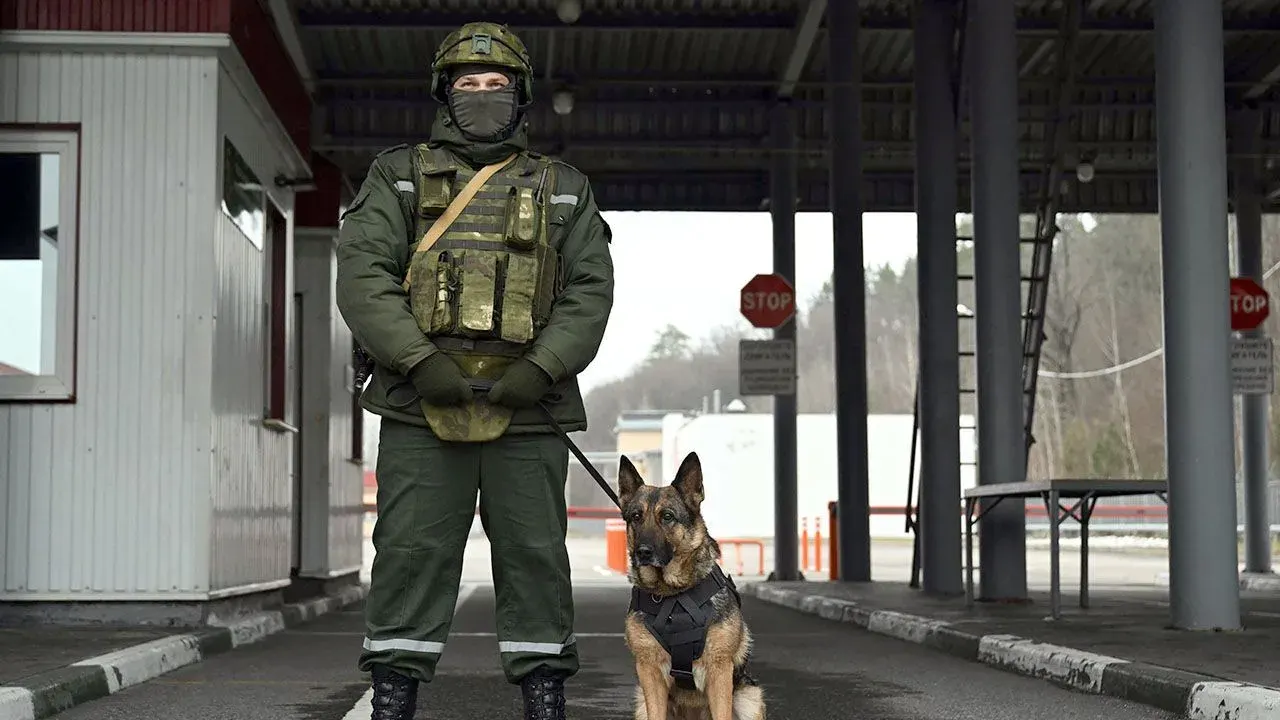
- The Mokrany-Domanove crossing, 60km from Poland, is formally closed but operates as a humanitarian passage for people leaving Russian-held areas.
- About 30 to 40 people cross daily, mostly women, children and older people, after a days-long route through Russia and Belarus.
- Occupied residents must register their homes with the occupying authorities by July 1st or face seizure.
- Recent polling suggests perhaps 40% of Ukrainians might accept a peace deal ceding territory — but almost nobody crossing out agrees.
The last open doorway out of Russian occupation runs through Belarus
Situated 60km from Poland, the Mokrany-Domanove crossing has turned into a vital escape for some of Ukraine’s most vulnerable citizens. It is formally closed, yet it has functioned in reality as a humanitarian passage for people leaving Russian-held areas since the earliest weeks of the war. Getting there is gruelling: travellers follow an indirect itinerary across Russia and Belarus lasting days.
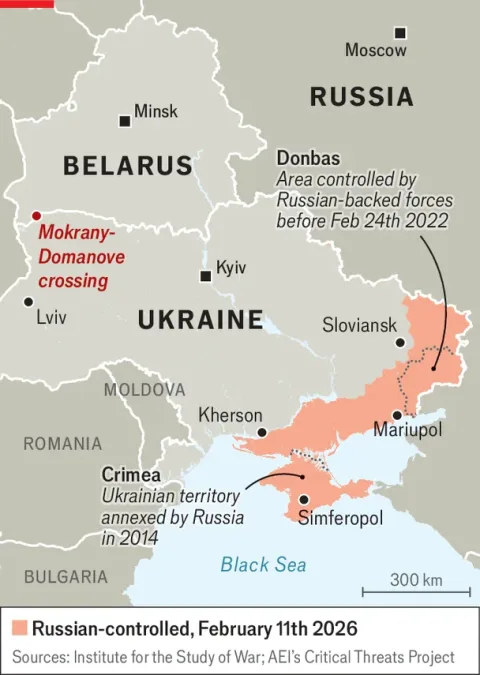
To enter Ukraine, anyone lacking valid Ukrainian papers — unsafe to transport inside Russia — must first obtain interim documents from the Ukrainian consulate in Minsk. Some fail to arrive, halted at “filtration points” operated by the FSB, Russia’s state security service, or rejected following interviews at the border.
Who makes the crossing
About 30 to 40 individuals make the crossing daily. The majority are women, children or older people, although men of military age also get through, aware they will go directly to Ukrainian army officers for possible recruitment. Several are gravely sick and coming home to die. Others carry possessions they refused to leave, including horses and on one occasion a small group of Kamori goats. Everyone brings accounts of a homeland being closed off and Russified amid Russia’s creeping battlefield advances.
On Ukraine’s side of the frontier, the welcome operation is organised by a local volunteer, also named Serhiy. After the chilled arrivals pass security screening, they proceed to Serhiy’s portacabin shelters, where they receive food, a fresh SIM card and a refugee grant of 10,800 hryvnia ($250), when funding permits. Minibuses then carry them onward to trains, buses, hospitals or family members.
Crossers per day
Refugee grant, when funding permits
And $400 for one pensioner’s journey
Serhiy, a former prisoner who found God during the covid pandemic, says he uses his personal history to offer the refugees hope, though lifting morale proves hard. People who arrived in summer had still expected conditions in occupied areas might improve, but “those travelling now, in winter, see no changes. It is getting worse, worse, worse.”
An ‘invisible life’ under occupation
Numerous arrivals fear speaking. Those willing to talk frequently start in whispers, then wariness yields to disclosure. Alvetina, a pensioner in her 60s, journeyed to Domanove from a village in Donetsk region. She hopes to meet her family in Kyiv for the first time since the war began. A trip that previously lasted a few hours took three days and cost $400.
Her route passed through Mariupol, seen by her for the first time since Russia destroyed much of the city early in the war. “You can still see the houses, how the poor people burned, how they were bombed. It’s hell, a truly terrible sight.” Weeping, she recounts her “invisible life” in her own village, concealing her Ukrainian passport inside a jar of flour “like contraband”. She understands better than to disclose her allegiance to neighbours, many of whom presently back Russian authority.
Moscow locks in its gains
Four years into the war, Russia’s occupation is shifting in nature. Last month concluded a three-year “transition period” designed to integrate the occupied territories into Russia. Moscow still seems uncertain over allegiance in the most recently annexed regions. There, FSB surveillance is omnipresent, even as Europe’s ownership of the Ukraine war reshapes the endurance of Kyiv.
Still, annexation has left a clear mark. Judicial systems, pensions, taxation, policing and business and property registers have been absorbed into Russia’s electronic bureaucracy. Under a fresh decree, Ukrainian homeowners must register their homes with the occupying authorities by July 1st or face seizure; properties judged “unoccupied” will be expropriated regardless. Propaganda banners promote the idea of “one nation”, reunited under Russia. “You must never speak well of Ukraine,” says Sofia. “Sit quiet, or risk being taken away or locked in your own basement.”
Cruel, but effective
Russia’s occupation is cruel but effective. “No one has mastered the art of occupation like the Kremlin,” says a source in Ukrainian intelligence. During the initial years of the war occupied Ukraine possessed a strong underground pro-Ukrainian network. Now there are fewer: “They filtered and frightened them.” Alongside Russia’s creeping battlefield advances, this has created new facts on the ground. In American-led peace talks, Ukraine’s leaders are being pushed to accept the de facto loss of millions of their citizens’ homes.
Recent polling suggests a growing minority, perhaps 40%, of Ukrainians might accept such a deal if it led to peace. But it finds limited support among those crossing out.
“We know it is difficult. But we are still waiting for Ukraine. We still hope to be liberated.”
Alvetina · Pensioner from the Donetsk region
KEEP THE CONVERSATION GOING
A good story is worth sharing.
Send this story to someone who values the bigger picture.
See more from GlobeBriefly on Google
Choose us as a preferred source in your Google preferences.