Evidence correction · October 2, 2026: This article has been revised to distinguish self-reported outcomes from measured sleep, correct trial participant counts and clarify uncertainty. Primary-source links have been added, the illustrations replaced with a real photograph, and the previous narration removed from the article.
Weighted blankets can feel comforting, but feeling better is different from sleeping longer. These five studies report some improvements in self-reported symptoms, while evidence for better objectively measured sleep is limited and inconsistent across populations.
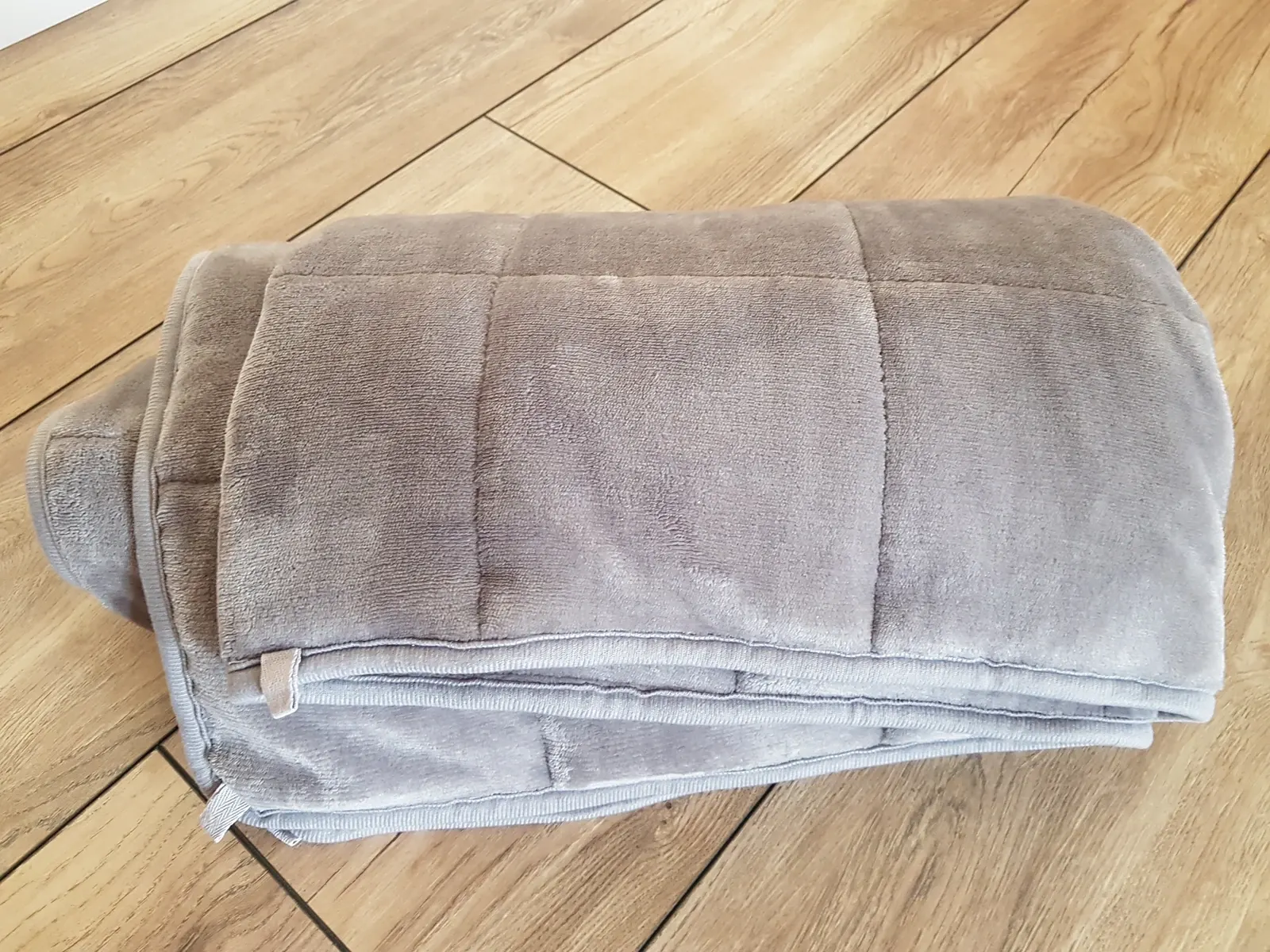
- A small Swedish laboratory trial found a greater bedtime rise in melatonin, without a significant increase in measured sleep duration.
- A Chinese pilot trial found improved reported sleep quality, but no statistically significant advantage in insomnia severity or recorded awakenings.
- The other trials distinguish symptom scores, sleep measurements and blanket preference; these outcomes are not interchangeable.
Weighted blankets use materials such as glass beads or chains to add pressure. Trials compare different weights and designs, making it important to look at each study’s participants, measurements and duration rather than treating all blankets as one intervention.
A Swedish night-lab trial: melatonin rose, with no significant sleep-duration increase
A Swedish crossover study, published online in 2022 and in a 2023 journal issue, tested 26 healthy young adults. Each had a laboratory night with a blanket weighing about 12% of body weight and another with a light blanket weighing about 2.4%, in randomized order.
During the hour before lights-out, the increase in salivary melatonin was about 32% greater with the weighted blanket (P=0.011). This was a hormone measurement, not a 32% improvement in sleep.
32%
The greater bedtime rise in salivary melatonin in this small laboratory study; its clinical relevance remains uncertain.
Sleep duration recorded by a wearable ring did not differ significantly. Technical problems left 13 of 52 nights without sleep-duration estimates. The study did not establish a sustained benefit for people with insomnia; oxytocin also did not differ significantly.
One-month insomnia trial: reported sleep quality improved
A 2024 Chinese pilot trial randomized 102 adults with insomnia to 5.5 kg or 3.5 kg blankets; 95 completed follow-up. After one month, self-reported sleep-quality scores improved by 4.1 versus 2.0 points (P=0.006).
Insomnia-severity improvements did not differ significantly (P=0.233). Recorded awakenings fell in the heavier-blanket group and rose in controls during the first week, but this difference was not statistically significant (P=0.280). Other objective sleep measures showed no statistically significant group differences.
Some other self-reported symptoms improved more with the heavier blanket. Interpretation is limited by the small sample, short follow-up, imperfect blinding and retrospective registration. Objective monitoring lasted only one week; nonsignificant findings do not establish either a benefit or equivalence.
Insomnia with psychiatric disorders: a strong questionnaire result
A 2020 Swedish trial randomized 120 adults with insomnia and depression, bipolar disorder, generalized anxiety disorder or ADHD to a 1.5 kg control blanket or a 6–8 kg weighted blanket. Of these, 119 completed four weeks; one stopped because of anxiety while using the blanket.
Insomnia-severity scores fell by at least half in 59.4% of the weighted-blanket group versus 5.4% of controls. Participants also reported improvements in fatigue, anxiety and depression. Overall actigraphy results did not show significant improvements in total sleep time or wake time after sleep onset. Only 77 participants had usable recordings at both time points; favorable responder-subgroup findings are not the overall randomized comparison.
The later 12-month follow-up was open-label, with both groups offered weighted blankets, so it cannot establish a long-term advantage over the control. Explanations involving touch or oxytocin remain hypotheses, rather than mechanisms demonstrated by this trial.
Autism and chronic pain: different outcomes tell different stories
A 2014 British crossover trial randomized 73 autistic children with severe sleep problems; 67 completed the study and were analyzed. Each blanket was used for two weeks. Neither objectively measured nor parent-reported sleep improved significantly with the weighted blanket, although children and parents preferred it. Preference is not evidence of improved sleep, and this brief trial does not establish long-term safety.
A US chronic-pain trial published in 2022 compared 15 lb and 5 lb blankets for one week. Its full participant-flow report lists 118 randomized, 16 lost to follow-up and eight excluded before analysis, leaving 94 analyzed. The abstract instead describes 94 as randomized; the counts here follow the full participant-flow report. The heavier blanket improved a broader questionnaire combining pain intensity and interference, but showed no significant advantage in daily pain-intensity ratings. Both are self-reported outcomes. Sleep changes did not differ significantly between groups. Short follow-up, attrition and exclusions limit interpretation.
Overall, these studies do not establish a general treatment recommendation. Small, short trials cannot establish safety for every user or product. In particular, CDC safe-sleep guidance says weighted blankets and other weighted sleep products are not safe for infants.
Primary sources
- Meth et al. Journal of Sleep Research, 2023;32:e13743 (online 2022; open full text)
- Yu et al. BMC Psychiatry, 2024;24:765
- Ekholm et al. Journal of Clinical Sleep Medicine, 2020;16:1567–1577
- Gringras et al. Pediatrics, 2014;134:298–306
- Baumgartner et al. Journal of Pain, 2022;23:156–174 (full author manuscript)
KEEP THE CONVERSATION GOING
A good story is worth sharing.
Send this story to someone who values the bigger picture.
See more from GlobeBriefly on Google
Choose us as a preferred source in your Google preferences.