Audio
Listen to the article
Five leaders pulled out of the Pacific Islands Forum in Palau at short notice, dealing a heavy setback to a gathering whose major decisions require consensus, as the dispute over Taiwan overshadowed the meeting.
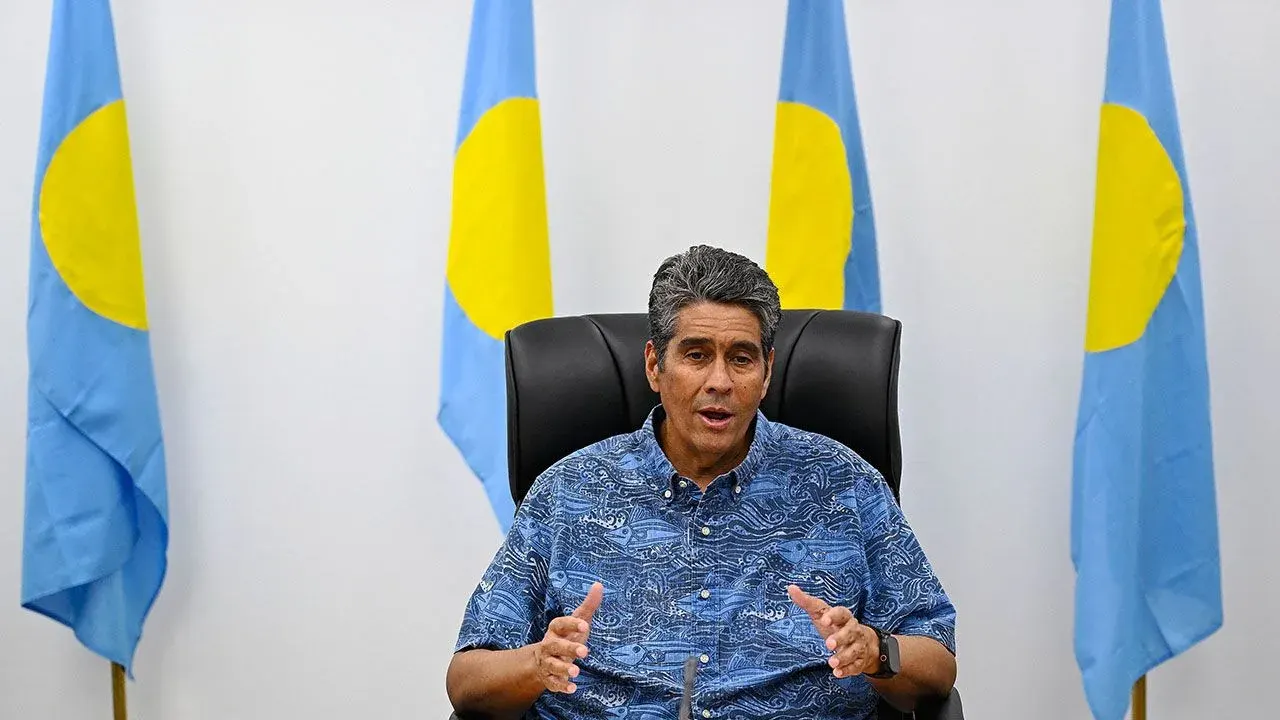
One distinctive habit of the 18-nation Pacific Islands Forum is what participants wear to the leaders’ gathering. Floral Hawaiian shirts are close to mandatory. At the session, held August 30th to September 1st, they appeared on island heads of government as well as on senior envoys from the United States, Europe and elsewhere in Asia.
- Five leaders pulled out at short notice from a forum whose major resolutions require consensus — and only leaders may adopt them.
- Palau’s president, Surangel Whipps, said China had warned weeks earlier of unspecified repercussions should Palau host Taiwan.
- Solomon Islands Prime Minister Matthew Wale, the forum’s departing chairman, hurried home to face a no-confidence motion, leaving his proposed security treaty with no advocate in Palau.
- Kiribati’s president sent a former ambassador to China in his place; Taiwan’s envoy said China was behaving like a guest acting as host.
Leaders absent from Palau
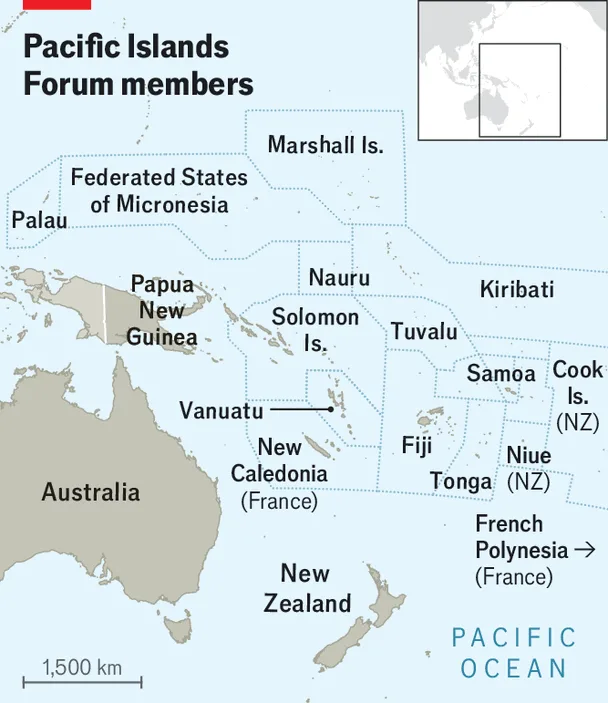
Pacific Islands Forum nations
Nations that recognise Taiwan
A summit hosted by one of Taiwan’s 11 diplomatic allies
A more consequential peculiarity is that three forum members recognise Taiwan instead of China diplomatically. Whenever one of those countries stages the yearly meeting, it creates the unusual sight of Taiwan’s top envoy, Lin Chia-lung, shaking hands and briefing journalists much as any foreign minister would.
This time the venue was Palau, among just 11 nations that recognise Taiwan. Beijing’s anger was predictable. Yet the extent of interference with the event still caught observers off guard. Five leaders pulled out at short notice, dealing a heavy setback. Forum resolutions require consensus, and only leaders may adopt major ones.
China’s warning to Palau
Attention soon turned toward China. Palau’s president, Surangel Whipps, a persistent critic of Beijing’s efforts to purchase sway in strategically placed Pacific island nations, informed journalists that China had warned weeks before of unspecified repercussions should Palau host Taiwan.
Solomon Islands: a treaty left without an advocate
The most prominent absentee was Solomon Islands Prime Minister Matthew Wale, in office since mid-May. As the forum’s departing chairman, Mr Wale had pressed members to endorse a fresh treaty that would complicate any Chinese bid to build a military or policing foothold in forum states. On the summit’s eve, however, three cabinet colleagues quit and lodged a no-confidence motion against him. Mr Wale hurried home to contain the parliamentary uprising. His treaty proposal was therefore left with no advocate in Palau.
Envoys in Honiara, the Solomon Islands capital, report routinely seeing China’s ambassador entertain parliamentarians at dinner, particularly since Mr Wale took office. One diplomat says Chinese officials and state-owned companies regularly hand money to lawmakers to encourage support for policies friendlier to Beijing. Still, they pointed to no concrete proof that China shaped the timing of the ministers’ resignations in this instance.
Kiribati’s substitute, and an angry Taiwan envoy
Other no-shows may reflect different causes. Not every leader enjoys robust health, and several face pressing home affairs. But one absentee, Kiribati President Taneti Maamau, abandoned discretion by dispatching as his substitute his nation’s ex-ambassador to China. The pattern annoyed Taiwan’s Mr Lin, who told journalists that China resembled a guest acting as host, issuing orders and “ruining the atmosphere” of the party.
For exclusive coverage of Asian politics, economics and security, sign up to Asia Bulletin, our weekly subscriber-only newsletter.
KEEP THE CONVERSATION GOING
A good story is worth sharing.
Send this story to someone who values the bigger picture.
See more from GlobeBriefly on Google
Choose us as a preferred source in your Google preferences.