Audio
Listen to the article
- Monetary policy brought inflation down without the feared recession, but long-dated forward guidance and negative rates proved less convincing.
- Central-bank independence works through expectations and is now under growing threat.
- With the G20 limping, “pragmatic plurilateralism” should advance shared goods from Basel III to AI.
- Europe has record 82% support for the euro but must deliver faster, with 40% of Draghi recommendations done and a proposed sovereignty target of January 1st 2029.
When I became governor of the Banque de France in 2015, a friend predicted plain sailing. The decade that followed was anything but. For us central bankers — stability-lovers and devout internationalists — deeply held convictions were put to the test.
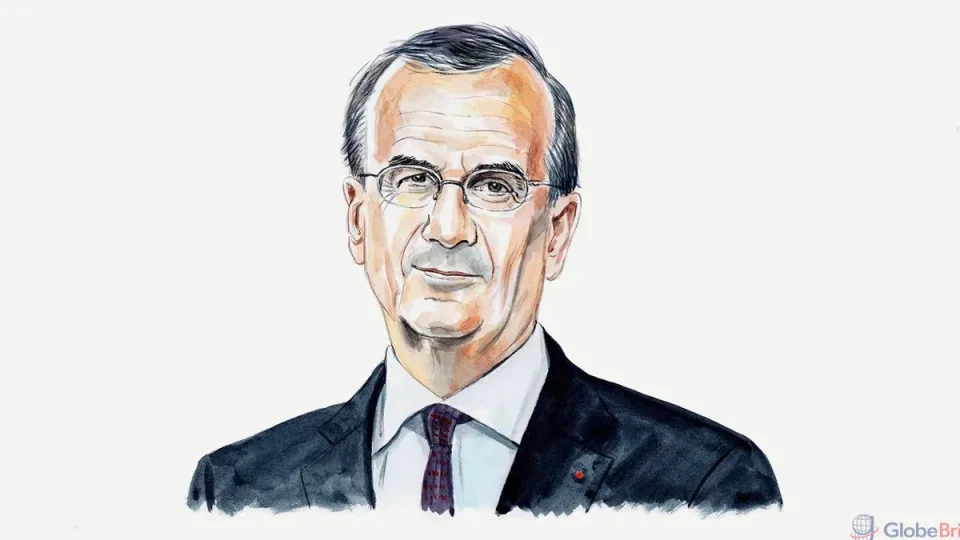
These years could be seen as purely chaotic and negative: slowing economic growth, rising debt and surging populism. Yet beyond that bleak picture, argues François Villeroy de Galhau, I draw four vital lessons.
1. Monetary policy worked — but humility is back
First, monetary policy worked, albeit not exactly as expected. In 2020-21 central banks confronted the risk of deflation triggered by the covid-19 pandemic; and from 2022 onwards, an inflation surge amplified by Russia’s invasion of Ukraine. Perfection is not the benchmark, but progress has been tangible. Inflation was brought down without the recession many feared — a soft landing, by any definition.
But legitimate pride should not be mistaken for hubris. Monetary policy in the wake of the global financial crisis of 2007-09 relied on an expanded arsenal of unconventional tools. Some proved remarkably effective: all balance-sheet instruments, including quantitative easing. Two other, more Promethean instruments appear less convincing today: long-dated forward guidance, which sought to forge the future, and negative interest rates, which strained economic common sense.
At the time, a refrain was repeated like an exorcism: monetary policy cannot be the only game in town. But the lesson was soon forgotten. After its efficacy against the financial crisis, monetary policy came to be seen as a way to tackle inequality or anaemic long-term growth at little cost. Today, central banks aim to be humble and nimble: data-driven, deciding meeting by meeting; and focusing firmly on price stability. This does not, incidentally, conflict with attention to climate risks, as extreme weather events increasingly affect economic activity and inflation.
2. Independence is a prerequisite, not a given
Second, independence is not a given, but is a prerequisite for effectiveness. The main challenge for central banks today — the growing threat to their independence — was barely thinkable a decade ago. Modern monetary policy works largely through expectations: households and firms must trust central banks’ commitment to bring inflation back to target. Attacking central-bank independence while claiming to fight inflation is schizophrenic.
More broadly, with today’s democratic governments often appearing constrained, the central-bank or “agency” framework offers a governance blueprint. It rests on three legs: a clear and measurable mandate (such as the 2% inflation target); autonomy over the means to achieve it; and democratic accountability for results.
3. Build “pragmatic plurilateralism”
The third lesson is the importance of building “pragmatic plurilateralism”. Multilateralism is in critical condition. The G20 has suffered most, limping from one communiqué to the next since the pandemic; the G7 under the current French presidency has at least been able to keep America on board. The time has come to find new ways to co-operate. Pragmatic plurilateralism — selected countries working together on specific issues when interests converge — is the way forward.
Pragmatic plurilateralism — selected countries working together on specific issues when interests converge, rather than waiting for full multilateral agreement.
Plurilateral coalitions of the willing
It is plurilateral because realism now calls for coalitions of the willing. In a speech in January, Mark Carney, Canada’s prime minister, championed alliances of “middle powers” — a sound idea. The success of the Network for Greening the Financial System illustrates the point: this best-practice-sharing group of central bankers and supervisors was launched from the Banque de France in 2017 with just eight members; it is now 152 strong.
Pragmatic work on shared public goods
It is pragmatic because it focuses less on grand macroeconomic ambitions and more on specific, shared public goods. Take financial stability: notwithstanding the current American temptation to deregulate or “de-supervise”, common rules for banks (Basel III), and even more so for non-banks, are in the common interest. Other topics ripe for such pragmatism could include trade, climate, payments — and not least AI.
4. Europe is solid, but must deliver faster
The final lesson is that Europe’s solidity depends more than ever on speed and delivery. Since 2015-16 I have witnessed several reinforcements of Europe. Citizens’ attachment to the EU has strengthened despite Brexit — and arguably because of it. The euro has consolidated spectacularly: support for the single currency in countries that use it stands at a record 82%.
Europe is robust, but not agile enough. Some 40% of the Draghi report’s recommendations have been fully or partially implemented — more than many imagine. But we need to speed up and change mindset and governance. Mindset means reconciling John Maynard Keynes’s social model and Joseph Schumpeter’s creative destruction. This is not an oxymoron: Sweden, Denmark and the Netherlands are among the most innovative countries in Europe, while also having some of the lowest levels of inequality.
As for governance, it is true that democratic deliberation takes time. But must it require three years between a European Commission proposal and a parliamentary vote on the digital euro? Must progress always wait for all 27 member states? The euro itself — adopted by 11 countries at launch, used by 21 today — shows how integration in steps, before all are ready, can succeed when anchored in a strong institution like the European Central Bank.
Nearly 35 years after the advent of the single market, Europe needs a mobilising date “à la Delors” — mirroring the former Commission president’s “Objective 1992” single-market push — for economic and financial sovereignty. Why not January 1st 2029, 30 years after the birth of the euro? Such a target could yet turn the challenge of the “Trump years” into a golden opportunity. ■
François Villeroy de Galhau has been governor of the Banque de France since 2015. He will step down in June. He has been chair of the board of the Bank for International Settlements since 2022.
KEEP THE CONVERSATION GOING
A good story is worth sharing.
Send this story to someone who values the bigger picture.
See more from GlobeBriefly on Google
Choose us as a preferred source in your Google preferences.