Audio
Listen to the article
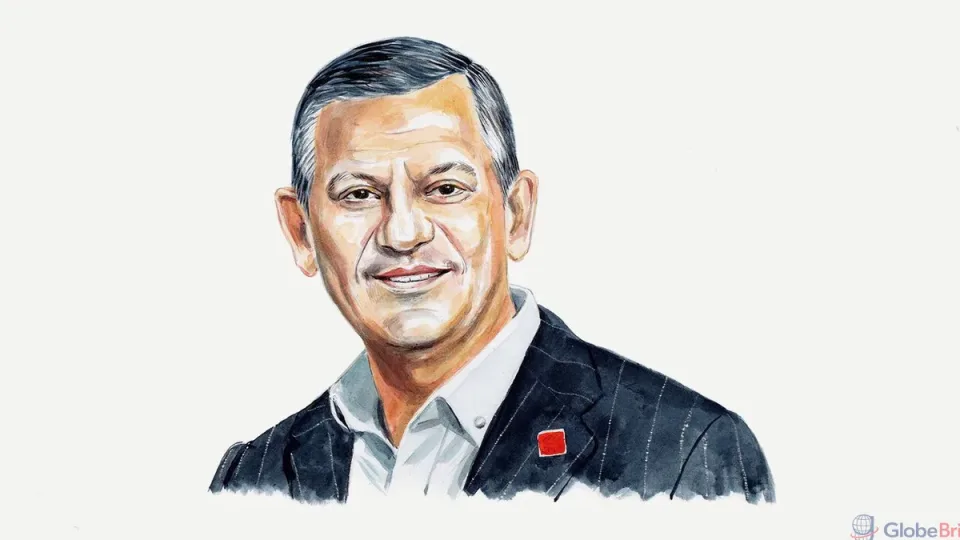
- Hungarian voters have unseated Viktor Orban. Turkey’s opposition leader Ozgur Ozel argues his country is fighting the same battle, on harder terrain.
- Six-party opposition alliances failed in both countries in 2022 and 2023. Bottom-up mobilisation is what worked.
- Turkey’s presidential candidate, Ekrem Imamoglu, has been jailed for over a year; around 25 CHP mayors have been detained since 2024.
- Unlike Hungary, Turkey sits outside the EU’s framework — which makes a democratic breakthrough there even more consequential.
Democrats across Europe, Turkey included, were heartened when Hungarian voters rejected Viktor Orban. His long spell as prime minister had become a case study in “illiberal democracy”: elections were still held, but the surrounding ecosystem was steadily bent—media consolidated, courts constrained, civil society pressured and economic power fused with political loyalty.
Much of this resonates far beyond the Danube. Turkey, too, has seen increasingly illiberal leadership and a gradual narrowing of competitive democratic space. Its president, Recep Tayyip Erdogan, came to power in 2003 with popular support and strong democratic rhetoric. Yet over time he has turned ever more authoritarian: controlling the media, building loyalist business networks, muzzling civil society and weaponising the judiciary against the opposition, including my own Republican People’s Party (chp), the second-largest in parliament after Mr Erdogan’s party, Justice and Development (ak). In both Turkey and Hungary, by the late 2010s, politics had shifted from open contestation to managed competition, where electoral outcomes are not predetermined, but increasingly guided by the ruling party.
A shared playbook, learned the hard way
There are also striking similarities between the democratic opposition movements in both countries. In Hungary’s 2022 election and Turkey’s 2023 election, broad six-party opposition alliances tried to defeat authoritarian incumbents. In both cases, however, these alliances—more focused on strengthening ties between the constituent parties’ elites and other establishment figures than on nurturing grassroots support—struggled to create a genuine opposition movement. What later succeeded was a new political approach that went beyond formal party alliances: politics rooted in popular mobilisation, disciplined messaging and credible leadership.
After the setbacks of 2022 and 2023, opposition movements in both countries learned from their defeats and began to look beyond conventional alliance-building. In Turkey the chp, under my leadership, defeated ak in the 2024 municipal elections. Since then we have been preparing for the next general and presidential elections. In Hungary the opposition under Peter Magyar’s leadership won last month’s general election, securing a parliamentary majority large enough to change the constitution.
The crucial difference: a jailed candidate
But there is also a crucial difference. Hungary is a member of the European Union, and it is now experiencing a peaceful transfer of power. Mr Orban ensured that the recent election was an unfair fight, for instance by rewriting electoral rules to suit his own interests and overseeing a disinformation campaign aimed at tarnishing the opposition. In Turkey Mr Erdogan has walked the same path, but dared to go much farther along it, using loyal elements within the judiciary to suppress the opposition.
Our presidential candidate, Ekrem Imamoglu, the mayor of Istanbul, defeated Mr Erdogan’s handpicked mayoral candidates in 2019 (twice), and again in 2024, and was preparing to compete against Mr Erdogan himself. For this electoral success he has been jailed, along with his associates, on baseless and politically motivated accusations of corruption, espionage and aiding terrorism. Mr Erdogan is now attacking my party’s mayors through fabricated lawsuits, aiming to paralyse our party and create an opposition he can control. Since 2024 around 25 chp mayors have been arrested, placed in pre-trial detention and in effect removed from office through judicial and administrative measures.
Containment, not elimination
Still, as in Hungary, resistance to Mr Erdogan’s regime—in the streets, coffeehouses and courtrooms—has sparked a new democratic awakening in Turkish society. My party has embraced bottom-up mobilisation, making the case that economic decline and democratic backsliding are deeply intertwined. We are uniting voters across parties, social groups, ideologies and ethnicities.
ak’s goal is not to eliminate the opposition but to tame it: allowing it to contest elections, and even govern big cities, while forcing it to operate within narrowing constraints. This is not simply a shift from democracy to authoritarianism, but from free competition to containment. The chp’s task is therefore not only electoral, but also civic: to regenerate democratic confidence and restore citizens’ sense of agency.
Why Turkey matters beyond Europe
Turkey’s case is further complicated by identity. It is an overwhelmingly Muslim country, yet constitutionally secular and socially pluralistic, with a long history of parliamentary democracy. In this sense, Turkey is a crucial test for the universality of democracy, the rule of law, checks and balances, and accountability. While Hungary speaks powerfully to the post-communist experience, Turkey—a country with almost nine times as many people, a regional power, a migration hub, an energy corridor and a key member of nato (as well as being an eu candidate)—carries broader significance for democracy, from Europe to North America and beyond.
The Kurdish question makes Turkey even more distinctive. Today there is a new peace process between the government and the outlawed Kurdistan Workers’ Party (pkk). The chp supports this process, not out of tactical or electoral calculations but for a broader democratic vision. Peace and democracy cannot be separated. This understanding is crucial for the Middle East, where questions of pluralism, representation, citizenship and co-existence remain central to any peaceful future.
A harder fight, and higher stakes
The struggle for democracy in Turkey is even more difficult than in Hungary—not simply because Turkey is outside the eu’s institutional framework, but because it is larger, more complex and crisscrossed by geopolitical fault lines. The stakes are higher, and the conditions more challenging. Mr Magyar was able to run in, and win, elections in Hungary. But our presidential candidate has been behind bars for over a year.
In Turkey the democratic struggle is no longer confined to parliament or the ballot box. It is being waged on multiple fronts: in mass rallies, in everyday life on the streets, in courtrooms through legal arguments, and on social media through the wit, creativity and digital fluency of young people. Hungary’s opposition victory energised the global debate on democratic backsliding. A democratic breakthrough in Turkey would transform it. ■
Ozgur Ozel leads the main opposition in Turkey. He is the chair of the Republican People’s Party and a member of parliament for Manisa Province.
KEEP THE CONVERSATION GOING
A good story is worth sharing.
Send this story to someone who values the bigger picture.
See more from GlobeBriefly on Google
Choose us as a preferred source in your Google preferences.