Audio
Listen to the article
Kyiv
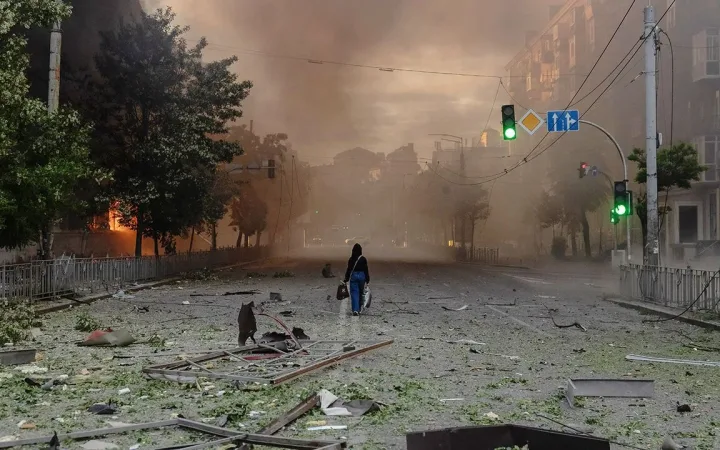
Shoppers in Kyiv had not confronted bare grocery shelves since the invasion began, yet that sight has returned. On July 19th a Russian ballistic missile struck a depot serving the premium Goodwine chain, and fourteen days later attacks on two Silpo distribution centres — belonging to a bigger retailer — left six employees dead.
- With interceptor stocks thin, Russia fired a record 198 ballistic and hypersonic missiles in July, now able to hit civilian logistics that were previously protected.
- Retail and delivery networks have been hit hard — Goodwine’s co-founder puts costs to Ukrainian firms at roughly $500m in three weeks — and Black Sea shipping is now targeted directly.
- Odesa’s ports are commercially dead as 50m tonnes of harvest await export; economists warn losses could reach $10-12bn, about 5% of GDP, if planting is abandoned.
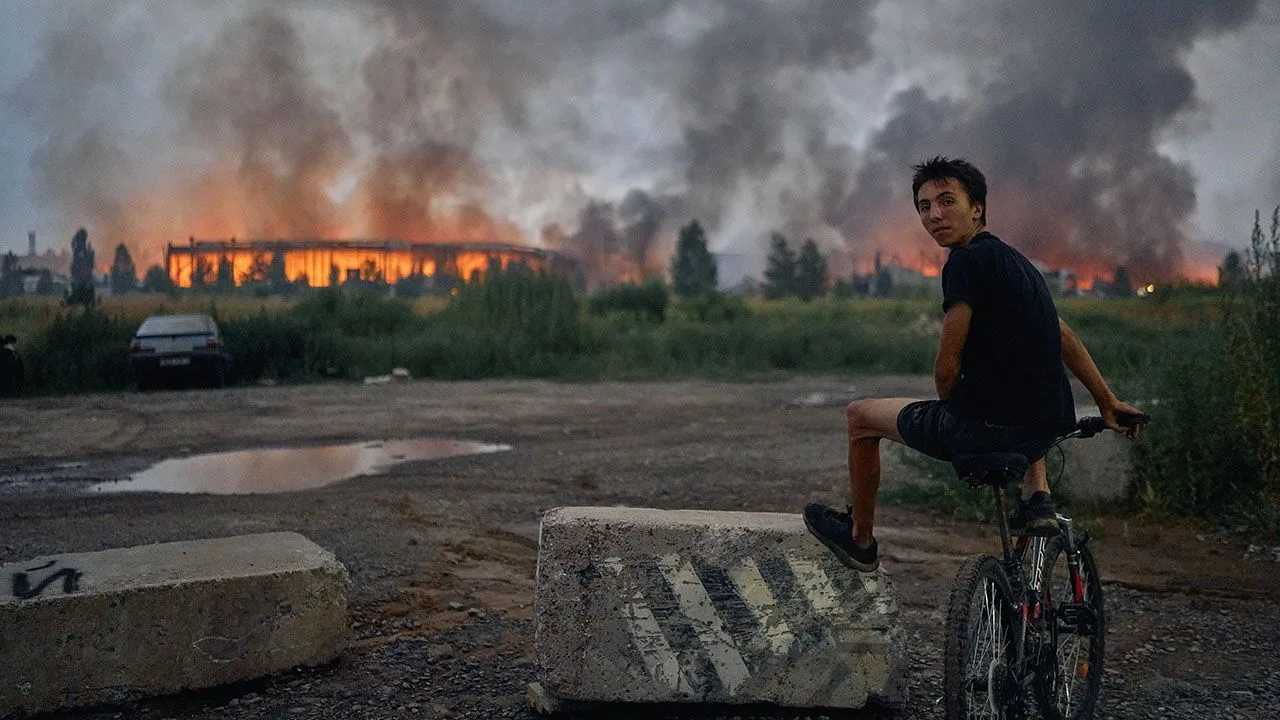
Russian strikes during the last three weeks have imposed roughly $500m in costs on Ukrainian firms, according to Goodwine co-founder Dmytro Krymsky. Nova Poshta, the private delivery firm relied upon across much of the country, has suffered repeated hits. More alarming is Moscow’s fresh practice of pursuing civilian freighters serving Ukraine’s Black Sea harbours — putting a much greater portion of economic activity at risk.
Why air defences can now protect only a handful of sites
The offensive against civilian supply lines reflects a deliberate widening of the war, enabled by a recent change overhead. Moscow is manufacturing more ballistic missiles precisely when Kyiv’s interceptor inventories have run thin. Ukrainian air defenders are now able to protect just a handful of priority sites.
During July, Russia exploited the opening by firing a record 198 ballistic and hypersonic missiles, chiefly toward the Kyiv region.
Ballistic & hypersonic missiles fired in July, a record
Estimated cost to Ukrainian firms in last three weeks
Tonnes of harvest still needing shipment
Retaliation narrative and Ukraine’s drone campaign inside Russia
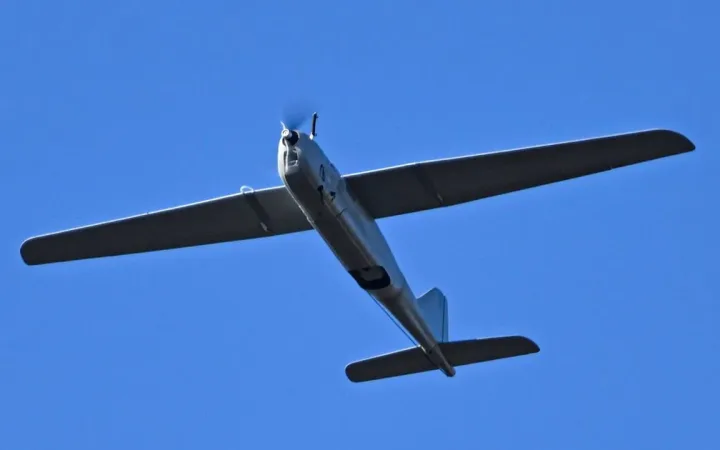
Moscow also presents the bombardment as retaliation for Ukraine’s own drone raids far inside Russia. Those operations have struck arms factories and petroleum facilities, shut Russian merchant traffic out of the Sea of Azov and set ablaze depots belonging to Wildberries, the Russian online-retail giant. Kyiv contends the firm transports gear for Vladimir Putin’s war effort.
Volodymyr Zelensky declared a 40-day “surge” in late June, meant to push Mr Putin toward talks. Observers widely expected Ukrainian pressure to climax during August. A Ukrainian intelligence source describes the effort as a military operation intended to deliver a “political and psychological” blow ahead of Russia’s rigged parliamentary elections in September. Near-daily blasts, advancing steadily toward central Moscow, have spread unease and humiliated Mr Putin.
That effort has also hurt Russia economically. Refinery attacks have disabled more than 30% of the nation’s working capacity. Fuel rationing, at its worst spread across 80 regions, persists in 18. Wildberries has forfeited almost a third of its sites, with damage estimated at between $2bn-4bn.
Because Elon Musk’s Starlink satellite network, resistant to jamming, operates for Ukraine but not for Russia above occupied land, Kyiv holds an edge in medium-range drone warfare. Ukrainian drones hunt Russian assets in and around Crimea and have assisted in halting Russian movement through Azov ports.
Black Sea ports choked as civilian ships are targeted
Yet strangulation now cuts in both directions, and Kyiv stands more exposed. Odessa’s harbours, the nation’s economic lifeline, felt the squeeze first. Endangered when the war erupted, the deep-water ports came back through a Turkish-mediated grain agreement, followed by a protected corridor for Ukraine in 2023. Russia continued to strike harbour facilities, but carriers accepted the danger, hauling 210m tonnes across the next three years.
That calculation shifted in mid-July after Russia started targeting the vessels themselves. Cruise missiles struck and sunk a Turkish-owned freighter departing Chornomorsk, among three major ports in the area, on July 19th. Ten people were killed. From that point, each ship sailing into or out of Odessa has come under attack. A small number still attempt the voyage, but commercially the harbours are dead.
The moment is especially damaging because 50m tonnes of harvest still need shipment. Substitutes look unappealing. “One ship of 100,000 tonnes is equivalent to 5,000 trucks, 5,000 drivers, and 5,000 border procedures,” says Dmytro Barinov, president of the Ukrport association. Conditions are tougher than in 2022, he says, when Danube terminals compensated for part of the shortfall. Today shallow river levels plus Russian strikes render that alternative more difficult.
Odesa’s deep-water ports are Ukraine’s main export route. The shift from striking facilities to sinking freighters — starting with the July 19th attack on a Turkish-owned vessel at Chornomorsk — has made commercial voyages unviable.
A grinding front and a war waged from the air
Along the front, both armies face bleak conditions. Across sections of eastern Ukraine, Russian forces keep inching forward, though losing more than 1,000 men a day — a pace recruitment has difficulty sustaining. In other sectors, Ukraine makes small gains through local counter-attacks. Neither side gains much ground.
Attention has therefore moved largely toward the air campaigns. Kyiv mainly directs drones at Russian military objectives, refineries and supply routes feeding Moscow’s forces. Moscow fires heavier ballistic missiles at Ukraine’s arms industry, civilian logistics and power systems. Europe now owns the war effort as the wider contest turns on endurance.
What the mutual strikes really cost
Each capital exaggerates its figures. Ukraine’s general staff claims $13.5bn-worth of damage to Russia’s refining sector since August 2025. Sergei Vakulenko of the Carnegie Endowment, a think-tank, judges the actual, immediate commercial losses at perhaps one-tenth of that, with almost no effect on state revenues. “The strikes hurt, but not where or on the timescale Ukraine claims,” he says.
of GDP that Dragon Capital, a Ukrainian investment firm, calculates the blockade will cost Ukraine this year. The assault around Odesa threatens to trap the harvest just as export routes narrow.
For Kyiv, the gravest threat is Moscow’s blockade of maritime exports. Ukraine lacks the means to respond in kind. Russia will therefore probably sustain it, whatever diplomacy brings.
Harvest at risk: the next economic shock
Greater harm could come next. Should the present harvest remain unsold, growers may forgo winter planting entirely, warns Alex Lisitsa, president of the Ukrainian Agribusiness Club. Farm losses might then climb to between $10-12 billion, he says, around 5% of official GDP.
$10-12bn
Potential farm losses if the harvest cannot be sold and winter planting is skipped — about 5% of official GDP, according to Alex Lisitsa.
Fallout would spread further, endangering food security and Ukraine’s position in long-standing markets across Africa and the Middle East. “It’s as if we played open football with the Brazilians,” rues one former senior official. “We scored three and are celebrating, but they scored 13.”
What comes next if interceptors do not arrive
This year Ukraine beat expectations and recovered battlefield momentum. That advance was always expected to fade with winter’s approach; instead, strain has come sooner. Without a dependable supply of ballistic interceptors, both its economic and military outlook will suffer badly. Western partners must increase assistance.
Kyiv whispers about a nightmare in which Russian hits on power, water sources and possibly even sewage trigger large-scale flight. “Would they go that far? They might,” says a Ukrainian security source. Kyiv races to armour its grid before the cold months deepen the crisis.
Mr Krymsky says companies are adjusting. “A colleague was telling me how they had a big meeting yesterday called Autumn Actions, about future plans,” he says. “Today it already has a new name: Survive Till April.”
To stay on top of the biggest European stories, sign up to Café Europa, our weekly subscriber-only newsletter.
KEEP THE CONVERSATION GOING
A good story is worth sharing.
Send this story to someone who values the bigger picture.
See more from GlobeBriefly on Google
Choose us as a preferred source in your Google preferences.