Audio
Listen to the article
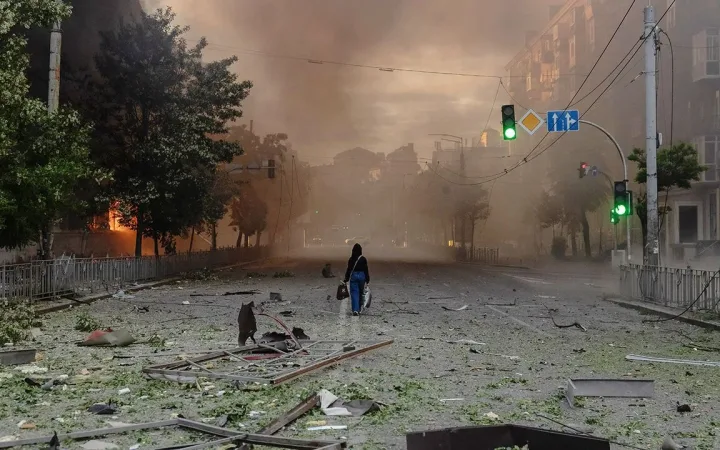
Eight non-combatants were killed and over 80 wounded. Thick black smoke rose above the debris. On July 18th Ukrainian drones struck two enormous depots owned by Wildberries, Russia’s biggest internet seller, in Moscow and in Tambov, roughly 475km south-east of the capital. The blasts reportedly wiped out consumer merchandise valued at some 150bn roubles ($1.9bn). Four days afterward Ukraine hit two additional storage sites in south-west Russia. One woman died.
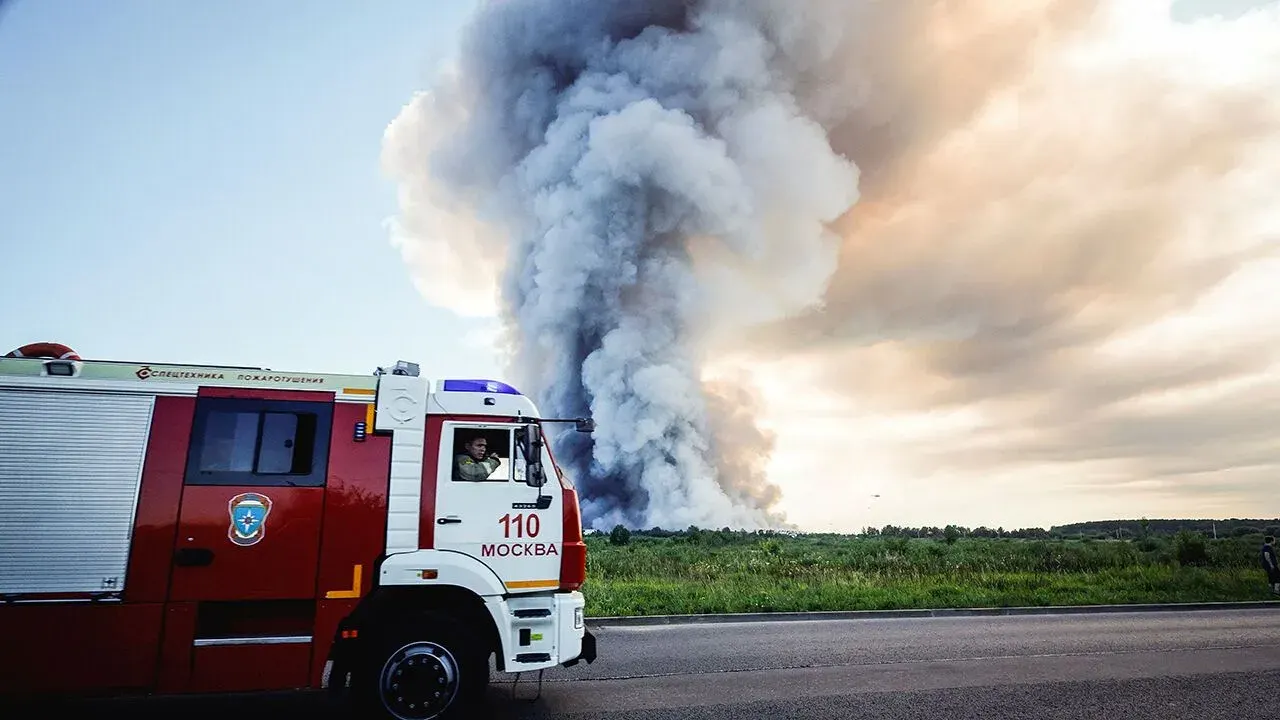
- Ukrainian drones hit two Wildberries depots — one in Moscow, one in Tambov — on July 18th; merchandise valued at some 150bn roubles ($1.9bn) was reportedly destroyed.
- Volodymyr Zelensky says soldiers and volunteers buy military-related goods such as drone components and bulletproof vests on the platform, and calls the raids a response to Russian strikes on Ukrainian cities and communities.
- Satisfaction with government policy has fallen from 45% in January to 21% in June, as the war moves from the television screen into daily Russian life.
Why Ukraine struck Wildberries depots
Volodymyr Zelensky, Ukraine’s president, said that soldiers and volunteers use Wildberries to buy military-related goods such as drone components and bulletproof vests. Yet he also hinted at retaliation. The attacks, he said, were a “response to Russian strikes on our civilian infrastructure and on our cities and communities”. They came after hits on premises of Nova Poshta, a Ukrainian postal and logistics company, which Russia says are also used for military purposes.
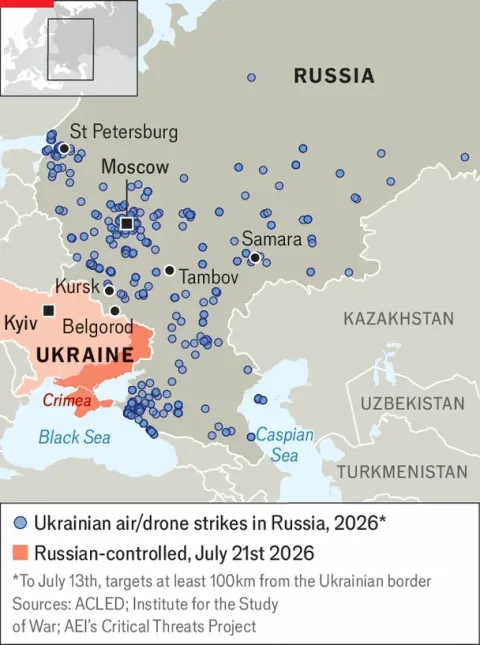
Ukrainian raids on refineries, which have caused fuel shortages across the country, had already carried the conflict into ordinary life. The newest blows further erode the belief that combat will remain limited to the front lines inside Ukraine and highlight the Russian authorities’ failure to defend their own people. “Those black columns of smoke have become part of everyday life,” says one Muscovite. Wildberries counts millions of customers. Hundreds of thousands of firms rely on it to sell everything from socks to smartphones (not to mention body armour and fibre-optic cable). “The attacks on Wildberries warehouses have affected nearly 100% of the population in one way or another: some physically, some financially, and others psychologically,” says Elena Panfilova, a Russian political scientist.
Traders offering products through the platform flooded social media with clips and messages. One mother from a small town posted on Instagram: “I made everything with my own hands…and then this happened. Everything fell apart. What am I supposed to do now?” Natalia Plonke, who sells cosmetics, said: “The risks are being shifted onto us. The losses are becoming ours, too. It’s only going to get worse.” Still, for Wildberries the raid did not come entirely without warning. Two weeks before, the firm updated its merchant agreements, disclaiming responsibility for war-related losses.
Anger and indifference
Russian military bloggers have long lamented the apathy of Russians who tried to ignore the war. Reacting to the newest hits, some pro-war nationalists sounded almost gleeful. “From the point of view of getting people involved, [these attacks] are a plus,” said one commentator. In reality such raids may deepen Russian bitterness over the conflict. In the Samara region a veteran recently tried flashing his credentials to get petrol without queuing. Angry motorists beat him up.
Popular frustration is growing. According to VCIOM, a pollster close to the Kremlin, satisfaction with government policies has fallen from 45% in January to 21% in June. The share saying Russia is moving in the wrong direction has doubled from 17% to 35% in the past year, says Levada, an independent pollster. President Vladimir Putin’s own approval ratings are falling, too, though from a high level.
Roubles of goods reportedly destroyed ($1.9bn)
Satisfaction with government policy in June, down from 45% in January
Russians who trust television, though 56% name it their main source
Across Moscow, campaign billboards proclaiming “Za Putina” (“For Putin”) — emblazoned with the Latin letter “Z”, symbolising the war — have become ubiquitous. Parliamentary elections are two months away. Any politician who speaks against the war has been excluded from standing. The Kremlin will declare whatever result it wants.
Yet the Kremlin cannot dictate public sentiment. Most want the war to end. News bulletins are omitting details of Ukraine’s drone attacks, further eroding trust in television — one of Mr Putin’s levers of power. While 56% of Russians still mention television as their main source of information, only 37% say they trust it. Previously, Mr Putin delivered the war to their TV screens. Now he has delivered it into their daily lives.
For the biggest European developments, subscribe to Café Europa, our weekly subscriber-only newsletter.
KEEP THE CONVERSATION GOING
A good story is worth sharing.
Send this story to someone who values the bigger picture.
See more from GlobeBriefly on Google
Choose us as a preferred source in your Google preferences.