Audio
Listen to the article
Vilcha, Ukraine — on the Belarus frontier, 150km north of Kyiv
- Shortly after 4am on February 24th 2022, the small detachment at Vilcha survived a rocket barrage and then faced a 700-vehicle Russian armoured column with rifles, RPGs and one machinegun.
- On the first day of the invasion 20 border guards were killed, 59 injured and 85 taken prisoner nationwide — the service absorbed the initial blow.
- Four years on, the Vilcha guards are dispersed to the fiercest fronts while their story tracks Ukraine’s shift to a drone-dominated war and growing strains at home.
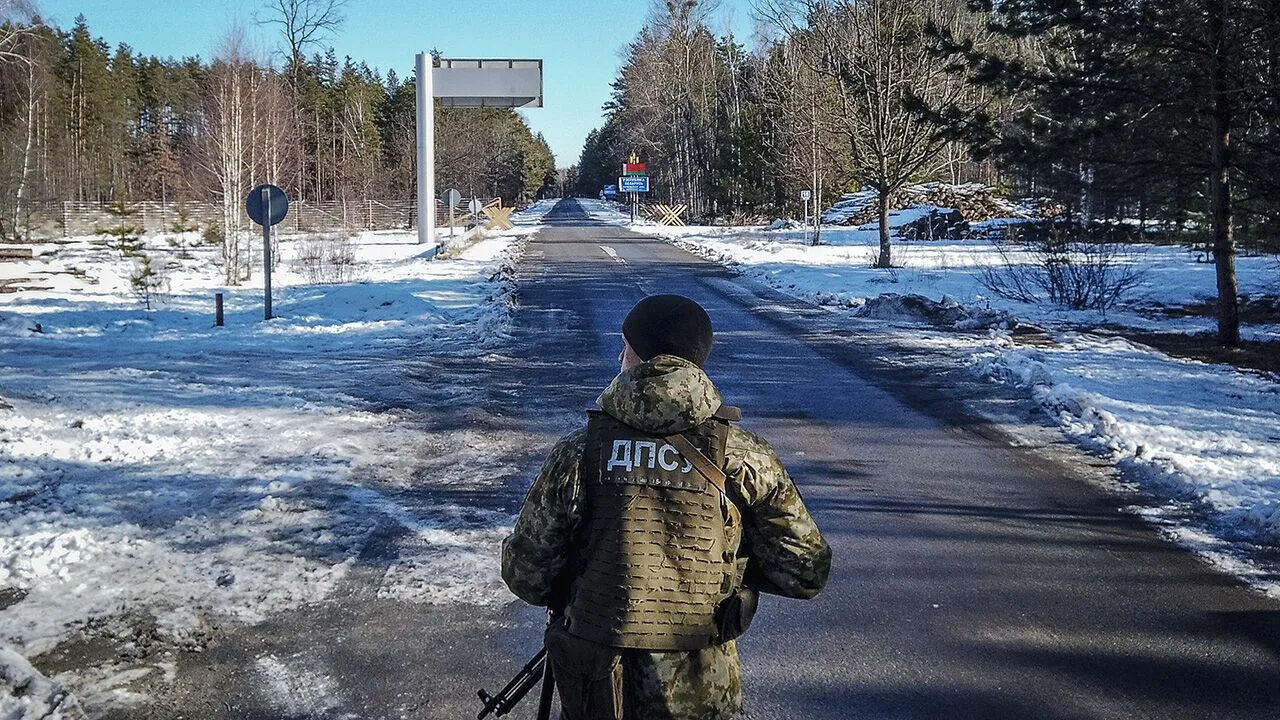
Shelling erupted shortly after 4am on February 24th 2022. For the small team of guards posted at Vilcha checkpoint, 150km north of Kyiv, the chances of living through it looked slim. Rockets tore their corrugated-iron huts apart within moments. Only fast reactions by Senior Lieutenant Sashko “Buddy” Suprun spared the men from destruction. Catching the sound of incoming fire he yelled for them to pull back, and they observed from foxholes just metres distant, equipped with barely more than assault rifles, rocket-propelled grenades and a machinegun, as a 700-vehicle-strong armoured column advanced toward them.
The attack at dawn
Nationwide, Ukraine’s border service absorbed Russia’s initial blow. On opening day 20 guards were killed, 59 injured and 85 taken prisoner. Back then, nobody could tell what kind of nation might endure Russian aggression. That uncertainty persists, though Vladimir Putin is far from his main objective of destroying Ukrainian statehood.
Border guards killed on Feb 24, 2022
Vehicles in column that hit Vilcha
Russian soldiers claimed killed or seriously wounded in Dec-Jan by drone units
A family on the frontier
The detachment functioned like a tight family. For years its men and women had resided together in the village, beside the Chernobyl exclusion zone. They counted as friends, partners, godparents to one another’s youngsters.
“Baloo”, the 23-year-old unit commander, had lately welcomed his first baby. Lieutenant Suprun, then 31, loved cooking and hoped to launch a restaurant. “Hassid”, 35, operator of the armoured personnel carrier, had battled the Russians across multiple deployments in occupied Donbas since 2014. Signaller “Koshyk,” 33, the longest-serving, had been stationed at Vilcha intermittently since 2010.
That wintry dawn altered their existence permanently. “Life turned upside down,” says Baloo. “Before, I had plans, I had hopes.”
Warning signs and the decision to delay
Around Vilcha strain had mounted for weeks. The guards tracked developments across the frontier through Ukrainian and Belarusian truck drivers, who shared dashcam clips revealing the Russian concentration. They learned almost at once when the earliest tank transporters reached the area in January, and where they concealed themselves inside the Belarusian forest.
At first they ventured to hope the troops would depart once drills finished, yet by February 23rd little illusion remained. That morning they received word that the Russians were daubing tactical markings on vehicles and guns. That evening Ukraine’s cabinet ordered border crossings shut at 8pm. The guards sipped tea and started a night without sleep. “All you can do is think about your family,” says Signalman Koshyk.
Commander Baloo understood his detachment could never halt the huge Russian column. His aim instead was to delay it sufficiently for army formations 20km further along the route to engage it: “We knew the terrain better than they did.” Bridges received mines and ambush positions were prepared.
Blowing the bridge on the Uzh
On the morning of February 24th, amid a lull in bombardment, the border guards withdrew toward elevated ground beside the river Uzh. It resembled a slow-motion movie, says Hassid, who departed last in his armoured personnel carrier, with two shells detonating “right in front of my bonnet”.
When the Russians moved onto the bridge spanning the Uzh, Ukrainian troops demolished it. That halted the column — temporarily. The Vilcha guards slipped away along narrow side roads. Astonishingly, everyone survived.
Dispersed to the fiercest fronts
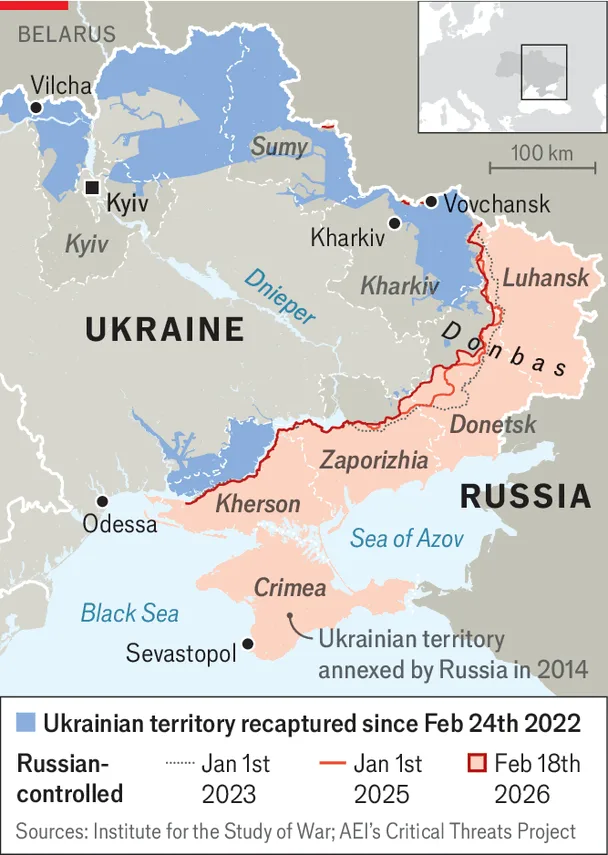
Now, unit personnel are dispersed throughout the nation. Many of the guards serve in the fiercest sectors of Donetsk, Kharkiv and Sumy regions.
Commander Baloo belongs to an elite counter-espionage unit. “I can’t say much more about my work, other than that I’m now all about hunting enemies close to home,” he says. Koshyk, moved to another secret unit, is active “somewhere on the Ukrainian-Belarusian border”. Hassid, veteran of multiple operations in eastern Ukraine, now serves with the garrison holding Kramatorsk in Donbas.
Four years on: from artillery to drones
As the war nears its fifth year, Ukraine stands in a firmer place than numerous observers imagined possible during those opening days. Russia no longer risks conquering Kyiv. Its drive was repelled by an improvised network of guerrilla-like defenders, including the Vilcha guards. Later in 2022 Ukraine drove Russian forces back in the Kharkiv and Kherson regions. Prospects for outright triumph faded with a failed counter-offensive in 2023.
Yet Ukraine has endured against a foe holding vastly greater resources — and in a novel high-tech war nobody anticipated. “Back in 2022 the scary thing was artillery,” says Baloo. “By the end of 2023 we’d made it all about drones.” Drone operators sit at the heart of Ukraine’s armed forces. In December and January they claimed to have killed or seriously wounded a staggering 65,000 Russian soldiers.
The costs at home
Ukraine confronts separate troubles of its own. Enlisting soldiers is becoming tougher and demands greater coercion. The desertion rate among new recruits is above 30%. Personnel in service are retained longer without rotation. They feel drained, and bitter about separation from families. “My kid is now three years old, but I’ve seen only a few months of that,” says Hassid.
At the same time, Russian air strikes on energy infrastructure have crippled the economy. A vast corruption scandal, and the impossibility of elections during wartime, are fracturing political unity. President Volodymyr Zelensky, whose brave decision to stay in Kyiv helped give Ukraine its chance, is no longer the unassailable leader he once was. Valery Zaluzhny, a popular former top general, now ambassador to Britain, waits in the wings. On February 18th he spoke publicly for the first time of the disagreements that led to his dismissal in 2024.
An uncertain peace and the lesson of February 24th
A peace process is under way and might yet stop the fighting, at least for a while. But it is steered by an unreliable, often hostile American president. Any settlement will include territorial concessions that Ukraine would once have rejected; that risks weakening national unity. “I don’t want to give up our territory,” says Commander Baloo, but “Russia is simply much bigger than us.” He does not envy the politicians who have to make such choices.
Regarding American or European pledges to defend Ukraine if Russia breaks an agreement, the border guards argue February 24th imparted a lesson: the only security guarantee worth anything is your own guns. “God forbid you ever face what we did,” says Koshyk. “But if you do, remember it’s on you. Save yourself. Save your family. And save your colleagues. Because no one else will do it for you.”
The man who bought them seconds
For the Vilcha guards, keeping contact proves difficult, although telephone calls and occasional reunions happen. After swapping updates about partners and youngsters, conversation always circles back to “Buddy” Suprun, whose fast reaction preserved his men.
Suprun continued fighting across several theatres in eastern Ukraine. His path finished near Vovchansk in the Kharkiv region, killed by an enemy mine on July 29th 2024, as Ukrainians sought to repel another Russian incursion. His widow Maria, now also a border guard, says she keeps his memory alive for their son, four months old when his father died. At bedtime “I try to fill in the gaps,” she says. “I tell him his daddy is still protecting him up there, from the sky.” ■
To stay on top of the biggest European stories, sign up to Café Europa, our weekly subscriber-only newsletter.
Sources
Account based on interviews with Vilcha border detachment members Baloo, Sashko “Buddy” Suprun, Hassid and Koshyk; border service casualty figures for February 24, 2022; Ukrainian military claims for December–January drone operations.
Map: territorial control in Ukraine since February 24, 2022.
Previous reporting: high-tech war; energy infrastructure; peace process.
KEEP THE CONVERSATION GOING
A good story is worth sharing.
Send this story to someone who values the bigger picture.
See more from GlobeBriefly on Google
Choose us as a preferred source in your Google preferences.