Audio
Listen to the article
Bots can help poor writers say what they want for a fraction of the cost of a ghostwriter, argues speechwriter Ryan Jacobs.
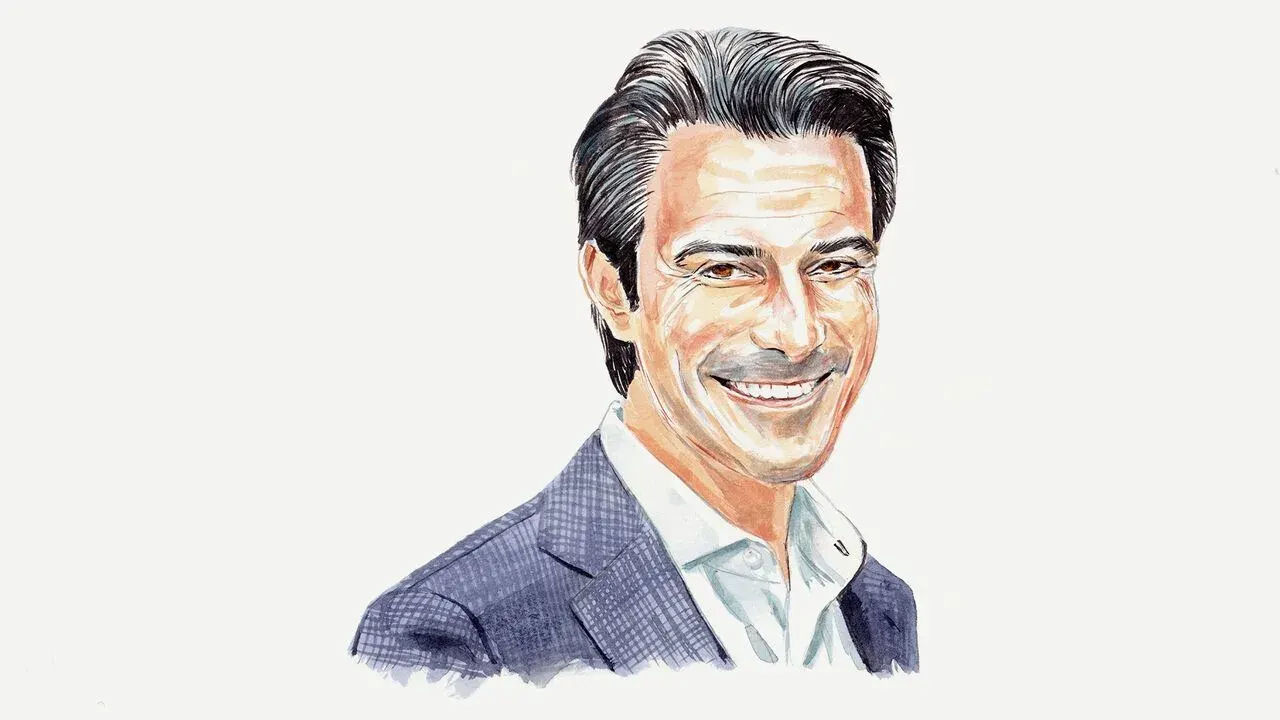
- Stanley Druckenmiller’s AI-assisted op-ed in the Wall Street Journal drew outrage; opinion editor Paul Gigot compared using AI to using speechwriters.
- Real speechwriting value comes before writing, in the interview that finds the throughline — a $15,000 op-ed lesson AI still misses.
- At $20 a month, Claude Pro remains agreeable and sycophantic; Jacobs wants AI that interrogates the person, not the page.
A law of 21st-century life seems to be that every new technology we adopt arrives with a new way to embarrass ourselves. Just ask my Great-Uncle Howard, who once mistook the Facebook status update bar for the Google search bar while looking for “foods to increase the sex drive of women over 60”. His third wife was not amused.
An AI byline is not a scandal
By this standard, Stanley Druckenmiller’s AI-written op-ed published recently in the Wall Street Journal is a non-event. “Many contributors, especially prominent politicians or CEOs, employ speechwriters,” Paul Gigot, the Journal’s opinion editor, wrote in response to the outrage. “How different is that from using AI to streamline an essay?” In an ideal world, it wouldn’t be.
I have been a professional speechwriter for 15 years — long enough that the exact number of op-eds I’ve ghostwritten for the Journal now escapes me (I’ve also written for By Invitation). The job involves much more than writing, but that’s the basic goal of it: write someone’s words better than they could themselves. Which is exactly what AI did for Mr Druckenmiller. He is, by his own admission, a poor writer. So are most people.
The panic over AI writing misses how writing improves
The moral panic around writing with AI seems to exist on a different plane of reality. Behind the admonishments to never outsource one’s writing is a naive implication that inside everyone rests a hidden Hemingway, and all they need is time and the discipline to sit with a blank page. To do otherwise is loser behaviour.
This is a bonkers, elitist vision of the writing world, which is now fuelling a cottage industry of word police, like Claude’s watermarking or Pangram’s AI-writing score. Neither shows you how to make your draft stronger. They are essentially just scolds in the form of software: You’re writing wrong, you cheat. Be better!
But how do you write better if you don’t know what better writing looks like? If nobody ever showed you how to get an idea out of your head and onto the page?
What a $15,000 speechwriter really sells
When chief executives shell out $15,000 or more, the going rate for an op-ed from a good speechwriter (and maybe a price Mr Druckenmiller now wishes he’d paid), this is mostly what they are buying. They may come in thinking they are just outsourcing the banging out of prose. In my experience, though, they leave seeing that the real value happened before a single word was written.
Three years ago, one of the people behind the Xerox copier technology hired me to write a commencement address. Over a long Zoom interview, I probed him about his life: how he studied chemistry and almost blew himself up; how he went to law school after; how his father had played violin in a Berlin chamber group with a young physicist named Albert Einstein. Random stories. Over that hour, though, it became clear to him — and to me — that there was a throughline to all of it.
“Alone, magnesium and iron are boring. But heat the iron until it’s molten, then add the magnesium, and you get fireworks.”
Commencement address · written with Xerox technologist
Law and chemistry had been two dull subjects, too, until together they got him a patent. And when Einstein was trying to unlock the mysteries of the universe, he’d play the violin for inspiration. His father had seen it. “Very few of us are Einsteins,” he said, “but we can do what he did: find inspiration at the intersection of things.”
This is what speechwriters do. We hold up a mirror so people see their own lives, and their own ideas, in a new way. And that is the great promise of writing with AI — that it could democratise the editorial firepower traditionally available only to people who can afford a speechwriter.
Why AI still fails the interrogation
We’re still nowhere close. At $20 a month, a Claude Pro subscription is still most people’s best alternative to a real speechwriter, and it still fails miserably at the interrogation. Ask it to argue with you and it will, for a while. But these systems are designed to be agreeable: they’re post-trained to produce answers humans prefer. They’re sycophants with a large vocabulary.
It may be that the best analogy for AI is not electricity or fire or the internet, but the invention of agriculture 12,000 years ago. Once our food supply depended on the harvest, our life and death were tied to a particular plot of land. “We did not domesticate wheat,” the historian Yuval Noah Harari has written. “It domesticated us.” (It is supremely ironic that this line, brilliant as it is, reads exactly like AI. No one should care.)
The risk with AI is the same: that the thing expanding our capacity to produce writing constrains our ability to put thought behind it. A world of more, but emptier, words.
Build an interrogator, not a scold
Software built to attack this problem — to work the way a speechwriter does — is, slowly, starting to appear. Dan Wang, a former professor of mine at Columbia Business School, watched ChatGPT hand his students easy answers and built a program that debates with them instead.
I, too, have taken a swing at the problem, building an AI word processor that forces you to write at least a few hundred words before it interviews you, the way I would interview a client. The project, however, is mostly on ice. The interview kept fixating on my bashed-out words instead of on why I’d wanted to write them at all. I realised I had built something that interrogated the page instead of the person — the same mistake the word police make.
I hope somebody eventually cracks it. People deserve a better way to write with AI than the one they’re being publicly embarrassed for using. As a human speechwriter, I will almost certainly find it bad for business. But if my semi-obsolescence is the price of a world that thinks deeper and writes better, so be it.
Ryan Jacobs is the CEO of Cardinal40 and a former speechwriter to Janet Yellen, Bill Gates and others. For The Economist’s policy on AI and guest essays visit: Economist.com/ai-policy.
KEEP THE CONVERSATION GOING
A good story is worth sharing.
Send this story to someone who values the bigger picture.
See more from GlobeBriefly on Google
Choose us as a preferred source in your Google preferences.