Dark tourism is moving into the mainstream. Visitor numbers for Salem, Chernobyl, celebrity graves and other fright sites are soaring, as travellers choose experiences over the pool and seek meaning in places linked to death and disaster.
- Salem’s month-long Haunted Happenings now draws 500,000 tourists; in 2016 tourism pumped $104m into Salem and funded some 800 jobs.
- Chernobyl’s exclusion zone grew from 7,191 visitors in 2009 to 36,781 in 2016, while Fukushima and the 9/11 Memorial show the tension over recent tragedies.
- Researchers say most dark tourists seek meaning, not merely the macabre, acting as amateur scholars of human nature.
What is dark tourism?
The fact that tourism is soaring is well-known — between 1999 and 2016 the number of people opting for a foreign holiday doubled, according to the UN World Tourism Organisation (UNWTO). As travellers embrace experiences, rather than just heading to the pool, visits to “dark tourism” sites have risen in tandem.
Dark tourism — visits to sites linked to death, disaster and atrocity, including Auschwitz and Cambodia’s killing fields, Chernobyl and Fukushima Dai-ichi, and other morbid locations such as the house where O.J. Simpson’s ex-wife was killed.
The internet has raised awareness of such places; cheap flights have made them easier to get to.
Salem: from witch trials to month-long Halloween
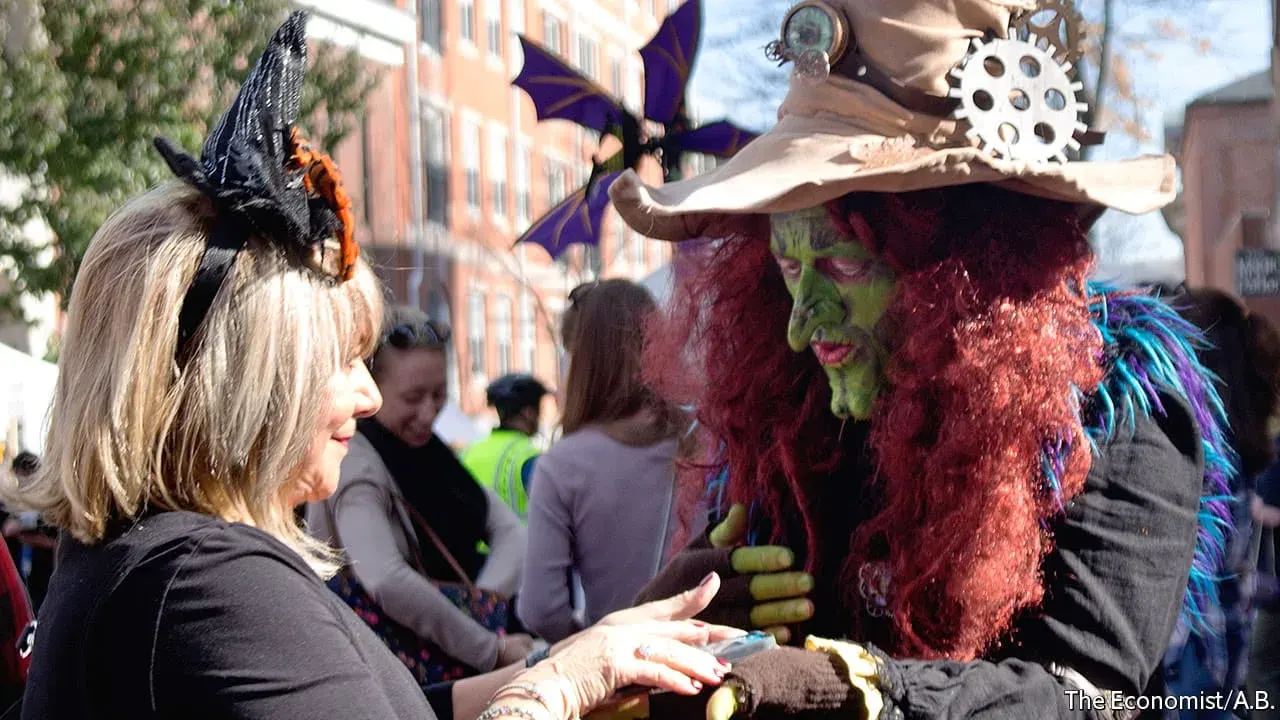
One recent morning in Salem, in the state of Massachusetts, a witch ran out of wands. Teri Kalgren, the owner of Artemisia Botanicals, an apothecary and magic shop, attributed the shortage to a boom in visitors.
People have long flocked to Salem to learn about the infamous witch trials of 1692, in which Puritan hysteria led to the executions of 20 people (and two dogs). But since 1982, when the city introduced Haunted Happenings, a day-long Halloween festival for local families, the event has expanded into a celebration that lasts for a month and attracts 500,000 tourists. In 2016 tourism pumped $104m into Salem and funded some 800 jobs.
Hollywood graves and the experience economy
On America’s opposite coast, Scott Michaels can also attest to the allure of the macabre. He has watched his Hollywood-based company, Dearly Departed Tours, grow from a one-man gig to an operation with seven employees who take tourists to celebrity grave sites every day of the week. “Just a few years ago, we were just the quirky ones doing tours in an old hearse,” says Mr Michaels.
Chernobyl: Pripyat and the exclusion zone boom
Take Chernobyl. The nuclear disaster at a power plant in what is now Ukraine, in 1986, killed more than 30 workers, afflicted thousands with radiation poisoning and forced 180,000 Soviet citizens to abandon their homes.
A decade ago Dominik Orfanus, a Slovakian journalist, visited Pripyat, a modern city turned into a ghost town by the explosion, and founded a tour company. The number of visitors to the “exclusion zone” has since jumped (from 7,191 in 2009 to 36,781 in 2016). An easing of government restrictions in 2011 and Ukraine’s hosting of the 2012 European football championship helped numbers swell further.
CHERNOBYL.wel.come, Mr Orfanus’s company, is one of three such firms which, collectively, have more than 2,000 reviews on TripAdvisor, a travel-review website. It hands out shirts with slogans such as “Enjoy Chernobyl, die later”.
Commodifying Chernobyl can be justified by the passage of time and the fact that tourism is seen by locals as a boon to their stunted economy. Salem is also easy to commercialise because the deaths occurred so long ago.
Fukushima, 9/11 and the line between memorial and attraction
But recent tragedies demand greater sensitivity. Japanese authorities have banned tours to the vicinity of Fukushima Dai-ichi nuclear power plant, which went into meltdown after an earthquake caused a tsunami that engulfed the coast in 2011, killing nearly 19,000 people. Local guides still take over 2,000 tourists each year to villages near the reactors.
Michael Frazier, of the National September 11 Memorial & Museum in New York, bristles at the word “attraction,” even though the museum charges admission, sells souvenirs and markets itself on its website as TripAdvisor’s “#2” of 1,055 Things to Do in New York City. It is also “#6” of the World’s Most Instagrammed Museums. Last year more than 3m visitors brought in $67m for the non-profit foundation that runs the museum.
At the 9/11 museum and at Auschwitz, crowds are controlled with carefully timed tours. At Chernobyl, however, sometimes “there are so many buses that all of a sudden the ghost town feels like Disneyland,” says Mr Orfanus. Carolyn Childs of MyTravelResearch.com, a research firm, sees plenty of room for thoughtful architecture firms and design consultancies to help sites walk the fine line between commemoration and commercialisation.
Why dark tourists travel: meaning, not just the macabre
Death sells, says Philip Stone of the Institute for Dark Tourism Research at the University of Central Lancashire. But most dark tourists seek meaning, not merely the macabre. His research into their motives reveals not so much oddballs ticking atrocities off a list as amateur scholars of human nature.
The Salem Witch Museum tries to cater to such cerebral interest, casting witch-hunts as a staple of America’s political culture. It cites cases such as Japanese internment after the attack on Pearl Harbour in 1941, and Senator Joe McCarthy’s scapegoating of alleged communists in the 1950s. A guide asks a crowd clad in black and orange to come up with modern parallels. The visitors leave deep in thought.
Sources
Foreign-holiday figures: UN World Tourism Organisation (UNWTO).
Reviews and rankings: TripAdvisor. Site research: MyTravelResearch.com; Institute for Dark Tourism Research at the University of Central Lancashire.
KEEP THE CONVERSATION GOING
A good story is worth sharing.
Send this story to someone who values the bigger picture.
See more from GlobeBriefly on Google
Choose us as a preferred source in your Google preferences.