Audio
Listen to the article
- America’s support for Taiwan, Japan and South Korea is the bedrock deterrent against a Chinese move that would bring global economic catastrophe and loss of countless innocent lives.
- Deterring China requires clear, consistent signals from Congress and the White House, especially ahead of President Donald Trump’s meeting with President Xi Jinping on May 14th-15th.
- Allies are raising defence spending, while one-fifth of maritime trade and more than 90% of advanced chips flow via Taiwan; a crisis could cost the world more than $10trn.
When we landed in late March at Songshan Air Base in the heart of Taipei, America’s commitments in Asia were not abstract. Hardened hangars, jet fly-bys and armed personnel are part of daily life in a capital just a hundred miles from China, and that proximity shapes every decision Taiwan makes.
An invasion by China would trigger an immediate global economic catastrophe and the loss of countless innocent lives. The stakes are high, and they matter to people all over the world.
America’s unwavering support for its partners and allies in the Indo-Pacific is the bedrock deterrent preventing such a calamity. Deterring China requires clear and consistent signals from Washington, both from Congress, which maintains its leading role in US-Taiwan policy, and the White House.
This is especially true ahead of the meeting between President Donald Trump and President Xi Jinping on May 14th-15th. With China engaged in increasingly aggressive behaviour and its partners in Russia, North Korea and Iran looking to test American resolve, friends and allies are counting on the United States to hold the line.
What we saw in Taipei, Tokyo and Seoul
Across the Indo-Pacific, in meetings with heads of state and ministers, we saw how closely America’s partners and adversaries alike track its actions, and how central America’s support and presence are to them.
In Taipei officials described China’s increasing air and naval activity around Taiwan, including military exercises in December that simulated a blockade. China engages in regular “grey zone” activities that range from cutting Taiwan’s undersea cables to harassing commercial ships and interfering in elections.
In Tokyo and Seoul leaders were contending with Chinese weaponisation of rare earths and maritime encroachment.
Deterrence must survive Middle East pressures
We also heard concern about the spillover of the conflict in the Middle East — from higher energy costs to the diversion of American military assets critical to deterrence in the Taiwan Strait.
Although America has global commitments and responsibilities, there is a long-standing bipartisan agreement that China is its “pacing challenge” in both the economic and security spheres. America must ensure that shifting its assets and attention to the Middle East does not weaken deterrence in the Pacific and risk miscalculation from Beijing.
China is operating under the dangerous assumption that the East is rising and the West is declining. This perceived advantage, paired with global attention focused on the Middle East and eastern Europe, could embolden Mr Xi to test America’s limits. If its commitments were to appear uncertain, China’s leader would be more likely to probe for openings.
America remains the keystone, but allies are stepping up
America remains the keystone of stability in the region. Tens of thousands of its troops are stationed in Japan and South Korea, deterring North Korean aggression and shaping Chinese calculations. These deployments and security collaboration with regional allies provide a vital bulwark against aggression. No other country can replicate it.
Importantly, America’s allies are also stepping up. Taiwan has extended conscription and boosted missile and drone production. President Lai Ching-te’s Special Defence Budget would put Taiwan on a trajectory to spend 5% of its GDP on defence by 2030, on a par with NATO’s new target.
Japan is on track to spend 2% of GDP on defence, up from a long-standing cap of 1%. South Korea is investing heavily in its capabilities as North Korea deepens military co-operation with Russia and China.
Taiwan defence trajectory by 2030
Japan defence target, up from 1%
World’s advanced chips made in Taiwan
Beyond security: trade, chips and a $10trn risk
The stakes go beyond security. American support to Taiwan protects the continued flow of vast amounts of goods: one-fifth of the world’s maritime trade, by value, moves through the Taiwan Strait. That trade, in turn, strengthens America’s alliances in the region. Japan and South Korea are among its largest trading partners. Taiwan produces more than 90% of the world’s advanced semiconductor chips.
The potential cost to the world economy of a Chinese move against Taiwan, immediately shrinking American GDP by 7% — an initial hit almost as hard as the Depression, according to Bloomberg Economics.
For families and workers all over the world, the consequences would be inescapable, from skyrocketing prices on essentials to shuttered production lines.
Such a scenario would also risk escalation between two nuclear-armed powers and could draw American allies across the region into a conflict with China. In the longer term, a multi-state conflict over Taiwan could permanently reorder the global system, compelling Indo-Pacific allies to choose between even deeper and higher-risk security integration with America or navigating a regional order dominated by China.
What Washington should do before Trump meets Xi
Those mind-bogglingly high stakes are why consistency matters. Our hope is that Mr Trump affirms America’s long-standing and bipartisan support for Taiwan and other regional allies in his summit with Mr Xi. And that expression of support should be matched by action. America should strengthen its existing force posture in the region and expedite sales of American-made military equipment to Taiwan.
Since the Taiwan Relations Act of 1979, Congress has played a leading role in America’s relationship with Taiwan. Over the course of this Congress, the Senate Foreign Relations Committee has developed and advanced bipartisan legislation mandating crippling sanctions against China in the event of aggression against Taiwan, protecting the subsea cables that the island relies on to communicate with the world and further codifying America’s long-standing “Six Assurances” to Taiwan, among other measures. These proposals are yet to become law.
These efforts support commitments in the region that have endured across administrations and across party lines. Our bipartisan delegation reflected that tradition. Congress and the administration must ensure that America’s commitments in Asia remain credible. The peace, security and prosperity of the region, and of Americans at home, depend on it.
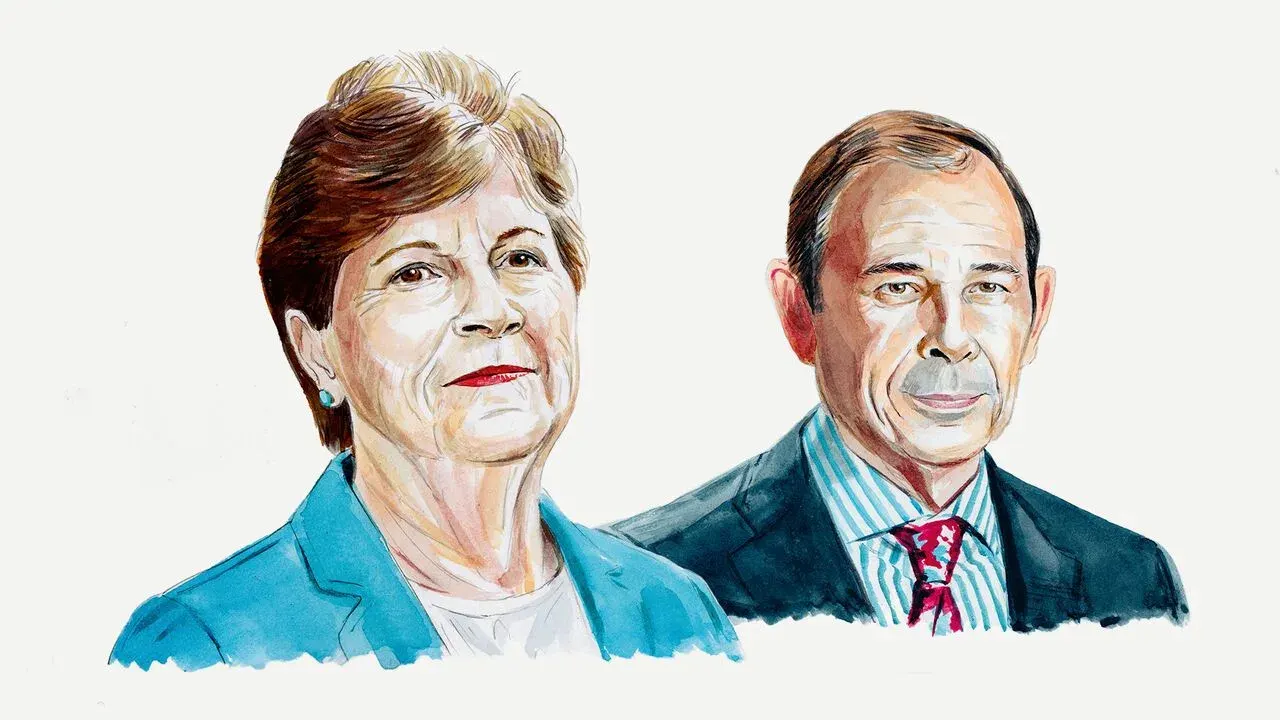
Jeanne Shaheen, a Democrat, and John Curtis, a Republican, are United States senators and members of the Senate Foreign Relations Committee.
KEEP THE CONVERSATION GOING
A good story is worth sharing.
Send this story to someone who values the bigger picture.
See more from GlobeBriefly on Google
Choose us as a preferred source in your Google preferences.