Audio
Listen to the article
- American memory centres on Jim Crow, King, Rosa Parks and “I Have a Dream,” but activists also shaped — and were shaped by — global politics.
- Black women at the grassroots were early internationalists, from the Sojourners for Truth and Justice in 1951 to columnist Marguerite Cartwright at Bandung and in Ghana.
- King, Fannie Lou Hamer and SNCC linked the US struggle to Gandhi, Ghanaian independence, Guinea and the fight against apartheid.
From grassroots organisers to Martin Luther King Jr., Black leaders framed their struggle in global terms, writes Keisha N. Blain.
American public memory of the civil-rights movement of the 1950s and 1960s has long been fixed on the struggle to dismantle Jim Crow in the South. Most accounts centre on the national efforts of well-known individuals such as Rev. Martin Luther King, Jr. and Rosa Parks. King’s “I Have a Dream” speech is the movement’s defining moment, encapsulating a story about how courageous black Americans and their allies toppled legal segregation and brought an end to black disenfranchisement.
This domestic view of the movement dominates public memory and shapes much of the civil-rights curriculum in schools. However, the transformative power of the movement lies not just in how it changed America but also how it shaped — and was shaped by — the global political landscape. It became a platform from which black activists agitated for broader rights and freedom far beyond the borders of their country.
Black women and early civil-rights internationalism
At the movement’s grassroots level — and often at its margins — black women activists were among the first to articulate an internationalist vision. In 1951 the Sojourners for Truth and Justice emerged as a radical left-wing civil-rights organisation. The Sojourners maintained a firm anticolonial position, openly calling for America to withdraw its support from countries that uphold systems of white colonial rule.
The Sojourners saw the South African resistance to apartheid as parallel to their own fight against white supremacy. They joined anti-apartheid demonstrations in front of the South African consulate in New York, wrote to several South African activists to express solidarity and sent letters denouncing apartheid to President Harry Truman and members of the UN South African delegation. Though the movement dissolved after just a year, amid intense pressure during the government’s anti-communist crackdown, the Sojourners represented one of the earliest and most radical articulations of internationalism within the civil-rights movement.
Marguerite Cartwright: Bandung, Ghana and African self-determination
Where the Sojourners demonstrated international solidarity through collective action and direct protest, Marguerite Cartwright wielded a different instrument: her pen. As a columnist for the Pittsburgh Courier and New York Amsterdam News, Cartwright shed light on human-rights abuses, championed marginalised groups and built transnational networks between African-Americans and people of colour in every part of the world. She was often the bridge between activism and public discourse.
In 1955, for example, Cartwright travelled to Indonesia to attend the historic Bandung Conference — the first and arguably most significant gathering of African and Asian nations in the 20th century. “The Conference at Bandung”, she explained to readers, “introduced the people of Asia and Africa to international politics and made known to the world their determination to have their voices heard.” In 1958 Cartwright attended and documented the All-African Peoples’ Conference in Ghana, which brought together influential figures from across the black diaspora. Drawing on her expertise in African affairs, her personal connections with world leaders and her work as a correspondent for the UN, Cartwright educated thousands of American readers about these conferences, emphasising the importance of African self-determination in the global struggle for freedom.
Martin Luther King, Gandhi and African liberation
King’s internationalism was of a different kind. Where the Sojourners protested and Cartwright observed global freedom struggles, he absorbed them, bringing an internationalist sensibility from the margins to the centre of the movement. For example, King’s philosophy of non-violent resistance, including tactics like boycotts and peaceful marches, was directly inspired by Mahatma Gandhi and the struggle for Indian independence. King wrote that the Gandhian model was “the only morally and practically sound method open to oppressed people in their struggle for freedom”. He spoke often of the significance and symbolism of African liberation struggles, particularly Ghanaian independence in 1957, and praised the crucial work of South African leaders fighting to end apartheid.
Fannie Lou Hamer, SNCC and Guinea in 1964
Fannie Lou Hamer, the dynamic orator from Mississippi who coined the phrase “nobody’s free until everybody’s free”, epitomised the inseparable connections between local, national and global developments. Her travel overseas expanded her political vision, helping her see that the struggle for black rights in America was — to quote W.E.B. Du Bois — a “local phase of a world problem”.
In 1964 Hamer visited Guinea with a group of other activists in the Student Nonviolent Coordinating Committee (SNCC). In 1958 Guinea had declared its independence from France, a significant milestone in the fight to end European colonialism in Africa. During their stay, the SNCC delegation met Sékou Touré, Guinea’s first president. As these activists looked beyond the borders of the United States, freedom fighters in other parts of the world were watching them in turn.
During the meeting with the SNCC, Touré emphasised how deeply the struggle for black rights in America was connected to the struggle for rights and freedom in Africa and offered strategic advice to the activists. He cautioned them that their leaders must be “carefully selected because the quality of their actions will affect society in one way or another”. And he advised them to always convey a public image of unity in the struggle, despite differences. In the coming years, Touré would cultivate close ties to African-American activists Malcolm X and Stokely Carmichael.
A national movement with global reach
The civil-rights movement was national in its origins yet global in its reach and expansive in its vision. From well-known leaders like King to lesser-known figures such as Cartwright, activists applied an internationalist lens to their work. They positioned black Americans as members of a global polity. They framed their demands to topple Jim Crow not only as national citizenship rights but as part of a global struggle that encompassed Africa, Asia, Latin America, the Caribbean and beyond.
That global dimension has faded from popular memory — an omission that narrows Americans’ understanding of the past. The movement used internationalism at every level. It was a wide-ranging effort, one of whose main aims was to connect Americans to a post-colonial world.
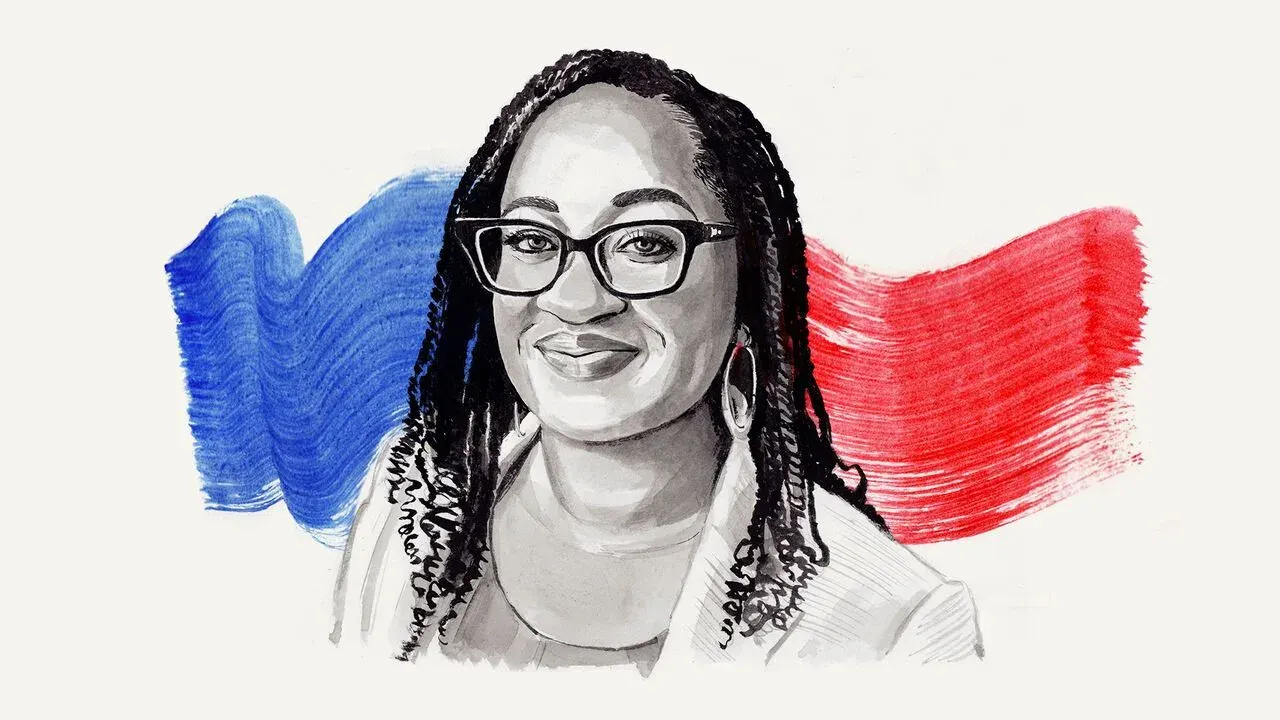
Keisha N. Blain is a professor of Africana studies and history at Brown University.
KEEP THE CONVERSATION GOING
A good story is worth sharing.
Send this story to someone who values the bigger picture.
See more from GlobeBriefly on Google
Choose us as a preferred source in your Google preferences.