Audio
Listen to the article
The first round of Colombia’s presidential election sent far-right and far-left candidates to a run-off — and exposed a country divided by fear, inflamed by rhetoric and dangerously close to mistaking aggression for leadership.
- The June 21st run-off pits Abelardo de la Espriella, from the right, against Iván Cepeda, a leftist senator and ally of Gustavo Petro.
- Illegal armed groups now exceed 27,000 members, while fiscal deficits, debt and health-system strain cloud the outlook.
- The greatest test is governability: building the agreements needed to restore security, reform and confidence.
Colombia is not alone in this trend. Around the world, voters increasingly feel pushed to choose between extremes. Moderation is squeezed, anger is rewarded and democratic politics becomes less about solving problems than defeating enemies. But in Colombia, a country that knows the cost of political hatred, this dynamic is especially concerning.
The run-off and the challenges ahead
The run-off on June 21st pits Abelardo de la Espriella, from the right, against Iván Cepeda, a leftist senator and ally of the current president, Gustavo Petro, who cannot run again under the constitution. The winner will take office facing very big challenges.
Illegal armed groups have grown substantially in number and power since 2018, with membership now exceeding 27,000. This deterioration has been fuelled by the lack of political will and skill on the part of the last two governments to fully implement the peace agreement I signed with the Revolutionary Armed Forces of Colombia (FARC) in 2016, despite this being a constitutional obligation.
Some social indicators have remained resilient, but this stability has come at a long-term cost: Colombia faces daunting fiscal deficits and debts. The health system is under mounting financial strain. Investors remain cautious. Citizens are impatient.
Governability is the greatest test
But the greatest challenge the next president will face is governability — that is, whether he and his administration will create the conditions to govern effectively. Unless they do, no security strategy will be possible, no fiscal adjustment will be effective, no health reform will work and no energy policy will restore confidence.
Colombia’s next president will be judged not only by how he addresses these problems, but mostly by his capacity to build agreements to solve them.
This campaign has made the task harder. Both run-off candidates have used language that is harsh, personal and destructive. Anger has been presented as authenticity; insult rewarded as courage; restraint caricatured as weakness.
Such an approach may win votes, but anger does not build the congressional majorities necessary to pass reforms or restore institutional trust.
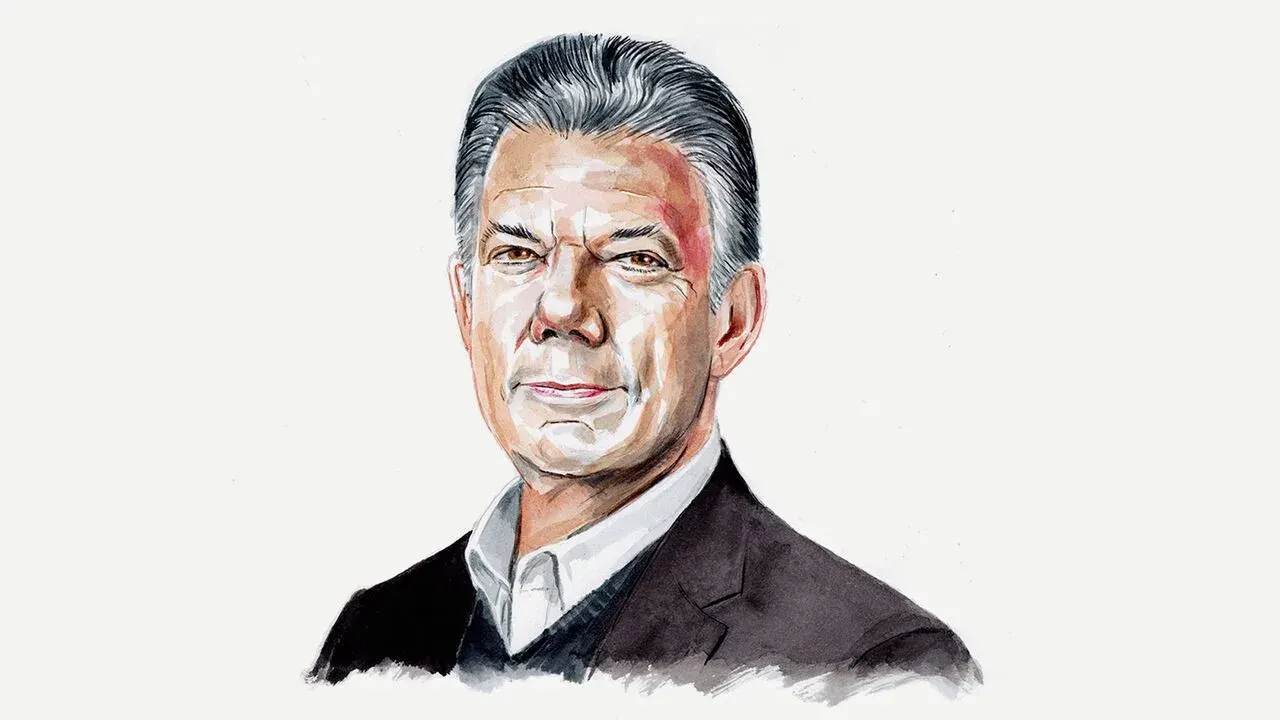
Juan Manuel Santos
The winner will inherit the consequences of the very campaign that brought him to power: to govern after having burned down the bridges.
Why moderation matters
That is why moderation matters. Democracies depend on the capacity to make agreements and accept that no side can govern as if the other half of the country does not exist.
Abraham Lincoln knew this better than most. After winning the American presidency in a fracturing country, he invited his fiercest rivals into his cabinet. Lincoln understood that a divided nation required not only conviction, but generosity and political intelligence to turn former enemies into reluctant partners. By doing so, he built the coalition needed to abolish slavery and win the civil war.
Our government strove to take a Lincolnian approach from 2010 to 2018. After winning the 2010 election, we reached across political lines and brought my rivals and critics into the cabinet. This gave us the political capital to approve reforms, build a strong economy and pursue peace. It also helped produce probably the best results Colombia has achieved so far this century.
What moderate government delivered
Poverty reduction
Illegal armed-group members now
Long-term financing cost now
Poverty was reduced from 40% to 27%; extreme poverty was halved to 7%; and inequality, measured by the Gini coefficient, declined to its lowest level ever. Access to health care became a fundamental right.
Security also improved dramatically, and after signing the peace agreement we enjoyed the most peaceful years in recent history. Colombia recovered its investment-grade rating and we managed to borrow funds at less than 5%.
We proposed and promoted the Sustainable Development Goals, joined the OECD and gained global recognition as never before. In 2016 The Economist chose us as country of the year.
All of this gave us the confidence, legitimacy and governability needed to sign the agreement with the FARC, the region’s oldest and most powerful guerrilla group, and end the longest armed conflict in the western hemisphere. Peace was possible because Colombia had built the necessary conditions and political bridges needed to make what many thought impossible possible.
We governed from moderate ground, guided by the “Third Way” approach of Anthony Giddens, former director of the London School of Economics, where I studied: the market as far as possible, the state as far as necessary. This allowed Colombia to combine economic responsibility, social progress, security and international credibility. These were not the fruits of ideological purity. They were the fruits of effective governability.
What must happen after the run-off
Rediscovering this approach becomes more urgent as the influence of illegal armed groups grows, pulling at the social fabric, and the fiscal outlook darkens. After losing its investment-grade rating again in 2021, Colombia is now paying around 13% for long-term financing and its debt has reached unprecedented levels.
After the run-off, both candidates, and also Mr Petro, must understand that electoral victory does not bequeath a mandate to deepen division, but an obligation to begin repairing it. The country cannot afford further polarisation as a governing strategy. Instead, it requires agreements. Agreements require trust. And trust cannot be built on the ruins of permanent confrontation.
The run-off will decide the next president. But the real test will begin the morning after. History will not remember who shouted the loudest in this campaign. It will remember who had the courage, humility and greatness to rebuild what this campaign has broken. ■
Juan Manuel Santos was the president of Colombia from 2010 to 2018. He won the Nobel peace prize in 2016.
KEEP THE CONVERSATION GOING
A good story is worth sharing.
Send this story to someone who values the bigger picture.
See more from GlobeBriefly on Google
Choose us as a preferred source in your Google preferences.