Audio
Listen to the article
Football can’t rely on a revolt every time its governing body goes too far, argues Lorin Parys, the head of a European league.

- FIFA withdrew FIFA Forward Enterprise, which would have offered outside investors a 20% stake, raising up to $4.2bn at a valuation of about $20bn.
- A global sport needs a global authority, but influence should follow responsibility while preserving one association, one vote legitimacy.
- Parys proposes a permanent calendar council and supermajority safeguards for commercial deals that lock up long-term value.
FOOTBALL STOPPED FIFA this summer. It took a public row, pressure from across the game and the threat of a wider revolt to do it. The cause was FIFA Forward Enterprise (FFE), a proposal to place the commercial rights and event operations of the game’s governing body in a new company.
Outside investors would have been offered a 20% stake, raising up to $4.2bn at a valuation of about $20bn. FIFA argued that the deal could unlock much more money for development across its 211 national member associations.
Why the FIFA Forward Enterprise plan failed
The promise of more predictable funding for football development was attractive, but the price and process were not. FFE would have given private investors a lasting claim on World Cup revenues and a role in core operations before the valuation, safeguards, potential conflicts of interest and remuneration arrangements had been properly disclosed and tested.
It also tied an irreversible transaction to the immediate promise of more money for member associations at a time when Gianni Infantino, FIFA’s president, is up for re-election. That is why opposition spread quickly across confederations, national associations and professional football, prompting FIFA to pull the plan.
That was the right outcome. It was not, however, proof that the system works.
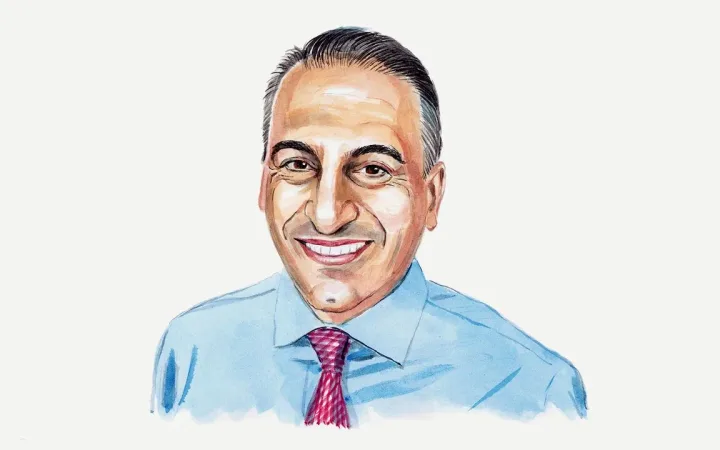
Lorin Parys · Pro League
A healthy governance model should not need a last-minute coalition every time a big decision goes too far.
Weakening FIFA is not the answer
The easy response is to say that FIFA has too much power and should simply be weakened. I do not agree. A global sport needs a global authority. Someone has to organise the World Cup, maintain common rules and move money towards countries where the market would otherwise invest very little.
One association, one vote is imperfect, but it gives smaller football nations a formal place in the system.
I run a European professional league, so I am not a neutral observer. Leagues want more influence. Clubs and players do, too. But any reform must allocate influence according to responsibility, not wealth, while preserving the system’s global legitimacy. The main goal should not be to maximise monetisation.
Where FIFA’s authority should stop
The real question is where FIFA’s authority should stop. The organisation’s structure rests on an old idea: that a national association represents football in its territory. That made more sense when associations organised most of the game.
Today it is leagues, not associations, that often run competitions and sell collective rights, while clubs employ the players and unions represent their labour. FIFA regulates them all, sets the international calendar and sells competitions that rely on the same scarce time and talent.
The work is now spread across several institutions, but the formal decision-making has not caught up. That is why the same disputes return: over the calendar, player release, transfers, new competitions and commercial control.
Football needs a new compact. The outdated idea is not that national associations matter; it is that they alone can represent every interest in modern football. They should continue to elect FIFA’s leadership, control its statutes, shape development policy and protect national-team football. But for a limited category of decisions that directly allocate the time, labour or economic value of leagues, clubs and players, wider input is required.
A permanent calendar council for international football
Start with the international calendar. For a domestic league, this is not just some diagram discussed in FIFA HQ in Zurich. It decides whether clubs can play on a Sunday, how many hours a player must be given to recover after returning from international duty and whether a competition can keep the promises it has made to broadcasters and supporters.
I would create a permanent calendar council with three constituencies: national associations; professional leagues and clubs; and players. Any substantial expansion of international windows, or of clubs’ obligations to release players for national-team duty or FIFA competitions, should require majority support within each constituency.
FIFA should first publish evidence on what the changes would mean for player workload, travel, recovery and domestic competitions, as well as the consequences for women’s football and the impact on smaller markets. Until agreement is reached, the existing calendar should remain in place.
Safeguards for World Cup revenues and commercial deals
Core commercial transactions require different safeguards. Prerequisites for a future FFE-type proposal should include an independent valuation, disclosure of conflicts of interest and remuneration arrangements.
Council and Congress — FIFA’s main decision-making and legislative bodies, respectively, where a future commercial proposal should require supermajorities.
It should require supermajorities in FIFA’s Council and Congress, its main decision-making and legislative bodies, respectively. Development funding should be debated separately from any transactions proposed to finance it. Just because a deal is commercially attractive and generous to smaller associations, that doesn’t make the process legitimate.
What the FIFPRO agreement shows — and misses
There has already been some progress. In June FIFA signed an agreement with FIFPRO, recognising the global players’ union as football’s employee representative. Future changes to the transfer system and player-welfare standards will be discussed through a “social-dialogue platform” and, in important areas, agreed collectively. Those are real gains.
The agreement also shows how reform can stop halfway. By granting meaningful rights to one stakeholder, a governing body can increase inclusion while leaving its general architecture unchanged — and thereby fragment the coalition pressing for systemic reform. That is not an argument against the players’ agreement. It is a warning that bilateral advances should not become a substitute for coherent rules across the institution.
Limited checks, not paralysis
The obvious objection is paralysis. It should not be discounted. Football already has enough committees. Most technical and operational decisions should remain with FIFA’s administration and specialist bodies.
The new safeguards would apply only to a narrow list of decisions that increase the burden on others or lock up long-term value. Thresholds should be clear and deadlines fixed. There must also be protection against capture by the richest European interests. Smaller leagues, non-European competitions and women’s football would need guaranteed representation. These are limited checks on FIFA’s authority, not a transfer of sovereignty.
FIFA, in short, does not need to be dismantled. It needs institutions capable of stopping overreach before others in football feel compelled to mobilise against it. Clearer limits would make the governing body’s authority more legitimate, not less so. A global game needs a strong centre — but also rules strong enough to constrain whoever controls it. ■
Lorin Parys is the chief executive of the Pro League, Belgium’s top football league, and is completing a thesis about FIFA governance as part of an executive master’s degree. The views expressed are his own.
KEEP THE CONVERSATION GOING
A good story is worth sharing.
Send this story to someone who values the bigger picture.
See more from GlobeBriefly on Google
Choose us as a preferred source in your Google preferences.