Audio
Listen to the article
- Hong Kong hosted 104 new flotations between January and July 2026, raising around $42bn — more than twice the total for the same period of 2025.
- The Hang Seng has slipped roughly 1% this year, ranking fifth from bottom among the major bourses followed by The Economist.
- Research on US markets links listing booms to feeble returns that follow them — and Hong Kong’s newcomers are landing into a faltering aftermarket.
Hong Kong’s market for new share sales is booming. Companies completed 104 flotations between January and July 2026, raising about $42bn between them, and Shein started trading on August 31st. The market for shares that were already listed tells a different story: the Hang Seng, the territory’s gauge of large companies, has slipped roughly 1% this year, fifth from bottom among the major bourses followed by The Economist. That split carries a cautionary signal for the United States, which is in the middle of its own flurry of new issuance.

Amos Food, the maker of TastySounds sweets and other confectionery, hopes eventually to float in Hong Kong. Bite into one of its candies and the brain receives a peculiar double signal: beyond the sugary taste on the tongue comes a tune piped into the ear, as sound waves travel through the jaw. Sweetness dominates first, then follows a sudden rush of internal melody. Hong Kong’s equity market produces a comparable split perception. Its primary market, where new listings are sold, tastes delightful. Its secondary market, where already-quoted stock changes hands, sounds dull.
Hong Kong’s new-listing boom, in numbers
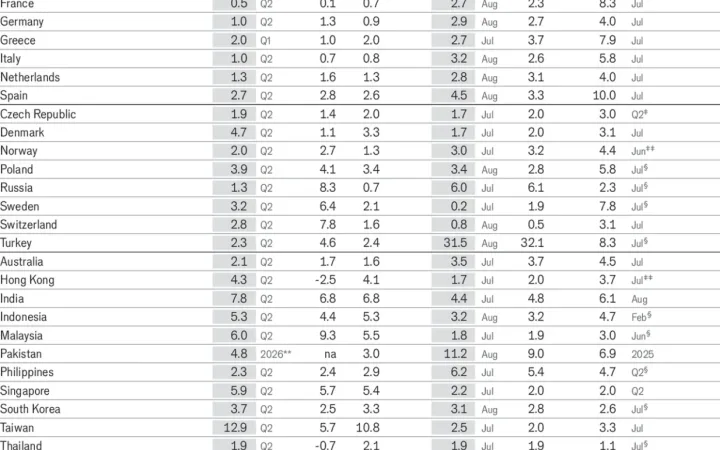
Amos stands among many hopefuls queuing for a Hong Kong debut. The bourse is wooing them by lengthening the deadline for finishing documentation and by permitting confidential submissions. Between January and July 2026 it staged 104 new flotations that collectively gathered around $42bn. Among the newcomers was Shein, a purveyor of ultra-cheap apparel that started trading on August 31st, after geopolitical worries discouraged the firm from choosing New York or London. That tally is more than twice the total from the equivalent period in 2025 — itself a bumper year, when Hong Kong newcomers collected more capital than issuers anywhere else. For broader context, see our Global Markets Scoreboard: Growth, Prices and Commodities at a Glance.
New listings, Jan–Jul 2026
Raised in the same period
Hang Seng decline this year
A secondary market that sounds dull
If share markets were equivalent to ordinary markets for automobiles or similar merchandise, Hong Kong would clearly be roaring. When buyers eagerly acquire abundant new cars at firm prices, nobody frets if pre-owned values stall or soften. With stocks, however, the trade in pre-owned securities dwarfs the issuance of fresh equity. That is what explains Hong Kong’s clashing impressions: lively and gloomy at the same time.
Why Chinese companies are choosing Hong Kong
Part of the discord stems from distinctive Chinese factors. Regulators on the mainland have tightened approvals for offerings in Shanghai or Shenzhen, so several Chinese businesses have pivoted toward Hong Kong, even absent otherwise attractive terms. Growing American antagonism toward its geopolitical competitor has likewise pushed various Chinese groups quoted on US exchanges to pursue dual listings in Hong Kong. Those arrivals may have siphoned appetite away from the remaining equities. Like an overindulged sweet-eater, Hong Kong’s bourse now shows signs of indigestion — the strain visible in China’s property reforms and tighter pre-sales rules.
What research says about IPO waves
It repeats a well-known refrain. Research covering US markets between 1928 and 1997 by Malcolm Baker of Harvard University and Jeffrey Wurgler, then of Yale, concludes that companies sell additional stock immediately ahead of stretches of feeble returns. A separate 2005 study by Lubos Pastor and Pietro Veronesi of the University of Chicago likewise concludes that listing surges trail strong periods and foreshadow weak ones.
True to that pattern, Hong Kong’s listing rush took off during a spectacular advance: the Hang Seng climbed more than 40% in the twelve months after Beijing unveiled new monetary easing in September 2024. What jars is that tepid performance has already materialised, even before the float pipeline has closed — a turn echoed in Europe’s bond markets, which face a post-holiday shock.
The Hang Seng’s gain in the twelve months after Beijing unveiled new monetary easing in September 2024 — the advance that Hong Kong’s listing rush rode in on, and one that has since faded.
Irrationality, or the option value of waiting?
Certain academics attribute the pattern to investor irrationality: proprietors dispose of shares when they recognise overpricing unspotted by outsiders. Mr Pastor and Mr Veronesi propose another rationale. Going public happens amid doubt — company insiders possess no private foresight about coming conditions unavailable to the market — and it cannot easily be undone. Because prices inevitably swing, delaying a float during downturns while awaiting better circumstances is logical. Patience therefore holds what economists term an “option value”. As a result, numerous enterprises debut once appraisals recover, yet well ahead of peak appraisals.
What it means for Hong Kong investors
What should Hong Kong shareholders conclude? Although the wider aftermarket is faltering, newcomers have generally fared decently, at least on day one of dealings — even the unlucky Shein closed its first session approximately unchanged. Participants fortunate enough to secure stock in a forthcoming float may therefore anticipate a triple treat: a tingle for the tastebuds, a tune for the inner ear and the chime of cash in the wallet. For the United States, now in the middle of its own bout of new issuance, the cautionary half of Hong Kong’s story is the one worth watching.
KEEP THE CONVERSATION GOING
A good story is worth sharing.
Send this story to someone who values the bigger picture.
See more from GlobeBriefly on Google
Choose us as a preferred source in your Google preferences.