Audio
Listen to the article
- Israelis see President Donald Trump’s memorandum of understanding with Iran as ignoring their security interests — from the unresolved nuclear issue to missiles, proxies and sanctions relief.
- Prime Minister Binyamin Netanyahu has strong motives to undermine the deal, yet a rupture with Washington would carry heavy domestic and strategic costs.
- Three calculations — alliance dependence, the deal’s likely fragility, and the failure to achieve strategic aims — may push Jerusalem to adapt, as it did after the 2015 JCPOA.
The memorandum of understanding between America and Iran on ending their war — Donald Trump’s Iran deal — had barely been signed when it faced its first test in Lebanon, as Israeli forces and Hizbullah kept up attacks on each other. That lent weight to intelligence conclusions in Washington, DC that Israel would try to scuttle it, writes Dalia Dassa Kaye. Such fears may, however, be misplaced.
Why Israel sees Trump’s Iran memorandum as a security setback
Israelis are dismayed that President Donald Trump — until recently, at least, very popular among them — would strike a deal that they believe disregarded their national-security interests. Their complaints go beyond the memorandum’s limits on Israeli action in Lebanon.
The nuclear issue is unresolved. The text makes no reference to reducing Iran’s missile capabilities or its support for proxies. The sanctions relief and other economic carrots promise a lifeline to a regime many Israelis believe could have been toppled. Binyamin Netanyahu, Israel’s prime minister, did not want to end the war, and certainly not on these terms.
Why Netanyahu may be tempted to undermine the deal
He will thus have strong motives to undermine the agreement. Since the Hamas attacks on October 7th 2023, Israel has unleashed its military power not only in Gaza but across the region, with little to no pushback from Presidents Biden or Trump. Israel’s political elite largely sees Iran as the source of its gravest security challenges and views diplomacy as futile.
Despite American frustration over Israeli strikes, Mr Netanyahu may believe Mr Trump lacks the ability to force Israel to permanently halt military operations or withdraw from southern Lebanon, which it has reoccupied. After all, the president has done little to enforce his own “peace plan” in Gaza and end Israel’s occupation of more than 60% of the strip.
Israel, then, is more emboldened regionally than it was just a few years ago. Moreover, many of its people view Mr Trump’s interim agreement as even worse than the JCPOA, the nuclear accord that America and other powers struck with Iran in 2015 — the ultimate insult. Why, then, would Israel accommodate a deal it doesn’t like?
Three calculations that may push Israel to adapt anyway
1. The cost of a rupture with Washington
First, Israel cannot afford a full rupture with Washington. Israelis are rattled by Mr Trump’s criticism of its tactics in Lebanon and by Vice-President J.D. Vance’s admonishment of Israeli politicians who oppose the deal.
Attacking the only powerful ally [they] have anywhere left in the entire world.
J.D. Vance · Vice-President of the United States, admonishing Israeli politicians who oppose the deal
Israel is the Middle East’s strongest military power, but it cannot survive friendless. Particularly in an election year, defying Mr Trump would add a domestic political cost that few Israeli leaders beyond those on the extreme right would be willing to pay.
2. The deal may collapse without Israeli help
Second, Israeli leaders may calculate that the memorandum will fall apart even without attempts to derail it, so why risk the blowback? Mistrust between America and Iran still runs deep. Mr Trump’s decision-making remains erratic. After a regime-change-motivated war, a harder-line leadership has emerged in Tehran.
The memorandum’s key commitments related to Iran’s nuclear programme and the future management of the Strait of Hormuz are ambiguous, to put it mildly. Who, then, could be surprised if the two signatory governments managed to scuttle the agreement all on their own?
3. A failed war and a return to the shadow war
Third, the war failed to achieve any clear strategic objective. As a result, Israeli leaders may reluctantly shelve their dreams of regime change and return to a shadow war.
This might entail eschewing assassinations of political leaders within Iran or other overt military attacks of the sort that have become the norm in recent years, and instead focusing on covert sabotage operations on nuclear sites or attacks on Iranian missile and drone transfers to proxy militias.
Israel is likely to continue targeting Iranian-aligned militia leaders but may avoid operations within Iran, establishing new red lines in co-ordination with Washington. America and Iran might even ignore these kinds of attacks if the memorandum is providing benefits to each side, such as, for Iran, sanctions and economic relief, and, for America, preventing further deterioration in the global economy.
All of which suggests that Mr Netanyahu may, despite Israeli attitudes, and aware of growing hostility towards Israel on both sides of American politics, ultimately adapt to the reality of a final deal if one ever emerges.
Precedent: How Israel handled the 2015 JCPOA
Indeed, this is what happened with the JCPOA, even during the tenure of an American president whom Mr Netanyahu had no problem openly confronting. Neither the Israeli leader’s unprecedented address to America’s Congress to undercut the diplomacy of President Barack Obama, nor extensive lobbying efforts by pro-Israel groups to tank the JCPOA, succeeded in derailing it.
Israel grudgingly accepted the deal and shifted its focus away from nuclear concerns to degrading Iran’s and its proxy Hizbullah’s activities in Syria and Lebanon. And despite fuming that the Obama administration excluded it from back-channel negotiations that led to the accord, once diplomacy became public Israel largely halted its “shadow war” attacks on Iran until 2018, when Mr Trump made good on his campaign promise to withdraw from what he had persistently called “the worst deal ever”.
An unstable hiatus, not a stable peace
This scenario of relative quiet on the Iranian front is by no means assured. Mr Netanyahu will no doubt press the Trump administration to rediscover belligerence. And even if Israel remains relatively constrained, it will not make for a stable situation.
It may offer a mere hiatus, a welcome reprieve from a catastrophic war, while all sides prepare for the next phase of battle.
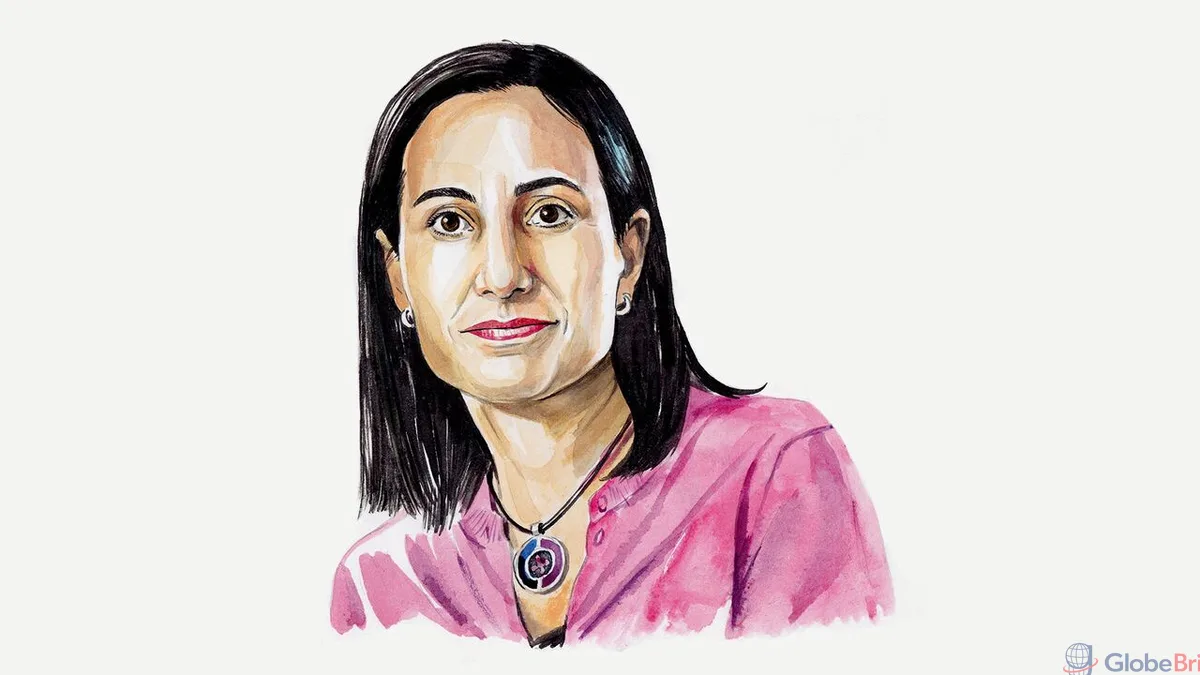
Dalia Dassa Kaye is a senior fellow at the UCLA Burkle Centre for International Relations and the author of “Enduring Hostility: The Making of America’s Iran Policy”.
KEEP THE CONVERSATION GOING
A good story is worth sharing.
Send this story to someone who values the bigger picture.
See more from GlobeBriefly on Google
Choose us as a preferred source in your Google preferences.