Audio
Listen to the article
By Peter Conti-Brown
What were the 1990s? On one side: the wry cynicism of “Friends”, “The Simpsons” and “Seinfeld”, the angst of Seattle grunge and a scandal-prone White House. On the other: a surging stock market, the internet boom and the first sustained federal budget surplus since the 1920s. The personification of those contradictions was not Kurt Cobain, Jerry Seinfeld or Bill Clinton. It was Alan Greenspan, chairman of the Federal Reserve, who has died aged 100.
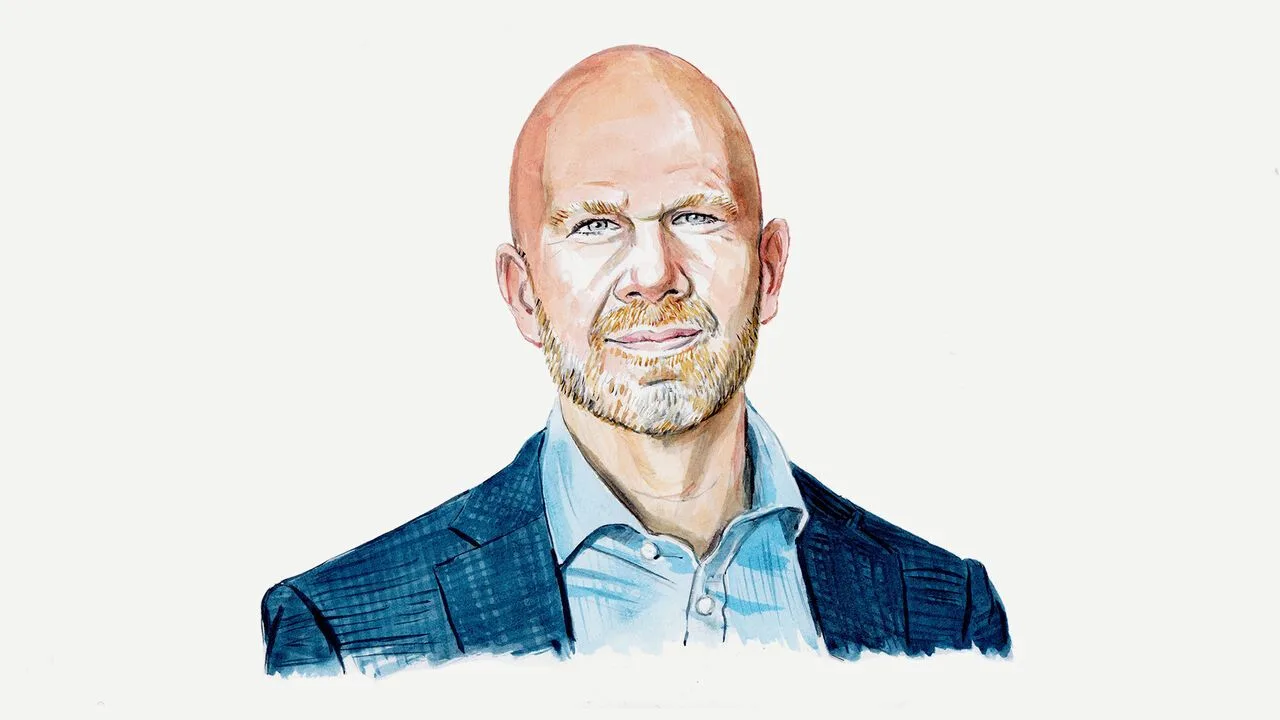
- Greenspan, who has died aged 100, was less a forecaster than a politician: he guided the Fed through political thickets, and dragged it into maelstroms where it did not belong.
- The first lesson is courage. When George H.W. Bush demanded in 1991 that “interest rates should be lower, now,” Greenspan did not buckle, and the cuts ran gradually into the 1992 election year.
- The second is restraint. His support for the 2001 tax cuts and for privatising Social Security lent the Fed’s prestige to a partisan agenda — and damaged both him and the institution.
- Kevin Warsh says he wants politics out of monetary policy. The lesson of Greenspan’s career is that the chair must practise politics anyway — in a narrow lane.
A legacy of prosperity, and of markets left undisciplined
Greenspan leaves behind a legacy so complex that historians will spend decades parsing it. He helped usher in prosperity: low inflation, high growth and American economic might in a post-cold-war world. He also did too little to discipline financial markets that learned to bet the Fed would bail them out, allowing them to privatise gains and socialise losses.
That legacy is familiar. Another is just as important, both an invitation and a warning to central bankers who must lead in his wake. More than a forecaster, a central banker, a strident libertarian, Greenspan was a politician. He mastered the art of guiding the Fed through political thickets. He also dragged it into maelstroms where it did not belong.
Lesson one: the courage to defy a president
After his appointment in 1987, Greenspan built on the strengths of his predecessor, Paul Volcker. He quickly made an enemy: Vice-President George H.W. Bush, Ronald Reagan’s heir apparent. As the 1988 election campaign gathered steam, the Greenspan Fed raised rates out of fear of overheating and resurgent inflation. Bush was none too pleased.
Bush won easily in 1988 and soon achieved the highest presidential approval ratings on record. But as the economy softened, the unbeatable president saw weakness. In 1991, at the peak of his popularity near the end of the first Gulf war, Bush demanded that “interest rates should be lower, now.” Greenspan did not buckle. The Fed cut rates, but gradually, well into the 1992 election year. Bush later blamed the Fed for his defeat. He was probably right.
By the time Bill Clinton took office, Greenspan held the political cards. When the White House chief of staff publicly criticised the Fed in 1995 for high interest rates, Robert Rubin, Mr Clinton’s chief economic adviser, rebuked him and set the course for a new rule: no one in the administration would ever publicly criticise the Fed again. It was a lesson reinforced in conversations with one of Mr Rubin’s closest economic collaborators during the Clinton administration: Alan Greenspan himself, whom he met weekly.
The lesson for Greenspan’s successors is clear. The most important political project a Fed chair can undertake is to preserve the prerogatives of independent monetary policy. Not because the Fed is always right, but because presidents and their fellow partisans are always biased towards easier money that pays off on the only time horizon relevant to them. If Fed independence means anything, it means resisting that myopia. The question is whether the chair has Greenspan’s courage to defend it.
Lesson two: keep the Fed chair’s lane narrow
There was also a dark side to the power Greenspan wielded. Time and again he inserted himself into debates that had little to do with monetary policy. In 2001 he joined George W. Bush’s administration in pushing for enormous tax cuts. Those cuts would add trillions to the national debt and essentially end the bipartisan commitment to any kind of fiscal restraint. Greenspan later concluded that his enthusiasm was a mistake, but far too late to make a difference. If the younger Bush gave birth to the shift in America’s fiscal fortunes, Greenspan was the midwife.
He did not stop there. During the second Bush administration, he endorsed efforts to privatise Social Security. Reform was a subject on which he had spent enormous time before joining the Fed, leading the commission that created the modern Social Security settlement. And Greenspan’s policy instincts were correct. The system’s solvency trajectory was, then as now, unsustainable.
None of this should have mattered to a sitting Fed chair. By lending his prestige to a partisan agenda, Greenspan damaged himself and the Fed. The only appropriate answer to such questions from a Fed chair is simple: I have no opinion to offer on matters that belong to Congress and the White House.
What Greenspan’s record means for Kevin Warsh
Today the Fed is steered by Kevin Warsh. In an exchange with Senator Elizabeth Warren during his confirmation hearing, he insisted that he wanted to “keep politics out of monetary policy and monetary policy out of politics”. Admirable but wishful thinking.
Keep politics out of monetary policy and monetary policy out of politics.
Kevin Warsh · confirmation hearing
Central banking does not, cannot and should not enjoy a hermetic seal from the political system that gives it purpose and accountability. The question is not whether the Fed can remove politics from policy. It is what kind of politics the Fed should practise.
Greenspan provides the road map, in his successes and excesses alike. The Fed chair must be an institutionalist in the face of pressure to put monetary policy in the hands of short-term partisan strategy. President Donald Trump’s campaign against the Fed is singular in its ferocity. But his desire for easier money is a presidential impulse as old as the Fed itself. We need not await the next presidential tantrum to know what the Fed chief should do. He must defend the Fed.
But Mr Warsh, like Greenspan, is a rock-ribbed partisan. The second lesson from Greenspan’s legacy is that the current chair must now do his best to shed those intuitions. No praise for his party or its politicians; no commentary on this or that partisan programme. His lane is narrow. From now on, his political project is simple: protect the Fed from outside influence. His success or failure will define his legacy. The rest will be footnotes. ■
Peter Conti-Brown is the Class of 1965 Associate Professor of Financial Regulation at The Wharton School and the author of “The Power and Independence of the Federal Reserve” and “The Federal Reserve: An American History” (forthcoming).
KEEP THE CONVERSATION GOING
A good story is worth sharing.
Send this story to someone who values the bigger picture.
See more from GlobeBriefly on Google
Choose us as a preferred source in your Google preferences.