Audio
Listen to the article
Past American prosperity offers no assurance for what comes next, argues Joseph Stiglitz
A quarter-millennium ago, America was chiefly a farming society — swayed by the weather, but free of genuine trade cycles. Those swings arrived with 19th-century capitalist expansion, and the sharpest oscillations of modern history followed: the Great Depression of the 1930s and the Great Recession that began in 2008. Thankfully, John Maynard Keynes, the 20th century’s towering economist, showed that such capitalist breakdowns need not be endured passively. Public action could address them.
- America’s trade cycles arrived with 19th-century capitalism; its gravest episodes were the Great Depression and the Great Recession that began in 2008.
- Keynes showed that public spending, not market self-correction, could revive demand in a deep slump — an answer Roosevelt acted on before the theory was even published.
- Despite that record — and despite the repeated failure of supply-side policy — Stiglitz argues America still falls short of its commitment to full employment.
Necessity, not theory, drove the New Deal
As the old saying holds, invention springs from necessity. When Franklin Roosevelt entered the White House in 1933, America had already squandered four precious years sliding deeper into despair. Roosevelt could not wait for Keynes’s prescription; he acted forcefully — almost by instinct, one could say. Portions of his programme remain disputed. Even with joblessness climbing toward nearly 25% in the Great Depression, mainstream economists and business leaders insisted: “Leave it to the market. It will correct itself eventually.” Yet, as Keynes joked, in the long run we’re all dead.
~25%
US unemployment at the depths of the Great Depression — even as mainstream economists and business leaders urged that the market would correct itself eventually.
Keynes’s 1936 volume “The General Theory of Employment, Interest, and Money” amounted to a transformation in thought. Against the orthodoxies then dominant, he maintained that unaided markets could stay trapped in prolonged mass joblessness. Even where automatic “forces” might restore full employment, on their own they operated far too sluggishly to avert severe distress. He showed why central-bank policy — the remedy many conservatives preferred whenever action seemed unavoidable — would fail during a profound slump. Crucially, he supplied an answer: public expenditure could revive demand and pull the economy from the bog.
Encouragingly, the constitution proved adaptable enough for such novel doctrines to be trialled and vindicated, though the Founding Fathers could never have foreseen this essential function of the state. In that era, government remained far tinier. Across the opening decades of the 19th century, Washington raised only 2% of GDP, and no central bank existed until the creation of the Federal Reserve in 1913. The national authorities lacked both the means and the instruments to steady a fundamentally volatile capitalist order.
A modest fix that still frightened the right
Keynes counted as no far-left firebrand. Inequality troubled him little; he trusted the market system; and he reckoned the involvement he suggested — a modest “fix”, not upheaval — would carry the day.
Still, numerous observers distrusted Keynes because he justified an expanded state. Certain right-wing ideologues would rather have endured depression than accept official salvation. Their logic ran: once government managed that feat, what limits would remain? It could promise everyone a basic retirement income, medical coverage and schooling. And financing those commitments could demand levies far above the paltry sums Americans contributed. That prospect alarmed the predecessors of today’s billionaire oligarchs — particularly because roughly two decades earlier, America had ratified the 16th Amendment to the constitution, permitting imposition of a (progressive) income tax.
Looking back, Roosevelt’s practicality together with Keynes’s thinking preserved capitalism despite the capitalists. Had the latter prevailed, the collapse of laissez-faire capitalism, with output choked by an apparently endless slump, would probably have left it unable to withstand popular democratic demands. Instead, President John F. Kennedy, guided by powerful Keynesian thinkers (among them John Kenneth Galbraith, Robert Solow and Paul Samuelson), made Keynesian measures the bedrock of his economic design.
The counter-revolution, from Reagan to Trump
During the 1970s, as the nation confronted rising prices (driven then, as now, chiefly by extraordinary oil-price surges), conservatives declared Keynes obsolete. Whereas Keynes had stressed the state’s part in maintaining overall — or aggregate — demand to keep the economy fully employed, Ronald Reagan inverted the vocabulary to stress supply. The right contended that with modest taxes and loose rules, market forces would deliver expansion alongside full employment. So confident were its advocates that they even asserted rate cuts would unleash such vigorous growth that public receipts would climb. Naturally, that never occurred.
In the decades since, America has tumbled repeatedly into contractions, several of them rather severe — emphatic proof that deregulated markets do not regulate themselves. Amid the Great Recession, and notably during the covid-19 pandemic, Keynesian remedies — state outlays — worked remarkably well.
Yet despite overwhelming evidence, the political struggle persists. In the early 1990s, lawmakers sought a balanced-budget amendment, a rule that would have effectively blocked workable Keynesian action; luckily, it fell to a narrow defeat. Under President Donald Trump’s initial administration, “supply-side policies” returned, featuring steep reductions in levies on corporations and the ultra-wealthy. Those measures flopped, just as Reagan’s earlier ones had: shortfalls widened, and any lift to expansion was negligible, if any lift existed.
The promise of 1946 remains unmet
Were the constitution drafted in the 21st century, with the awareness that authorities can keep the economy operating at full employment, it would almost certainly have required them to do so. The closest America came was the Employment Act of 1946, which established the Council of Economic Advisers inside the White House — which I led under President Bill Clinton. It pledged the United States “to foster…conditions under which there will be afforded useful employment for those able, willing, and seeking work”. Despite possessing the instruments to fulfil this charge, we have fallen short far too frequently, for far too many. ■
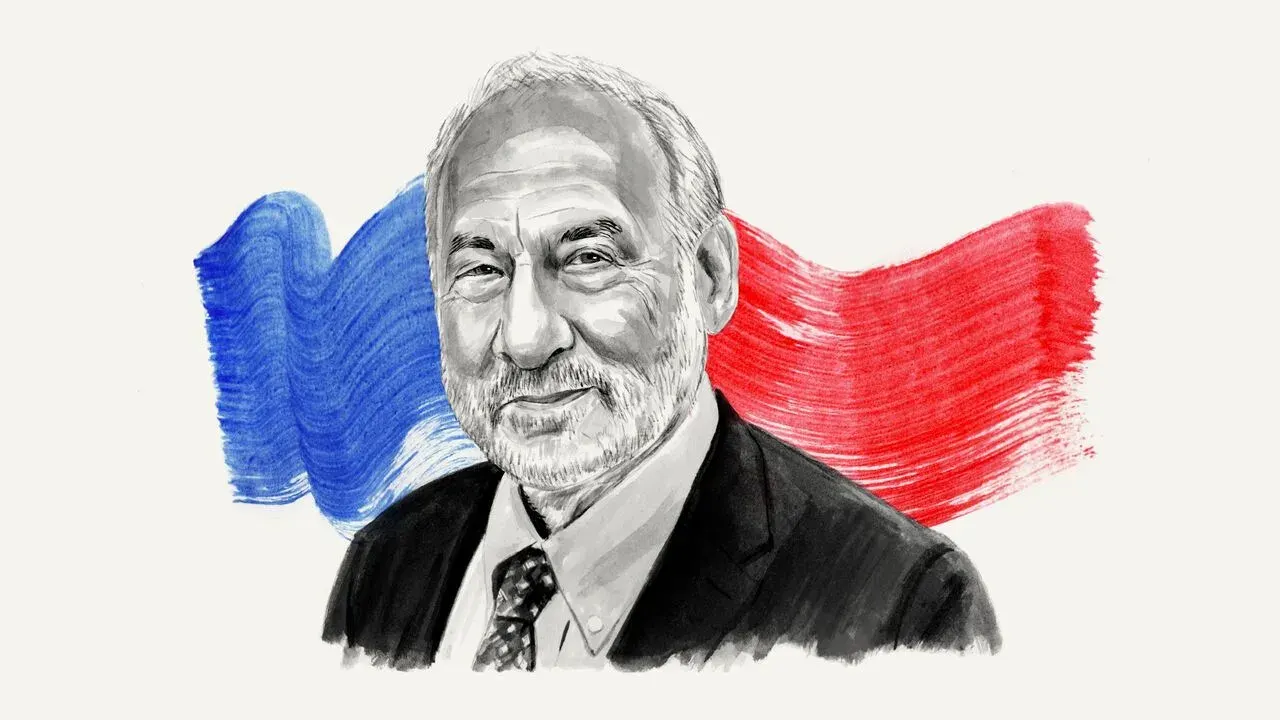
Joseph Stiglitz is a Nobel-prizewinning economist and a professor at Columbia University.
KEEP THE CONVERSATION GOING
A good story is worth sharing.
Send this story to someone who values the bigger picture.
See more from GlobeBriefly on Google
Choose us as a preferred source in your Google preferences.