Audio
Listen to the article
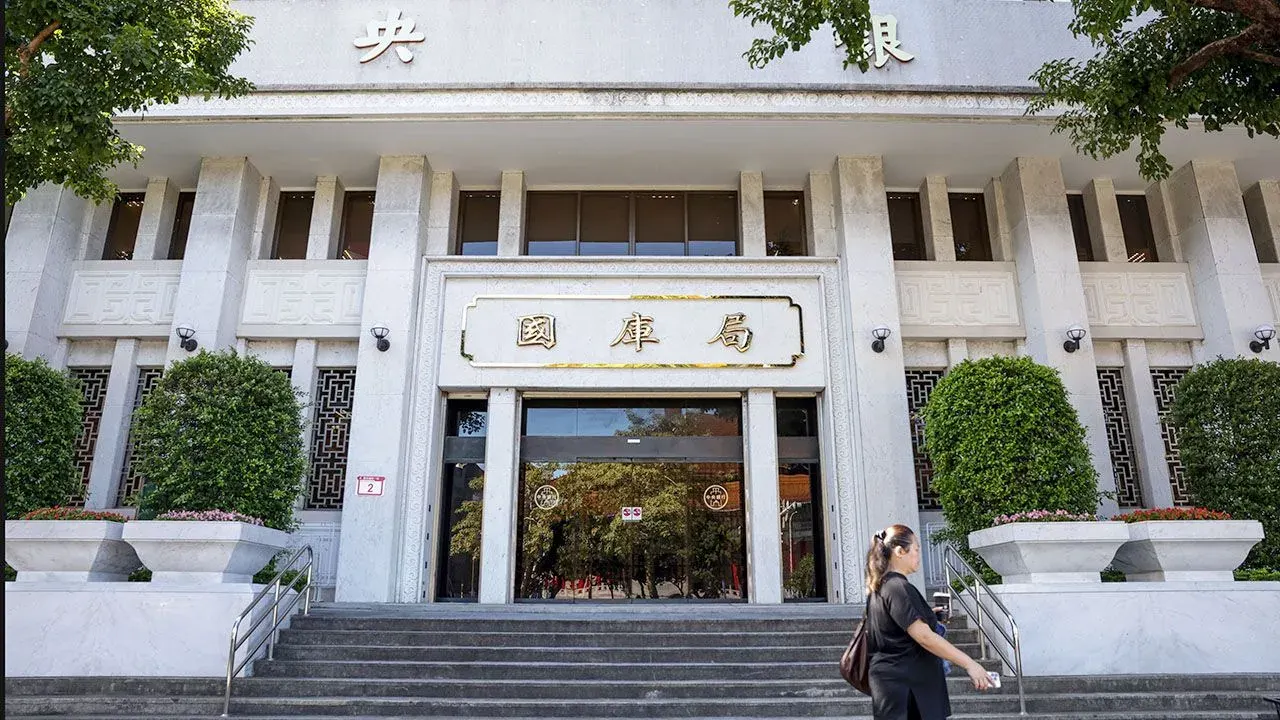
Taipei
We recently published a leader and briefing arguing that Taiwan’s weak-currency policy is punishing consumers and storing up financial risk. The central bank, known as the CBC, has written a detailed response, published below.
- Taiwan’s CBC says it intervenes only when necessary to maintain dynamic stability, and does not deliberately suppress the Taiwan dollar.
- It rejects use of the Big Mac Index and purchasing power parity to judge undervaluation, and links the surplus to excess savings and foreign demand.
- It says low rates reflect low inflation, housing curbs are working, purchasing power has risen, and insurer risks are managed.
What the CBC says we argued
We read with great interest your leader and briefing on Taiwan’s economy (“The hidden risks in Taiwan’s boom”, “Formosan flu”, November 15th). You used the Big Mac Index to infer that the New Taiwan Dollar, or Taiwan dollar, is significantly undervalued.
Your central argument is that Taiwan’s central bank, the CBC, on account of the pressure faced by exporters persistently intervenes in the foreign-exchange market to deliberately suppress the Taiwan dollar exchange rate. You claim this has led to a large trade surplus and the accumulation of substantial foreign-exchange reserves, which in turn releases excess liquidity, creating a domestic environment of low interest rates.
You also suggest that in order to generate surplus earnings for the national treasury, the CBC keeps exchange rates undervalued and interest rates low, but these policies drive up housing and import prices, weaken consumer purchasing power, erode the labour share of income, and hinder industrial upgrading.
Furthermore, you allege that the CBC cleverly channels Taiwan’s large current-account surplus to the life-insurance industry and intervenes in the swap market to lower the industry’s FX hedging costs, encouraging overseas investment and leading to currency mismatches on insurers’ balance-sheets. You conclude that a sharp appreciation of the Taiwan dollar could trigger a financial crisis. We offer a more nuanced assessment below.
Intervention and the Taiwan dollar exchange rate
Since the implementation of a managed floating exchange-rate regime in April 1989, the CBC has intervened in the foreign-exchange market only when necessary in accordance with our statutory mandate to maintain the dynamic stability of the exchange rate.
We do not engage in deliberate suppression of the exchange rate. Over the long term, the Taiwan dollar has exhibited two-way fluctuations and, in nominal terms, has tended to appreciate over the past decade and a half.
Regarding the claim that the CBC suppresses the Taiwan dollar due to lobbying by exporters, it must be stated that following financial deregulation there are many distinct types of participants in the domestic foreign-exchange market. The Taiwan dollar exchange rate is determined jointly by a group of diverse players and cannot be adjusted to target a single industry or sector.
Although the CBC intervenes in the market when necessary to maintain the dynamic stability of the exchange rate based on our statutory duties, these actions have never been part of Taiwan’s industrial policy. The CBC does not suppress the exchange rate to maintain competitiveness for exporters.
Following financial liberalisation, transactions in the financial account have come to comprise over 90% of foreign-exchange transactions, both globally and in Taiwan becoming the primary determinant of exchange rates. The link between exchange rates and the current account balance has consequently weakened.
Why PPP and the Big Mac Index are inappropriate
Using purchasing power parity (PPP) concepts, including the Big Mac Index, to gauge the equilibrium exchange rate is inappropriate.
International institutions, such as the World Bank and the United Nations, estimate PPP through the International Comparison Programme. The ICP website, the World Bank and the OECD all emphasise that PPP is designed to gauge price levels and purchasing power across countries. They explicitly state that PPP is not an equilibrium exchange rate and should not be used to measure currency undervaluation or overvaluation, let alone relying on a single commodity to assess a nation’s exchange-rate valuation.
Trade surplus, imports and foreign-exchange reserves
Regarding the current-account surplus, Taiwan has long exhibited excess savings characterised by a high savings rate and a low investment rate, due to an ageing population and insufficient domestic investment. The growth of the current-account surplus reflects structural economic issues such as long-term high domestic savings and low investment.
Furthermore, the production of Taiwan’s exports relies heavily on imported raw materials; agricultural and industrial raw-material imports account for approximately two-thirds of total imports. Appreciation or depreciation of the Taiwan dollar affects not only export prices but also import costs, leading to a partial offset. This weakens the impact of exchange-rate fluctuations on exports, making the exchange rate an increasingly blunt tool for adjusting trade imbalances.
Notably, since the escalation of US-China trade conflicts in 2018, the expansion of Taiwan’s trade surplus has been primarily driven by the growth of foreign demand, global supply-chain adjustments, the upgrading of Taiwan’s industrial structure, and the rising international competitiveness of high-tech products. The exchange rate is not the primary instigating factor.
The increase in Taiwan’s foreign-exchange reserves stems partly from the CBC’s market interventions to maintain exchange-rate stability and partly from investment returns on reserve assets. Since the Asian financial crisis of 1997, the central banks of most small open economies, particularly those in Asia, have built up reserves as a buffer against the adverse impact of massive capital flows. This is particularly relevant to Taiwan, as foreign portfolio investors often move large volumes of funds in or out of Taiwan over narrow time windows in a synchronised fashion.
Ample foreign-exchange reserves allow the CBC to manage the impact of large-scale capital flows and high geopolitical uncertainty more effectively in our effort to maintain the dynamic stability of the currency.
Liquidity, interest rates and housing prices
With regard to domestic liquidity and housing prices, the CBC employs various sterilisation instruments to properly manage the liquidity released into the banking system from our foreign-exchange market operations. Consequently, the growth of reserve money has remained stable and has climbed at a slower rate than have foreign-exchange reserves. Taiwan’s low and stable interest rates primarily reflect long-term inflation rates that are lower and more stable than in advanced economies.
Housing prices, on the other hand, are influenced by several factors, interest rates being only one of them. Tackling housing affordability requires a joint effort across central ministries and local governments. Since 2020 the CBC has adjusted selective credit-control measures seven times to curb the flow of credit into the real-estate market.
As a result, the concentration of bank credit in property lending has gradually been diluted, residential real-estate transaction volume has slowed, the rise in housing prices has moderated, and public expectations of future price increases have softened, demonstrating the growing effectiveness of these policies. The CBC’s interest-rate policy therefore remains primarily focused on inflation control.
Purchasing power and domestic prices
You mentioned that purchasing power in Taiwan has been eroded. In fact, Taiwan’s inflation rate has long been low and stable. From 1995 to October 2025, the Taiwan dollar’s nominal effective exchange rate appreciated by 9.6%, while the real effective exchange rate decreased by 18.9%, according to indices compiled by the Bank for International Settlements for 64 economies. The difference between the two primarily reflects the fact that Taiwan’s price increases were approximately 35.2% lower than those of its major trading partners, indicating that domestic prices are relatively low and stable over the long term, which contributes to an increase in purchasing power.
Additionally, since the end of 2021 and in order to cope with supply-side shocks such as the covid-19 pandemic and the Russia-Ukraine war, the government has successively implemented various price-stabilisation measures. These include stabilising fuel and electricity prices and reducing customs duties, commodity taxes, and business taxes. These measures have alleviated domestic inflationary pressure and helped maintain the real purchasing power of the people.
Moreover, according to the World Bank’s 2021 ICP estimates, the price level of household consumption in Taiwan is significantly lower than that of G7 countries, as well as South Korea, Singapore and Hong Kong. According to IMF estimates, Taiwan’s nominal GDP per person in 2025 is US$37,827. However, GDP per person using PPP reaches US$85,127, which is higher than Hong Kong, Canada, South Korea, Britain and Japan.
The aforementioned data all indicate that Taiwan benefits from a low and stable price environment and steady economic growth, resulting in a continuous rise in overall real purchasing power. There is no evidence of the “eroded purchasing power” claimed in your article.
Labour share, insurers and FX swaps
The Economist’s use of declining unit labour costs to explain the reduction in Taiwan’s labour share of income is inappropriate. The decline in Taiwan’s unit labour costs reflects the ebb and flow of different industries and the substantial productivity growth in the information and communication technology sector. The decrease in Taiwan’s labour share is mainly due to globalisation, technological progress, financialisation, and the domestic manufacturing sector’s shift toward high capital-intensive industries. It is unrelated to the exchange rate.
The currency mismatch on the balance-sheet of Taiwan’s life insurance industry is primarily because the industry’s funding sources are dominated by long-term Taiwan dollar insurance liabilities. However, due to the government’s strict fiscal discipline the issuance of government bonds is limited, leading to a shortage of domestic long-term investment instruments. Consequently, insurers invest overseas to match asset-liability durations and mitigate negative interest-rate spreads. This is not deliberately guided by the CBC.
As for foreign-exchange swaps, they are one of the CBC’s monetary policy tools. By participating in the interbank swap market, the CBC provides US dollar liquidity and lowers the cost of foreign-currency funding for domestic borrowers, consistent with our mandate of fostering economic development. Therefore, the asset-liability currency mismatch and the expansion of overseas investments by life insurers are unrelated to the CBC’s provision of FX swaps.
Furthermore, the life-insurance industry has already adopted various strategies to manage exchange-rate risk. And the Financial Supervisory Commission continues to promote measures to strengthen the financial soundness of the life-insurance industry, which will enhance the sector’s resilience against financial shocks and prevent systemic financial crises.
Surplus earnings and financial stability
Finally, remitting surplus earnings to the national treasury is not a statutory goal of the CBC, nor is it a key indicator used for CBC performance evaluation. The CBC does not need to, nor would it, suppress the Taiwan dollar exchange rate to increase contributions to the Treasury.
In summary, following financial liberalisation, the exchange rate is no longer determined solely by current-account transactions, and the CBC’s intervention in the foreign-exchange market is not part of Taiwan’s industrial policy. Given that the American Treasury closely monitors the exchange-rate policies of its major trading partners through semi-annual FX reports, it is virtually impossible for Taiwan to engage in currency manipulation.
The CBC’s exchange-rate policy goal has always been to maintain the dynamic stability of the Taiwan dollar to promote financial stability, thereby assisting Taiwan’s continued economic development. We hope these clarifications provide a more comprehensive perspective on the structure and resilience of the Taiwan economy.
Pi-Chun Hsu
Assistant director-general
Department of Economic Research
Chia-Tien Chen
Senior specialist
Department of Foreign Exchange
Central Bank of the Republic of China (Taiwan)
Taipei
KEEP THE CONVERSATION GOING
A good story is worth sharing.
Send this story to someone who values the bigger picture.
See more from GlobeBriefly on Google
Choose us as a preferred source in your Google preferences.