Audio
Listen to the article
The World Cup is wonderful. It could be even better
Football is the beautiful game. But it is often also the boring game. The World Cup, which starts on June 11th, is being hosted by America, Canada and Mexico — the international equivalent of going to a dinner party and hearing the hosts rowing in the kitchen. The tournament will feature 48 teams playing 104 matches over the course of six and a half weeks. Watching your own nation is dependably exciting; for neutrals, the average game is likely to be pretty drab. The stakes are too high for players to take big risks, and hanging on for a draw often pays off for less fancied teams.
- The expanded World Cup — 48 teams, 104 matches over six and a half weeks from June 11th — risks cautious, low-risk football for neutrals.
- Modest reforms already floated — such as Arsène Wenger’s ideas to tweak offside and turn throw-ins into kick-ins — are not radical enough to change incentives.
- Ten deliberately wild proposals imagine how to reward attack, punish time-wasting and make every match a spectacle.
Why modest fixes will not save the spectacle
Ideas are already circulating for making football more fun. Arsène Wenger, a manager whose credentials include making Arsenal bearable to watch, has proposed changes such as tweaking the offside rule and turning throw-ins into kick-ins. But these ideas are not radical enough. The Economist would like to propose the following changes, so that the world game is one that the world thrills to.
Ten radical ideas to make every match thrilling
Each proposal is intentionally outlandish — a satirical thought experiment about risk, reward and entertainment at a World Cup where caution too often pays.
- 1Three posts make a goal. If a team hits one of the posts or the crossbar three times, that will count as a goal. Attacking intent should be amply rewarded. This will favour teams that really go for it.
- 2A team for the non-qualifiers. Some great footballers never get to participate in a World Cup because they play for countries that have not qualified. A neutral team, made up of the highest-ranked players from these countries, would give everyone a second-favourite side.
- 3The shrinking goalkeeper. As the match progresses, the goalkeeper is allowed to use less and less of his body to make saves. First one hand is off-limits, then the other. In injury time the only part of the body that a goalkeeper can use to block the ball is his face.
- 4Punish play-acting. Anyone who feigns injury runs a higher risk of being injured for real. Watching someone writhe around in pretend agony for minutes on end is tedious beyond belief. If a player is judged to have feigned injury, the next foul on them will be unpunishable. Either there will be less rolling around on the floor or there will be the drama of violent retribution. Either way, football is the winner.
- 5Draft a fan. For a ten-minute period in the first half, a random member of the crowd is chosen to participate for each team. Spectators may well be picked to play for a team they do not support; their allegiances will not be known to anyone, including their new teammates. It is up to them how they use their time.
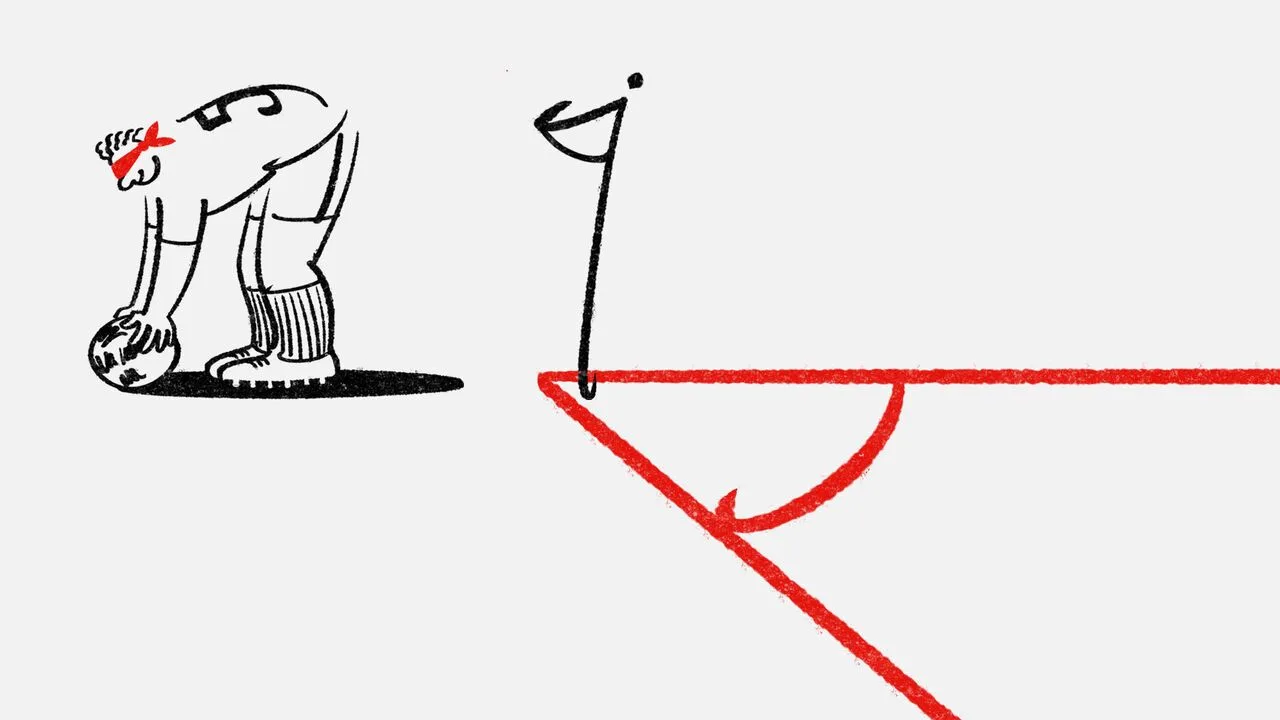
- 6Blindfolded corners. Corners have become wrestling matches. To make them more interesting, everyone on the pitch, including the corner-taker, must be blindfolded. Play will be allowed to continue until the ball goes off the field or the crowd starts booing.
- 7The green card. There is nothing like the promise of permanent residency to make sport exciting. As well as the usual yellow and red cards, the referees will be able to award a green card to any player who dribbles past an opponent in games played on American soil.
- 8Reward the celebration. One of the most memorable figures in the World Cup was a Cameroonian player called Roger Milla, who did a dance by the corner flag when he scored. If that makes football sound boring, our point is made. Still, a creative goal celebration can be fun; to encourage them, the referee can rescind a yellow card for foul play if they are particularly imaginative.
- 9Two balls at once. Competition is always a good thing, and that principle can be applied within matches by having two balls on the field at once. This will mainly be fun because of the effect that it will have on referees and commentators.
- 10A penalty for boredom. In extremis, a panel of video assistant referees can award a penalty against a team for being too boring. Even the best teams spend inordinate amounts of time passing the ball from one side of the pitch to the other, apparently unaware that the goal is in front of them. They should be punished.
It is just possible that these ideas will not be adopted before the World Cup starts. Bold thinking often takes time to become accepted. In the meantime, there are some consolations. It could be six and a half weeks of golf. ■
This Leaders piece is satire. The ten proposals are not real rule changes but a commentary on risk-averse football at an expanded 48-team World Cup.
KEEP THE CONVERSATION GOING
A good story is worth sharing.
Send this story to someone who values the bigger picture.
See more from GlobeBriefly on Google
Choose us as a preferred source in your Google preferences.