Audio
Listen to the article
- The European Commission has published a first draft of new EU merger guidelines for public consultation.
- The draft widens assessment to investment, innovation, resilience and supply security, while keeping competition at the centre.
- Merger control alone cannot fix fragmentation across 27 markets; deeper single-market integration is still required.
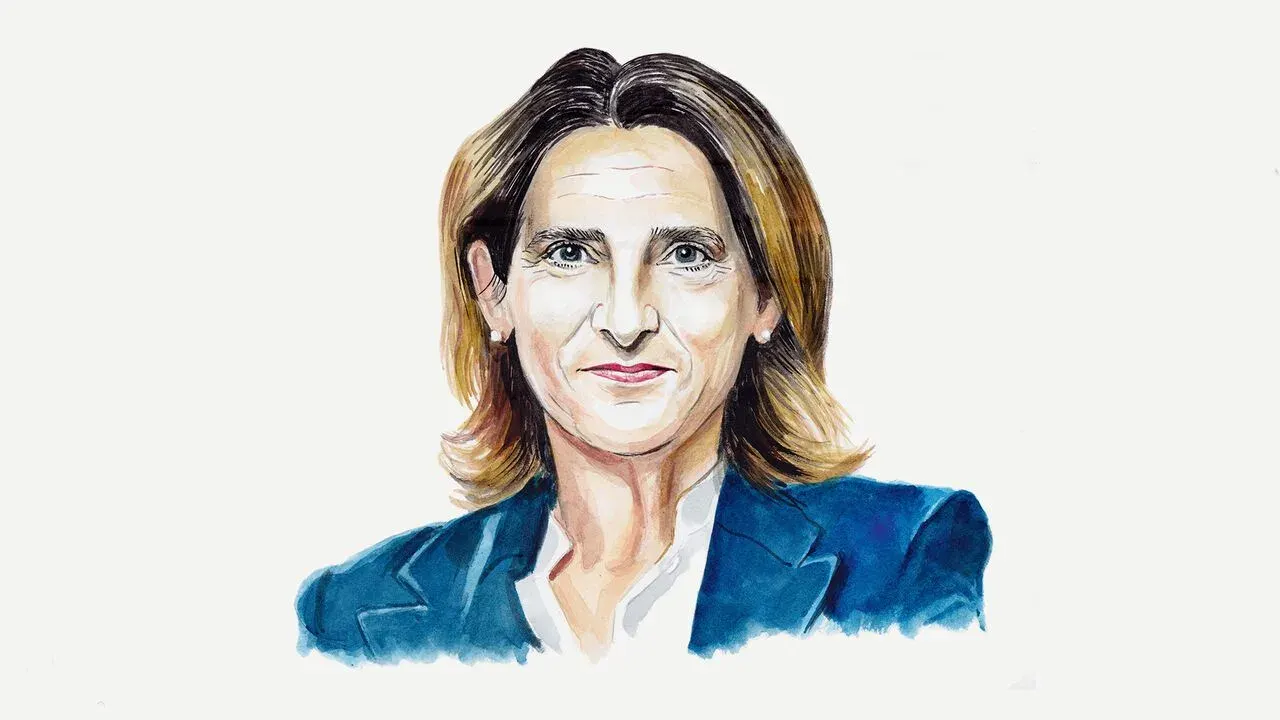
Across Europe, prosperity and fairness are now inseparable questions: how can the continent compete against American scale and Chinese state-backed industry without abandoning the rules behind its social market economy? EU competition chief Teresa Ribera argues the answer lies in modernised EU merger guidelines that help firms scale while protecting competition for businesses and consumers.
Today the European Commission published the first draft of new merger guidelines for public consultation. They set out how mergers and acquisitions that may affect competition and welfare in the EU are assessed. The central idea, Ribera writes, is to account for a more complex world while keeping competition at the heart of every decision.
Why Europe is revisiting merger control
Some argue Europe should simply relax merger control so firms can become bigger, while others fear any change could undermine the single market and innovation. Both views miss the point, Ribera writes.
The draft guidelines are not about loosening the rules, let alone writing blank cheques. They seek to incorporate the internal and external realities facing EU firms, including cases where research-and-development budgets are dwarfed by state support enjoyed by global rivals, or where supply-chain vulnerabilities could be leveraged geopolitically by a third country.
They are also designed to clarify how companies can support claims about the positive long-term effects of a merger on investment, innovation and economic resilience to shocks, from cyber-attacks to pandemics.
When Europe’s merger rules were last comprehensively revised in 2004, the world economy looked very different. Supply chains were less global and more stable, geopolitical tensions were lower, capital markets and innovation dynamics functioned very differently, and digitalisation had not yet transformed the speed at which industries can rise or disappear.
Innovation, investment and resilience over the long term
Today, resilience matters more, innovation cycles are faster, clean technologies require larger and longer-term investments, and security concerns increasingly shape economic policy. A merger once judged mainly on short-term price effects must now also be assessed on how customers are affected by its impact on European innovation, investment and supply security over the long term.
The draft responds by widening the analytical lens. It makes clearer that the European Commission should consider investment incentives, innovation capacity, resilience and longer-term market developments, because all affect customers’ interests.
That does not mean accepting vague promises. Businesses will need credible evidence that a merger raising concerns in some respects can also generate benefits reaching consumers and the wider economy.
When businesses show that deals can benefit public welfare, Ribera writes, the Commission will listen. It will be open to clearing a deal where longer-term benefits to consumers outweigh shorter-term harm, for instance by increasing innovation in Europe.
Businesses are also encouraged to embrace deals that deepen integration of the internal market. When companies combine to create an actor that reduces EU dependence on other global players, that benefits the internal market and European consumers.
This is, to be clear, not deregulation. It is modernisation.
Teresa Ribera · EU commissioner for competition
Competition, startups and future markets
Strong markets are not markets without rules, Ribera writes. They are governed by clear and predictable rules that reward efficiency without allowing an accumulation of power that can be abused.
Effective competition remains the foundation of European merger control. In the modern economy, protecting competition means looking not only at the market as it exists today, but at the market that could emerge tomorrow. That matters especially for young companies.
Europe wants more startups to become scale-ups, and more scale-ups to remain European. The revised approach can give greater certainty to innovators whose value may not be fully visible in today’s market shares. It can also help identify cases where a large company acquires a smaller rival not to develop its ideas, but to neutralise a future competitor.
Why merger policy alone is not enough
Yet merger policy alone cannot solve Europe’s competitiveness problem. Europe will not create globally competitive firms solely by changing how it reviews corporate deals. If European companies sometimes struggle to match rivals’ scale, it is often because they must expand across 27 partially connected markets rather than one truly unified market.
Capital remains fragmented. Savings are abundant but too often fail to fuel productive investment within Europe. Telecommunications remain divided along national lines, and energy systems are too disconnected. No merger guideline can substitute for that missing integration.
The founders of the post-war European project understood that markets needed both openness and rules. That insight remains valid, Ribera writes. In a more uncertain world, Europe’s strength still lies in a market of 450m people governed by law, not discretion or arbitrary decisions.
The task now is not to weaken that model but to update it. By modernising merger control while preserving competition, Europe can show that prosperity and fairness still belong together — and that the single market remains its strongest foundation in a harder global age.
Teresa Ribera is the EU commissioner for competition and the European Commission first executive vice-president.
KEEP THE CONVERSATION GOING
A good story is worth sharing.
Send this story to someone who values the bigger picture.
See more from GlobeBriefly on Google
Choose us as a preferred source in your Google preferences.