Audio
Listen to the article
- A dozen European NATO members pledged $50bn on July 8th to jointly develop deep-precision-strike missiles for 300km to more than 2,000km.
- The Pentagon cancelled a planned Typhon and Tomahawk deployment to Germany in May; Germany’s order for 400 Tomahawks by 2029 is seen as unlikely to arrive on time.
- High-end European systems are not due until the 2030s, so Berlin is seeking European-built stopgaps for deployment next year.
European NATO powers are scrambling to acquire long-range missiles as America pulls back its support and Russia expands its missile arsenal, leaving a growing gap in Europe’s ability to strike at distance.
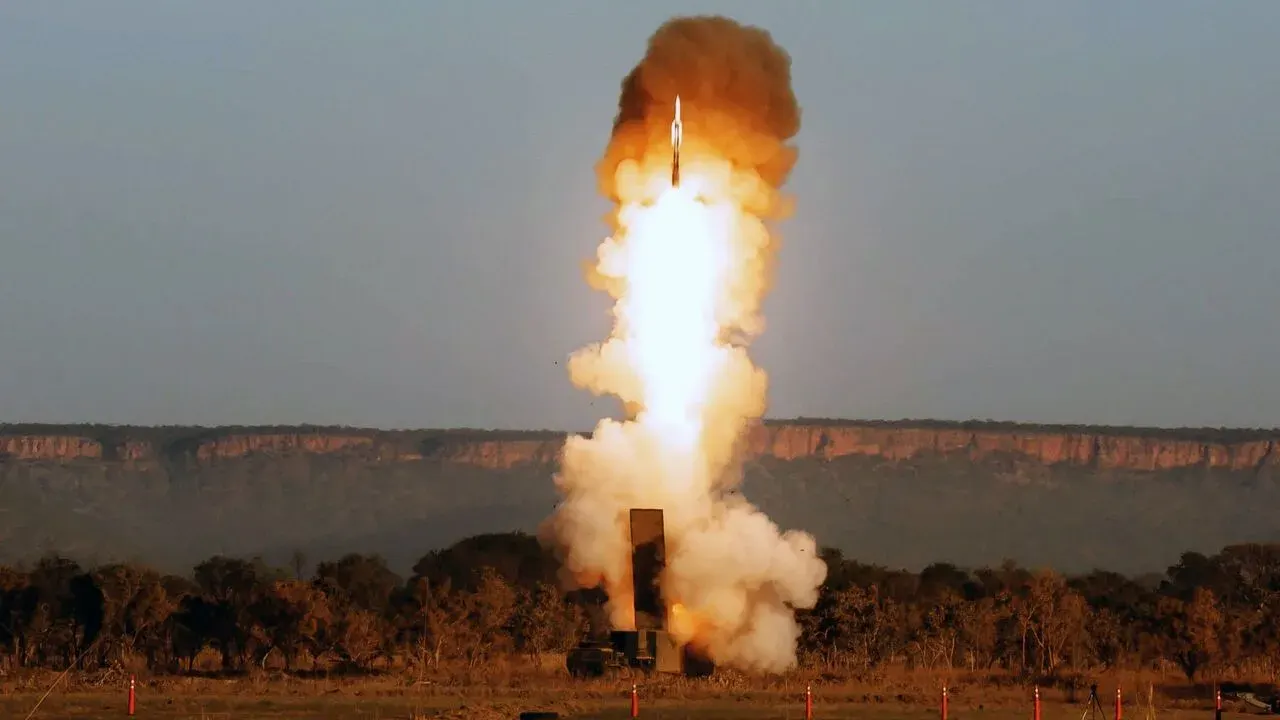
Europe’s deep-strike gap widens as US support recedes
When Donald Trump gushed about the “love in the room” at the NATO summit in Ankara this month, many European leaders felt reassured. Yet on the ground, America’s withdrawal from the continent is accelerating.
As a result, Europe’s armed forces face a widening gap in long-range strike — the ability to hit targets at distance — while Russia expands its own missile forces.
NATO’s $50bn plan for 300km to 2,000km missiles
In Ankara, European member countries agreed to speed up efforts to field “deep precision strike” missiles that can hit targets at distances ranging from 300km to more than 2,000km.
The war in Ukraine has shown why that matters: the ability to threaten Russian command nodes, logistics hubs, missile-launch sites, air bases and weapons factories. In the past, America provided most of these capabilities within NATO. European leaders have now decided that making their own missiles is an urgent priority.
On July 8th a dozen NATO members — including Britain, France, Germany and others — signed a commitment to invest $50bn to develop missiles jointly over the next decade. In a related initiative, six countries will combine efforts in a programme focused on ground-launched missiles, which can be deployed more cheaply and with greater mass than air- or sea-launched systems.
Why the Pentagon’s Typhon cancellation raised urgency
The Pentagon added urgency with a decision in May to cancel its commitment to send troops to Germany equipped with Tomahawk cruise missiles and new Typhon ground launchers. The deployment, promised by the Biden administration, was intended to help bridge the gap until Europe could field its own deep-strike systems.
The Pentagon reportedly cancelled it over fears that Russia would view it as an escalation. But Mr Trump had also been miffed after Germany’s chancellor, Friedrich Merz, said that America’s botched war in Iran had been a “humiliation”.
This month Mr Merz did manage to persuade Mr Trump to approve an order of 400 Tomahawk missiles, to be delivered by 2029. But most analysts reckon Germany is unlikely to get the missiles by then.
“I do not believe 2029 for a second,” says Nico Lange, a former chief of staff at the German defence ministry. America has burned through its own stocks: in the opening days of its war in Iran it used more than 1,000 Tomahawks, about a quarter of its stockpile. Replenishing it could take up to four years. Fulfilling Germany’s order will not be the Pentagon’s priority.
Europe’s long-range programmes will not arrive until the 2030s
In June the continent’s defence firms showed off their deep-strike wares at both Eurosatory, a defence exhibition in Paris, and the Berlin Air Show. But there was little sign of orders being placed.
An agreement between Germany and Britain in October 2024 to build stealthy ground-launched missiles with ranges above 2,000km is moving slowly. These systems are not scheduled to enter service until the 2030s.
A similar date has been pencilled in for the Stratus, an Anglo-French-Italian successor to the Storm Shadow cruise missile. Europe’s multinational missile firm, MBDA, showed off its 1,000km-range Land Cruise Missile — an adaptation of an older naval design — at Eurosatory. But the French defence ministry has yet to issue a contract. Its deployment is delayed until at least 2030.
Germany’s stopgap hunt: European-made missiles for next year
Notwithstanding its Tomahawk order, Germany has decided it cannot wait. Mr Lange says Germany has three requirements: production must be in Europe; deployment should start next year; and the missiles must not rely on components that would allow America to restrict their use. Mr Lange reckons that contracts “will be awarded within weeks” to one or maybe two companies.
Destinus and Rheinmetall joint venture
The first is likely to go to a joint venture formed in April between Destinus, a Dutch startup, and Rheinmetall, a German defence colossus. Destinus, which has worked closely with Ukrainian firms, has developed cheap ground-launched cruise missiles with ranges from 300km to 2,000km. Some will go into industrial-scale production later this year.
Covenant’s Anthem missile
The second firm hoping for a German order is Covenant, a shadowy American-Israeli outfit. German officials reportedly visited Israel last month to watch flight tests of the company’s Anthem cruise missile. Covenant is said to be committed to manufacturing the missile in Germany and Britain.
Diehl and Firepoint option
A third possibility is a tie-up between Germany’s Diehl Defence and Ukraine’s Firepoint, which makes drones and the powerful but crude Flamingo FP-5 cruise missile. Firepoint has been criticised for announcing its products’ capabilities before they are proven. Fabian Hinz, an independent missile expert, says that this misunderstands the business model of the new defence firms. They are designing missiles through a process of trial and error — much the same way they have developed their drones.
Stopgaps now, high-end systems later — but ISR remains the constraint
Where Germany leads, its allies may follow. The high-end systems that will arrive in the 2030s will still be needed, but in the meantime Europe needs stopgap solutions that are affordable, battle-tested and easy to mass produce. Most importantly, it needs systems that will be ready soon.
Mr Hinz, however, strikes a warning note. Low-cost subsonic cruise missiles are more vulnerable than exquisite systems, and therefore more dependent on sophisticated intelligence, surveillance and reconnaissance (ISR) for mission planning and avoiding air defences. When will Europe have a sovereign ISR capability independent of America? On the basis of investments being made by Germany and others, by about 2030 — if all goes well.
To stay on top of the biggest European stories, sign up to Café Europa, our weekly subscriber-only newsletter.
KEEP THE CONVERSATION GOING
A good story is worth sharing.
Send this story to someone who values the bigger picture.
See more from GlobeBriefly on Google
Choose us as a preferred source in your Google preferences.