Audio
Listen to the article
Readers respond to our review of Adam Smith and the Wealth of Nations at 250, defending his synthesis, invisible hand and legacy for trade, alongside letters on populism, AI Bible translation, Jakarta cats, hotel showers and Brigitte Bardot.
- Readers defend Adam Smith’s synthesis, invisible hand, pin-factory illustration and legacy in opening world trade at 250 years of the Wealth of Nations.
- Other letters dispute proportional representation, link centrism’s decline to stagnant wages, and warn AI Bible translation will add to scripture.
- Plus: a cat defends clowders over Jakarta, guests rue hotel showers and dining rooms, and a reader recalls the Bardot tagline.
Letters are welcome via email to letters@economist.com
Find out more about how we process your letter
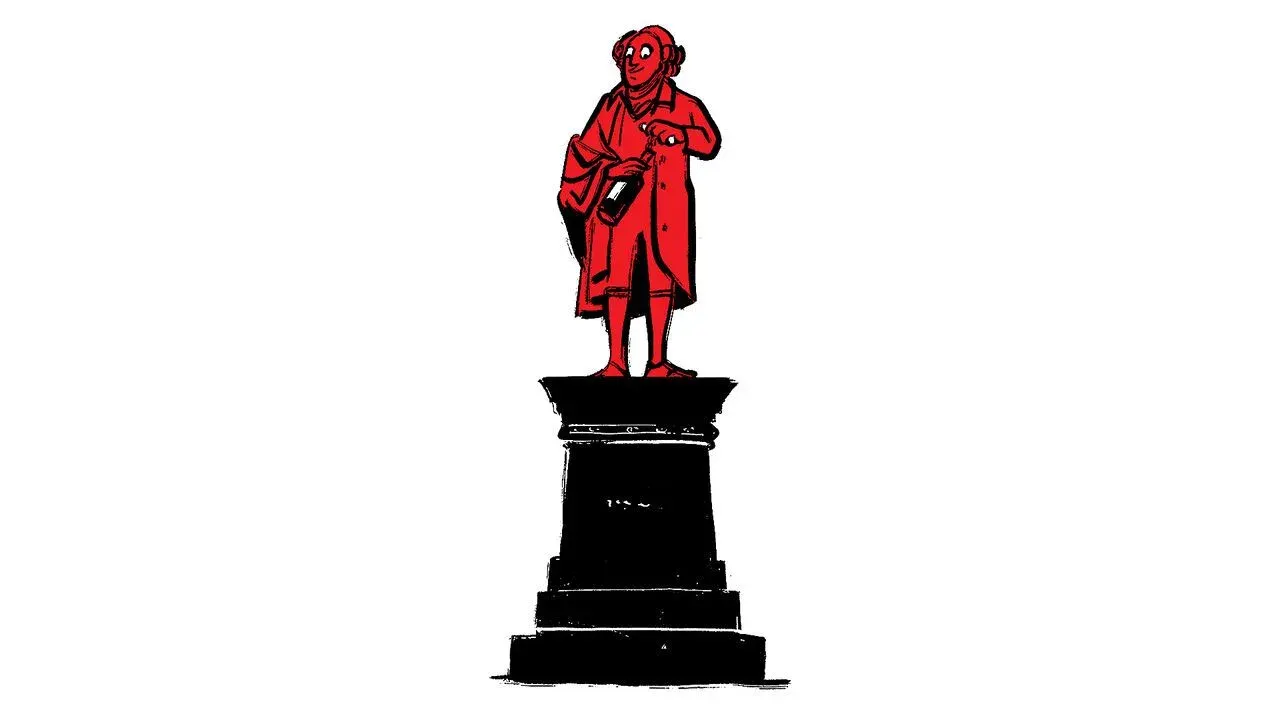
In defence of Adam Smith
Your Christmas special review of Adam Smith and the “Wealth of Nations” at 250 seemed unseasonably uncharitable (“Adam Smith is misunderstood”, December 20th). Look hard enough and you can find antecedents of any revolutionary ideas: Newton’s physics, Copernicus’s solar system, Darwin’s evolution, Smith’s economics.
The important thing is what these great thinkers made of them. Yes, Smith picked up observations from everywhere. But his genius was to show how those seemingly disparate observations meshed into a comprehensive, and surprisingly modern, understanding of economic life.
Certainly, he made mistakes, as pioneers do. Is the labour theory of value one of them? Smith mentions it only in the context of a primitive world without capital. It had been accepted wisdom for two millennia. But he clearly wasn’t happy with it, and the rest of the book goes on to explore the “higgling and bargaining of the market” as a better guide.
And who cares if Smith had never seen a pin factory? He made it a brilliant teaching to illustrate the thousandfold productivity gained from specialisation. Also, let’s not dismiss the “invisible hand” as a throwaway remark about a limited case. The whole of the “Wealth of Nations”, and his “Theory of Moral Sentiments” too, is an investigation of the complex relationship between individual actions and the overall social order, something Friedrich Hayek (it was he, not Smith, that was in Margaret Thatcher’s handbag) would go on to elaborate.
The “Wealth of Nations” deservedly had huge influence, especially in opening up world trade, and thereby boosting the welfare of humankind. So I shall wholeheartedly toast its 250th year, with a glass of claret (from France, of course, not Scotland).
EAMONN BUTLER
Adam Smith Institute
London
Even the title, “Wealth of Nations”, was an important conceptual breakthrough. Before Smith, the standard belief was that a nation’s wealth consisted of gold and silver. After an admittedly lengthy lead-in, he seeks to demolish this notion. For example, he points out that the Spanish viewed national wealth in terms of gold and silver, while the Tatars of Genghis Khan saw national wealth in terms of cattle. Smith writes: “Of the two, the Tatar notion, perhaps, was the nearest to the truth.” Smith’s notion that the wealth of a nation should be measured by the consumption of its people, not by its trade surpluses nor the wealth of its government, remains incompletely learned.
Timothy Taylor
St Paul, Minnesota
The 250th anniversary of the “Wealth of Nations” is an excellent opportunity to reacquaint ourselves with what Smith had to say in that book and his other great work, the “Theory of Moral Sentiments” (1759). They should be viewed as complementary.
Smith argued that a healthy society should result from a vibrant economy. Yet we live in a world where the health of the economy and that of society have become disconnected. In many countries, the market economy no longer reflects the ideals of capitalism championed by Smith. Instead, capitalism has been hijacked by capitalists in pursuit of economic rents, sometimes supported by government favours. In many markets, the visible hand of government crowds out the invisible hand of entrepreneurship through the burden of excessive regulation.
Smith warned of the need to regulate banks to avoid systemic risks and of the principal-agent problem inherent in corporate governance. He also influenced the work of Georg Wilhelm Friedrich Hegel, who in turn had an impact on Karl Marx. In “The Formation of the Economic Thought of Karl Marx”, Ernest Mandel noted that Hegel was “profoundly affected in his youth by economic studies, in particular by the work of Adam Smith.”
John Maynard Keynes said that as economic theorists strive for their unique contribution to the evolution of the science, none should compare themselves to Adam Smith. Hayek argued that Smith’s work surpasses all modern insights into the influences that shape human behaviour and society.
Joseph Healy
Melbourne
Electoral systems and populism
Many people will agree with your concern about British democracy caused by the rise of populist and extreme parties (“Britain’s slot-machine politics”, December 6th). It is a fallacy that this is caused by Britain’s representative voting system, (somewhat misleadingly termed “first past the post”). Almost all European countries use some form of proportional representation, and suffer at least as much from the rise of populism.
Those proposing proportional representation should be careful what they wish for. Candidates on party lists do not have to appeal to the voter, and being elected by the party machine, tend to be apparatchiks who are more extreme in their views than the average voter. The rewards offered to a plethora of small and single issue parties gives unwarranted power to extreme views.
The British system ensures that individual voters have a personal representative in the country’s government, something the party list system fails to do, and tends to reward parties with wide support. In 2011 British voters decisively rejected (by 68% to 32%) the Liberal Democrats’ more moderate Alternative Vote system.
Peter Gilmour
London
Mark Leonard’s By Invitation urging Europe to get to grips with the MAGA challenge (December 13th) offered a few superficial solutions to stop the decline of centrism. It predictably avoided tackling the ever-growing elephant in the room. Under centrist governments, average real wages in much of the West have been stagnant for more than four decades. When the vast majority of the proceeds of economic growth go to a tiny, lucky group of individuals, the likes of whom the average citizen is unlikely to meet in their lifetime, the dwindling of enthusiasm for centrism is easy to understand.
Tom Janson
Berlin
LLMs and the end of the world
The attempt by Christian missionaries to use AI to translate the Bible into every one of the 7,000 languages spoken on the planet (“Climbing the Tower of Babel”, December 13th) calls to mind Arthur C. Clarke’s science-fiction short story, “The Nine Billion Names of God”. In the story Tibetan monks hire experts to write a computer program that spits out every possible permutation of a sequence of random letters. The monks believe that when all of the nine billion names of God have been discovered and recorded within the sacred books, history will come to an end. The story finishes ominously as the computer completes its task, and “Overhead, without any fuss, the stars were going out.”
Let’s hope the missionaries’ translation efforts don’t end with the same results.
Robert Checchio
Dunellen, New Jersey
There is a theological complication in using large language models to translate the Bible. LLMs are notoriously unable to resist appending helpful suggestions to their output (ask ChatGPT for the capital of France and you’ll get “Paris”, followed by three creative options for planning your itinerary). Yet the Book of Revelation concludes with an explicit warning against adding to its text: “If any man shall add unto these things, God shall add unto him the plagues that are written in this book.” The last verses of scripture forbid adding to scripture. The algorithm translating it has no idea how not to. This will not end well.
Marcelo Lacanna
Buenos Aires
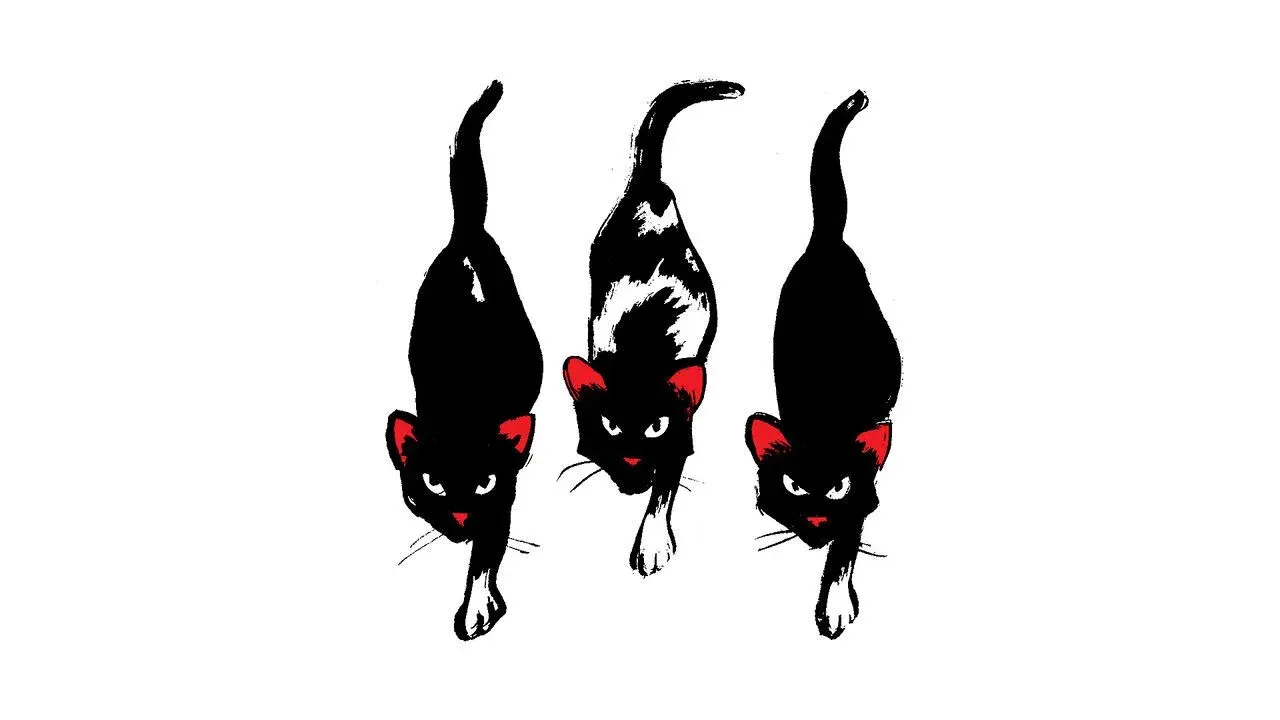
Feline feelings
I read your piece on why many Asian megacities are miserable places (“Agglomerate this!”, December 13th) with increasingly narrow eyes. Particularly the claim that Jakarta is governed “as coherently as a clowder of cats”. First, a linguistic quibble. A clowder is a group of cats. So adding the species is redundant, though I recognise your impulse to tautology as a human habit.
More importantly, the comparison is unfair. We cats are not incoherent. We respect territory, understand hierarchy and reach decisions with enviable speed. True, we occasionally push things off tables for no clear reason, but this has nothing to do with Jakarta. If Jakarta were truly run like a clowder, it would suffer less crowding (we like our space), enjoy clearer lines of authority and function rather well, provided there were treats.
Yours, with a flick of my tail.
Inca
Pet cat of Dr Iain Overton
London
Enjoy your stay
Bartleby’s guide to every business hotel room (December 13th) overlooked another one of their main attractions. State of the art showers that take 20 minutes to work out how to mix hot and cold water in the correct volume to avoid being burned or frozen, or flooding the bathroom, and in which you have to cower to be able to wash your hair.
JOÃO LUIS HAMBURGER
São Paulo
I, for one, am considering the need for advanced studies in both shower design and mechanical engineering to figure out which knobs and levers, only when perfectly synchronised of course, might provide for a predictable wash at a bearable temperature. Sadly and inevitably, I usually suffer through panicked moments of either scalding or frigid water ambushing me from an unsuspecting nozzle.
Brad Pick
Barcelona
Ask staff at reception for good places to eat and they will first recommend their hotel’s restaurant, where you can sit alone in a large empty dining room, or at the bar in the company of lonely-looking middle-aged men, and eat a $100 meal consisting of a bland hamburger, soggy fries, and a lightly portioned glass of industrial Californian wine.
Scott Simmons
Denver
A star is born
“And God Created Woman” was the film that, as you say, made Brigitte Bardot famous (Obituary, January 3rd). I remember watching it in the 1950s when I was 15 years old. I have never forgotten the movie’s publicity tagline: “And God created woman…but the devil invented Brigitte Bardot.”
Manuel Landa
Hawthorne, California
KEEP THE CONVERSATION GOING
A good story is worth sharing.
Send this story to someone who values the bigger picture.
See more from GlobeBriefly on Google
Choose us as a preferred source in your Google preferences.